
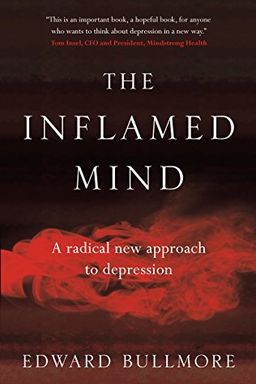
The Inflamed Mind cover

The Inflamed Mind

by Edward Bullmore

Edward Bullmore''s ''The Inflamed Mind'' delves into a revolutionary theory linking depression with inflammation, challenging traditional mind-body divides. By exploring new research in neuroimmunology, Bullmore unveils potential holistic treatments, offering hope and innovative pathways for those grappling with mental health issues.

Inflammation: A Revolutionary Lens on the Mind

Have you ever wondered why you feel emotionally drained when your body is fighting off a fever or even a toothache? In The Inflamed Mind, psychiatrist and neuroscientist Edward Bullmore asks this deceptively simple question—and his answer changes everything we think we know about mental health. He argues that depression may not be purely psychological or a chemical imbalance, but might instead be a direct physical reaction to inflammation in the body. What we’ve long considered “mental illness” could, in many cases, be our immune system talking.

Bullmore’s central claim is revolutionary yet simple: inflammation doesn’t just cause joint pain or fever—it can inflame the mind itself, altering mood, motivation, and cognition. This shift moves psychiatry beyond its traditional fixation on neurotransmitters like serotonin and toward the overlooked dialogue between brain and body. It’s the dawn of what he calls immuno-psychiatry—a scientific frontier uniting immunology, neuroscience, and psychology.

From Serotonin to Cytokines

Bullmore begins by revisiting decades of disappointment in psychiatry. As a young psychiatrist, he learned to explain depression as a serotonin imbalance—a neat story patients could grasp, but one built on shaky science. Despite the hope surrounding Prozac and other SSRIs in the late twentieth century, he saw firsthand that treatments for depression barely evolved in thirty years. Neuroscience had illuminated brain networks through fMRI and connectomics, yet the everyday reality in clinics was unchanged.

After years spent straddling academia and the pharmaceutical industry, Bullmore experienced an epiphany. When GlaxoSmithKline shut down its psychiatric research division around 2010, he realized the entire field was stuck. The “chemical imbalance” model had run its course. He began to explore a new hypothesis: maybe depression wasn’t all in the mind, or even just in the brain—but in the immune system itself.

The Mind–Body Divide Crumbles

This idea requires dismantling one of Western medicine’s oldest assumptions: Cartesian dualism. Since René Descartes, science has divided human experience into two realms—the physical body and the immaterial mind. Doctors have specialized accordingly: physicians treat the body; psychiatrists treat the mind. Yet Bullmore shows that this neat philosophical separation is crumbling under new biology. Instead of being sealed off by the blood–brain barrier (once imagined as an impenetrable Berlin Wall), the brain is in constant conversation with the immune system through message-bearing proteins called cytokines.

When inflammation occurs anywhere in the body—after an infection, injury, or even emotional stress—cytokines surge through the bloodstream and cross into the brain, signaling the nervous system to change mood and behavior. In other words, your lethargy, withdrawal, and dark thoughts after an illness might not just be psychological gloom: they’re physical side effects of immune activity. Bullmore calls this cascade “the inflamed mind.”

Scientific Stories That Shift the Paradigm

Bullmore’s narrative blends personal experience and cutting-edge science. He recalls his dental root canal operation—a seemingly trivial event that left him morose and withdrawn for a day. At first, he interpreted his melancholy as psychological (“I’m getting long in the tooth”). Later, he realized this episode might illustrate immunological causality: the bruised gums triggered cytokine release; those cytokines inflamed his brain; and depression followed seamlessly. There was no “ghost in the machine,” only the machine itself.

To demonstrate this link, he explores experiments in both humans and animals. In rats, injecting inflammatory agents reliably produces “sickness behavior”—social withdrawal, fatigue, disrupted sleep, and loss of pleasure. In humans, vaccination studies show similar results: after a typhoid shot, volunteers temporarily become despondent, and brain scans reveal heightened activity in regions processing emotion like the cingulate cortex and amygdala.

The Human Implications

If inflammation can drive changes in mood, then mental illness must be reconceived as a whole-body disorder. Depression might stem from the immune system’s response to injury, infection, obesity, stress, or even childhood trauma. Bullmore suggests that we evolved to feel depressed when inflamed because it helped our ancestors conserve energy and avoid spreading infection—a biological adaptation, not a personal failing.

This perspective carries enormous practical and ethical weight. It reframes depression not as weakness or character flaw but as an inherited physiological reaction—a message from an immune system doing its ancient work. It also promises new treatments: anti-inflammatory drugs, vagus nerve stimulation, and immune-based diagnostics may become as important as serotonin targets once were.

Why This Matters Right Now

Bullmore’s thesis resonates at a time when depression is predicted to become the world’s leading cause of disability. Despite more open conversation about mental health, medicine still treats physical and psychological illness on separate tracks—what Bullmore calls “medical apartheid.” Integrating mind and body under the unifying principle of inflammation could revolutionize care. This shift challenges clinicians to bridge their silos and patients to see mood and health as inseparable.

Big idea: Depression may not only be a disorder of thought or neurotransmitters—it may be the body’s immune system in revolt. The inflamed mind suggests a post-dualist medicine, where psychiatry meets biology and brain meets body.

In the chapters that follow, Bullmore explores how this new science works, why evolution selected it, and what it could mean for a future where mental and physical health are treated together. You’ll see how immunology explains mood, how modern psychiatry lost its way, and how reconnecting brain and body might finally heal both. It’s a story that’s as personal as it is scientific—and it invites you to rethink what it means to be whole.


Breaking the Mind–Body Barrier

Bullmore traces the failure of psychiatry back to its historical entanglement with Cartesian dualism. Medicine’s split into two camps—physical doctors for the body and psychiatrists for the mind—created a blind spot he calls “medical apartheid.” If the brain and body are really interwoven systems, this division has stymied discovery and treatment for centuries.

Descartes and the Legacy of Division

René Descartes envisioned the human as a blend of mechanical body and immaterial soul, joined at the mysterious pineal gland. That notion—though scientifically false—became the philosophical foundation for Western medicine. Physical ailments were mechanical, spiritual ones immaterial. Even today, hospitals and clinics reflect this divide: physicians diagnose physiology, psychiatrists address psychology.

Bullmore exposes how this dualist structure left countless patients stranded between specialties. Take Mrs. P, his early arthritis patient. Her doctor acknowledged her depression but dismissed it as “understandable”—a mental reaction to chronic illness, not an intrinsic part of it. Nobody considered that her inflammation might be chemically causing fatigue and sadness.

Inflammation as the Missing Link

The turning point comes when medicine recognizes that immune activity affects the brain. The long-standing belief that the blood–brain barrier isolated the mind from body turns out to be wrong. Cytokines, swollen immune cells, and inflammation cross that wall freely. When peripheral infection or injury occurs, the brain experiences its own mini-inflammation, leading to fatigue, anhedonia, and despair.

Bullmore cites microscopic discoveries of microglia—the brain’s resident macrophages—that mirror bodily immune cells. When activated, they overproduce inflammatory molecules that impair neurons and reduce serotonin signaling. Suddenly, “low serotonin” depression looks more like an inflammatory consequence than an isolated brain malfunction.

The End of Medical Apartheid

Once you grasp this unified view, the absurdity of our healthcare segregation becomes clear. Rheumatologists ignore fatigue because it’s “mental.” Psychiatrists ignore inflammation because it’s “bodily.” As Bullmore notes, this blind spot harms patients twice: physically inflamed people are undertreated emotionally, and mentally ill patients die younger from overlooked physical diseases.

“Medical apartheid,” Bullmore warns, leaves patients like Mrs. P alone with both pain and shame. To heal the mind, we must first reunite it with the body.

(Context: This insight parallels Lisa Feldman Barrett’s claim in How Emotions Are Made that bodily states shape mental experience. Both challenge the Western separation of mind and matter.) Bullmore’s advocacy is not philosophical abstraction—it’s a call for integrated clinics and cross-trained practitioners who can treat depression with both stethoscopes and empathy. He envisions a world where being “inflamed” isn’t metaphorical but measurable.


How Inflammation Causes Depression

So how precisely does inflammation make you feel low? Bullmore details the biological steps linking immune activation to mood change, showing that the process moves seamlessly from body to brain.

Step 1: The Body Sounds the Alarm

When injury, infection, or stress strikes, macrophages release cytokines—tiny signaling proteins like interleukin-6 and tumor necrosis factor. These chemicals circulate through the blood, commanding the immune system to fight. Along the way, they slip past the blood–brain barrier into the nervous system’s control center.

Step 2: The Brain Interprets Inflammation

Cytokines reaching the brain activate microglial cells—the nervous system’s immune guards. Once inflamed, these cells disrupt communication between neurons, damaging synapses and reducing serotonin transmission. fMRI scans reveal that during inflammation, emotional centers such as the amygdala and cingulate cortex glow more brightly—a sign of hypersensitive mood circuits.

Bullmore’s example of patients injected with interferon for hepatitis illustrates this vividly: a third of them became clinically depressed within weeks. The drug’s purpose was to turbocharge immunity; its side effect was despair. Even vaccines cause brief dips in mood because the immune system and emotion network share wiring.

Step 3: The Feedback Loop Takes Hold

Inflammation doesn’t just trigger low mood—it sustains it. Depressed individuals often show chronically elevated C-reactive protein, an inflammation marker. Their macrophages seem stuck in “angry mode,” creating a vicious cycle: cytokines flatten mood, depression increases stress hormones, and stress fuels more inflammation.

Step 4: Evolutionary Logic

Why would natural selection produce such misery? Bullmore presents a compelling explanation: depression from inflammation evolved to keep the sick still and isolated. For ancient human tribes, withdrawing from social activity conserved energy and prevented spreading infection. What saved our ancestors now debilitates us in modern society, where chronic social stress constantly activates our immune alarm without infection to fight.

Scientific takeaway: Feeling sad after illness isn’t weakness—it’s adaptive biology misfiring under modern conditions. Depression is inflammation’s behavioral echo.

Bullmore’s “how” closes the loop between immune cascades and emotional suffering. (As physician Gabor Maté similarly argues in When the Body Says No, stress and immune dysregulation are inseparable.) Understanding this mechanism moves us toward treatments that calm the immune chatter instead of merely numbing neurotransmitters.


Medical Apartheid and the Cost of Division

Bullmore’s critique of “medical apartheid” isn’t just philosophy—it’s a social indictment. He shows how separating mental and physical health worsens outcomes for both sets of patients.

A System Split in Two

In the UK’s NHS, psychiatric and physical medicine are different worlds. A patient like Mrs. P, suffering from rheumatoid arthritis and depression, can’t find one clinic to treat both. Rheumatologists focus on swollen joints; psychiatrists on guilty thoughts. Neither sees the systemic inflammation causing both symptoms.

Consequences for Patients

This divide isn’t just inefficient—it’s lethal. Bullmore cites shocking data: people with severe mental illness die ten to fifteen years earlier, even after removing suicides from the statistics. They succumb to heart disease, diabetes, or stroke—conditions linked to chronic inflammation. Similarly, physically ill patients with depression experience worse recovery and poorer quality of life because their emotional suffering remains untreated.

A Call for Integration

Bullmore envisions integrated clinics—places where mind and body are treated together. Doctors could use biomarkers (like CRP or cytokine levels) to guide antidepressant choice. A psychiatrist could work with a rheumatologist to address inflammation and mood simultaneously. He insists that true “parity of esteem” between physical and mental health requires this structural change.

“When medicine fails to see the body in the patient with mental illness and the mind in the patient with bodily disease, society pays the price in years of life lost,” Bullmore writes. Integration isn’t optional—it’s survival.

By exposing this systemic blind spot, Bullmore joins thinkers like Norman Doidge (The Brain That Changes Itself) advocating cross-disciplinary medicine. His goal is simple but radical: erase the old boundaries, because illness ignores them.


Rethinking Treatment: Anti-Inflammatory Antidepressants

Having explained that inflammation can drive depression, Bullmore turns to the future of therapy. He foresees the next generation of antidepressants emerging from immunology rather than pharmacology.

The End of the Blockbuster Model

After the serotonin era, pharma companies chased “blockbusters”—drugs marketed as panaceas for everyone. This model collapsed when firms like GlaxoSmithKline and AstraZeneca abandoned psychiatric R&D around 2010. Bullmore saw that depression was too heterogeneous for one-size-fits-all drugs. The future lies in smaller, personalized niche-busters guided by biomarkers.

Anti-Inflammatory Pathways

Anti-inflammatory agents already used for autoimmune diseases—such as anti-TNF antibodies (Remicade, Humera)—might also calm inflamed minds. In rheumatoid arthritis trials, patients not only felt physically better but emotionally lifted within days, a “Remicade high.” Though often dismissed as placebo, this response may mark genuine immune-mediated mood improvement.

Repurposing and Precision

Bullmore proposes repurposing hundreds of existing immune drugs and pairing them with companion diagnostics. A simple blood test could reveal whether a patient’s depression is inflammatory (elevated CRP or cytokines). Those patients would receive anti-inflammatory antidepressants; others would stick with traditional SSRIs or therapy. It’s precision psychiatry modeled after oncology’s genetic tests.

Clinical vision: “The next antidepressants won’t be bigger than Prozac, but better—targeted to the right biology in the right patient.”

(Note: This parallels emerging research from Charles Raison and Andrew Miller, pioneers of cytokine-based depression models.) Bullmore’s forecast calls for courage and patience—the same virtues that drive any medical revolution—but he believes the immunological wave is coming soon.


Stress, Evolution, and the Adaptive Mind

Bullmore answers the ultimate “why”: why did evolution build an immune system that can make us miserable? His answer reframes depression as an ancient survival tool hijacked by modern life.

Depression as a Defense

In prehistoric environments where infection was deadly, depressive behaviors helped our ancestors recover and avoid spreading disease. Withdrawn, cautious, and energy-conserving individuals survived longer after illness or injury. Their genetics favored strong inflammatory responses—even if those same reactions would later manifest as melancholy.

Modern Misfires

Today, infection isn’t our main threat—chronic stress is. Social rejection, overwork, and trauma mimic ancient danger signals. The immune system still responds with inflammation, perceiving stress as infection. The result: biological depression without germs. Bullmore calls this a tragic mismatch between old biology and new society.

The Genetic Evidence

Recent genomic studies support this view. Genes linked to depression, like olfactomedin 4, also regulate immune defenses in the gut. These may be relics of natural selection favoring survival against ancient bacteria. Depression, in this model, isn’t a flaw—it’s collateral damage from evolutionary success.

Bullmore concludes: “We may suffer because our immune systems still expect the savannah.” What once saved us now exhausts us.

By reconnecting depression with evolution and immunity, Bullmore restores dignity to those who suffer. You’re not broken; you’re running ancient software on modern hardware. Recognizing this mismatch is the first step toward compassionate, biological care.


The Future of Integrated Medicine

Bullmore ends on an optimistic note: the coming revolution in healthcare will unite physical and mental treatment. He believes new clinics, technologies, and mind-body therapies could change lives within a decade.

From Drugs to Devices

Beyond pills, futuristic treatments may include vagus nerve stimulation. This electrode-based therapy, already approved for depression, might work by reducing body-wide cytokine signals rather than merely boosting serotonin. Similarly, mindfulness and meditation lower inflammatory genes, confirming that mental practices can biologically heal.

Biofeedback and Biomarkers

He imagines “cytokine-guided psychotherapy,” where inflammation markers track emotional progress. Patients could literally monitor their immune calm as they practice stress management. It’s a vision that dissolves distinctions between psychology, physiology, and data science.

A Revolution Quietly Beginning

Bullmore reminds readers that medical revolutions rarely make headline news. Like DNA’s discovery or antibiotics’ invention, immuno-psychiatry will spread quietly, transforming care from the inside out. Its message is simple: the next frontier of mental health isn’t in the mind—it’s in the immune system.

Closing vision: “Depression will one day be treated as the inflammation it often is. The body and mind will no longer be enemies—they will heal together.”

Bullmore’s work stands alongside pioneering ideas from Andrew Weil’s integrative medicine and Daniel Siegel’s interpersonal neurobiology. Taken together, they signal a future where the inflamed mind gives way to the integrated self—a patient treated wholly, not in parts.

Dig Deeper

Get personalized prompts to apply these lessons to your life and deepen your understanding.

Go Deeper

Get the Full Experience

Download Insight Books for AI-powered reflections, quizzes, and more.