
Idea 1
Simple Rules for a Financially Secure Life
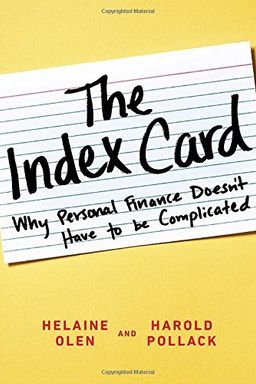
What if everything you needed to know about personal finance could fit on a single index card? That’s the provocative question at the center of The Index Card by Helaine Olen and Harold Pollack—a book that distills decades of financial wisdom into ten clear, practical rules. The authors argue that the world of personal finance has grown unnecessarily complex, with financial advisors, media personalities, and banks profiting from your confusion. But in truth, the fundamental rules of money management are simple, timeless, and accessible to anyone willing to practice discipline and common sense.
Pollack, a professor at the University of Chicago, famously wrote his core advice on an actual index card: save consistently, avoid high-interest debt, invest in index funds, and insure yourself wisely. When the card went viral, thousands asked for more details—and Olen, author of Pound Foolish, partnered with him to expand those rules into a full guidebook. Their approach is refreshingly basic: if you can follow simple, research-backed habits instead of chasing trendy schemes, your financial life will thrive.
Why Simplicity Matters
As Olen and Pollack emphasize, complexity is the enemy of good financial decisions. Wall Street, financial advisors, and TV pundits feed people the illusion that managing money requires expertise. Yet, the majority of professionals—even well-paid managers and brokers—rarely outperform market averages. Most people don’t need exotic products, insider trading strategies, or the next big tech stock to build wealth. They need reliable rules applied consistently: spend less than you earn, automate your savings, and avoid unnecessary fees.
This theme mirrors the advice of behavioral economists like Dan Ariely and Nobel laureate Richard Thaler, who suggest our biggest obstacle isn't knowledge—it’s psychology. We procrastinate, overspend, and panic because we’re human. The genius of the index card is that it bypasses temptation and confusion by giving you a clear set of simple behaviors that can be repeated for life.
The Ten Rules in Context
Olen and Pollack’s ten rules serve as the framework for the book:
- Save 10–20 percent of your income.
- Pay credit card balances in full each month.
- Max out 401(k)s and other tax-advantaged accounts.
- Never buy or sell individual stocks.
- Invest in low-cost, diversified index funds or ETFs.
- Make your financial advisor commit to the fiduciary standard.
- Buy a home when you’re ready—not before.
- Protect yourself with the right insurance.
- Value and defend the social safety net.
- And finally, remember the index card—it’s all you really need.
Each rule looks simple on its face, yet each deserves careful unpacking. The book’s chapters walk through key financial decisions—budgeting, handling debt, retirement accounts, investing, home ownership, and insurance—supported by anecdotes like Harold’s late start in saving for retirement or Helaine’s missteps during the dot-com boom. These stories remind you that even smart, educated people can make costly choices if they don’t stick to core principles.
A Story of Real People and Real Money
At its core, The Index Card isn’t a finance textbook—it’s a conversation between two relatable guides. Harold shares the sobering moment when his family was plunged into financial strain after adopting his intellectually disabled brother-in-law, while Helaine reveals her own temptations and regrets as a journalist covering personal finance myths. Both recount learning the hard way: wealth isn’t built by heroics but by boring, steady discipline.
“If it were rocket science, it wouldn't fit on an index card.”
—Helaine Olen & Harold Pollack
The book argues that true mastery of personal finance comes not from trying to beat the market but from establishing systems that nurture your future self. It targets everyday workers who want stability—people who earn normal salaries, raise families, pay taxes, and dream of retiring without fear. For them, the index card isn’t a shortcut; it’s a clear path through the noise.
Why It Matters Today
With wage stagnation, rising living costs, and an increasingly “do-it-yourself” retirement system, ordinary families shoulder more financial responsibility than any previous generation. The authors don’t sugarcoat these realities, but they show that clarity and consistency still win. In an age of confusing apps, pyramids of advice, and financial FOMO, The Index Card calls you back to basics: your money should serve your life, not consume it.
By mastering these ten rules, you won't just manage your money—you’ll reclaim peace of mind. Each chapter translates abstract advice into human stories and actionable steps that any reader can follow, proving once and for all that financial security fits in your wallet and starts with common sense.