
Idea 1
The Secret Journeys of Plants Through Space and Time
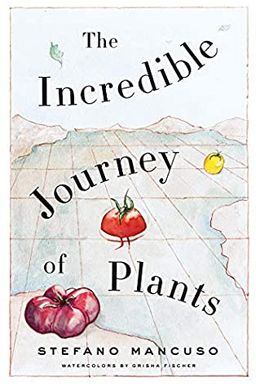
Have you ever stopped to consider that the trees outside your window might be travelers—ancient voyagers quietly crossing oceans, centuries, and even cataclysms? In The Incredible Journey of Plants, Stefano Mancuso—a pioneering plant neurobiologist—invites you to reimagine plants not as static backdrops to human life but as restless, ingenious navigators that have conquered every corner of the planet. He argues that despite being rooted in place, plants are master travelers through their seeds, spores, and astonishing resilience—able to bridge oceans, survive radioactivity, and outlast civilizations.
Mancuso’s central claim is provocative: that plants embody the same spirit of migration, adaptability, and persistence usually celebrated in human explorers. Rather than passive greenery, they are active agents in shaping the Earth’s ecosystems—pioneering new land, surviving extremes, and teaching us how to think differently about movement, intelligence, and survival. His narrative blends science, history, and storytelling, transforming botany into an adventure saga worthy of Darwin or Thor Heyerdahl.
From Rooted to Restless: A New View of Plant Life
Mancuso opens with a challenge to our assumptions. We think plants do not move; therefore, they must be static and simple. Yet, as he demonstrates, while plants cannot walk, they move through the ages and across continents by deploying ingenious strategies—dispersing seeds by wind, water, animals, and human hands. Their migrations build ecosystems and, by extension, sustain us. They’re the planetary settlers that make life possible after disasters, volcanic eruptions, or even nuclear fallout.
By tracing stories from the farthest reaches of the Earth—volcanic islands, deserted atolls, frozen tundras, and irradiated cities—Mancuso reveals a hidden pattern: life never stands still. Evolution itself, he suggests, is a long story of dispersal. Plants, more than any creature, embody life’s expansive drive.
Explorers Without Ships
Through chapters that read like miniature expeditions, Mancuso invites you to follow botanical explorers across oceans and eras. With wit and curiosity, he connects the experiments of Darwin on floating seeds to modern genetic analyses of coconuts drifting through Pacific currents. He tells how species like the Cocos nucifera (coconut) traveled across civilizations, nourishing entire cultures and shaping trade—and how eccentric dreamers, such as August Engelhardt, even built cults around them. Meanwhile, some species, like the monumental Lodoicea maldivica or “sea coconut,” evolved in the opposite direction—developing enormous, unmoving seeds and a rare form of parental care, thriving in isolation rather than travel.
The book’s power comes from Mancuso’s ability to weave botany with human history. We meet the coconut cultists of the early twentieth century, pirates capturing seed collections, Japanese diplomats discussing atomic-bombed trees, and explorers like Heyerdahl attempting to prove wild theories of transoceanic migration. In each case, plants are at the center of human adventure and imagination.
Life, Death, and Resurrection
Mancuso expands the notion of travel beyond geography into time. Some plants are literal time travelers: their seeds survive for centuries, sometimes millennia, waiting to germinate. He recounts the resurrection of a 2,000-year-old Judean date palm from Masada, the germination of a 200-year-old South African shrub from a pirate’s ship’s cargo, and the revival of a 39,000-year-old flower from Siberian permafrost. These stories suggest that life, in its most tenacious form, refuses to die—crossing epochs through rest, dormancy, and astonishing patience.
Even more haunting are the “Hibakujumoku”—trees that survived the atomic bombings of Hiroshima and Nagasaki and still stand today. Mancuso turns them into living symbols of endurance, witnesses that remember what no human could bear to. Their existence reframes what it means to “survive”: to remain rooted and alive even after apocalypse.
The Intelligence of Movement
Drawing on his earlier research (as in Brilliant Green), Mancuso argues that plant movement is an expression of intelligence—distributed, collective, and non-neuronal. Plants adapt, communicate, and plan in ways that mirror social cooperation more than solitary awareness. Understanding their strategies, he suggests, might teach humanity how to live in balance with our planet rather than dominate it. Where humans move to conquer, plants move to coexist.
Why It Matters
At its core, The Incredible Journey of Plants is both a scientific exploration and a moral mirror. Mancuso insists that by observing how plants persist—quietly, humbly, but with boundless creativity—we can better understand our place in the living world. In an age of climate crisis, their slow migrations remind us that resilience, not speed, ensures survival. They are teachers of patience and adaptation: travelers not in haste, but in harmony with time.
“Plants don’t merely inhabit the Earth—they continually remake it.”
Through movement, endurance, and silent intelligence, plants show us how life sustains itself across every catastrophe. Mancuso’s narrative invites you to see not just biodiversity, but biography—the life stories of species that have traveled further and lasted longer than any empire or civilization ever could.