
Idea 1
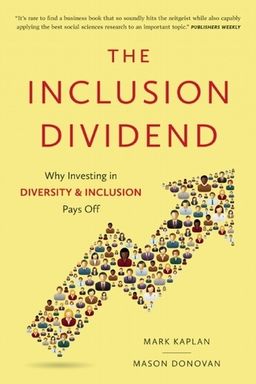
The Inclusion Dividend: Why Inclusion Pays Off
Have you ever wondered why some companies seem to thrive on innovation, creativity, and engagement—while others struggle to keep pace even with talented people on board? In The Inclusion Dividend, Mark Kaplan and Mason Donovan argue that the missing ingredient is not just diversity, but inclusion. Diversity, they contend, is merely the presence of difference—who is in the room. Inclusion, on the other hand, is how those differences are valued, leveraged, and integrated into everything the organization does. When organizations intentionally invest in inclusion, they yield what the authors call the inclusion dividend: measurable returns in innovation, profitability, customer loyalty, and employee engagement.
Kaplan and Donovan fuse decades of consulting and corporate experience to show that inclusion is not just moral or cultural—it’s a strategic business imperative. Through compelling stories—from Asha, a pharmaceutical executive who learns that investing in diversity has the same compounding effects as her 401(k), to companies like Frito-Lay and Apple that transformed markets by embracing inclusiveness—they argue that inclusion, much like any other investment, requires time, patience, and strategy. Their core question for leaders is simple but provocative: If diversity is already present in your workplace, how are you ensuring inclusion to unlock meritocracy and maximize results?
The Book’s Central Argument
At its heart, the book maintains that diversity without inclusion delivers little value. A company can boast statistics showing gender and racial representation, yet fail to engage those employees equitably in day-to-day decisions, innovation, and leadership. Kaplan and Donovan distinguish between two complementary forces: diversity as raw potential, and inclusion as the mechanism that transforms potential into performance. Inclusion leads to what they call a systemic meritocracy—a fair system where rewards and opportunities truly depend on ability and contribution rather than unconscious biases or insider privilege.
They also warn that most organizations mistakenly approach diversity and inclusion as temporary HR projects or compliance checkboxes. This oversight means leaders focus on intent—wanting to be fair—without realizing their impact may still exclude or marginalize others. The authors highlight this disconnect repeatedly through examples of managers who unintentionally hire and promote “comfort fits,” preserving sameness instead of capability.
Core Concepts Explored
Throughout the book, Kaplan and Donovan weave together four essential frameworks that guide organizations toward sustainable inclusion:
- Unconscious Bias – Recognizing and mitigating the subtle preferences that shape decisions without awareness, drawn from research at Harvard’s Project Implicit and work by psychologists like Daniel Kahneman (in Thinking, Fast and Slow).
- Insider–Outsider Dynamics – Understanding the social power patterns that privilege certain groups and unintentionally marginalize others.
- Levels of Systems Framework – Structuring change across four layers—individual, group, organization, and marketplace.
- Critical Leadership Competencies – Developing awareness, self-management, empathy, and the courage to create real meritocracies.
These frameworks connect diversity efforts from introspective personal awareness to global strategy, making inclusion both actionable and measurable. Kaplan and Donovan insist that inclusion must not reside merely in HR—rather, it belongs at the core of leadership development, business operations, and market expansion.
Why Inclusion Matters Now
The authors situate their argument within broad demographic and societal shifts—expanding racial and cultural pluralism, advancing gender representation, generational turnover, and global interconnectivity. Simply put, the world’s workforce and customer base have become more diverse than ever before. Yet, many leaders still cling to myths of corporate meritocracy—believing talent and effort alone determine success. Kaplan and Donovan dismantle this myth, using data from Catalyst and the Level Playing Field Institute to show how insider–outsider dynamics, stereotypes, and systemic biases prevent true equity of opportunity.
They position inclusion as an investment—like Asha’s 401(k)—that compounds over time, if leaders consistently nurture it through policies, training, and cultural evolution. The return on investment shows up in tangible dividends: better retention, higher engagement, innovative collaborations, and stronger performance across diverse teams. The inclusion dividend, therefore, becomes a metaphor for strategic foresight—those willing to invest long term will outperform competitors clinging to homogeny and complacency.
What You’ll Learn Ahead
In the chapters summarized below, you’ll discover how unconscious bias hides inside everyday decisions—from résumé screening to performance reviews—and how practical systems can minimize its effects. You’ll learn to navigate insider–outsider group dynamics, seeing inclusion as both an emotional and structural challenge. You’ll understand the leadership competencies required to transform intent into impact, and the strategic phases for embedding inclusion across an organization’s DNA. Finally, you’ll examine concrete dimensions of difference—gender, age, race, ableness, culture, and sexual orientation—and how each represents both challenge and opportunity.
Whether you lead a team, run an organization, or simply want to improve workplace culture, The Inclusion Dividend provides a roadmap for creating the kind of meritocracy most companies claim to believe in but rarely achieve. Kaplan and Donovan redefine diversity work as a growth strategy—not a moral obligation—and make clear that inclusion, when practiced deliberately, pays off exponentially in human and financial returns.