
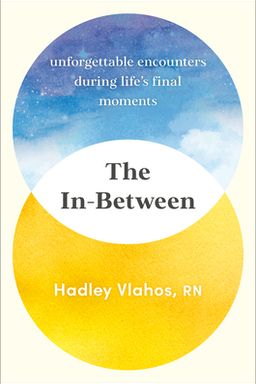
The In-between cover

The In-between

by Hadley Vlahos

A hospice nurse shares some of her most impactful experiences and questions some of society's beliefs around end-of-life care.

Lessons From the In‑Between

What if the moments at the very end of life could teach you how to live the middle better? In The In-Between, hospice nurse Hadley Vlahos argues that there is a distinct, observable space between this life and whatever comes next—a tender, mysterious interval populated by patterns that repeat across culture, creed, and circumstance. Vlahos contends that our medical system overvalues cure and undervalues comfort, yet the end of life consistently offers wisdom, connection, and even peace—if you know what to look for and how to show up.

Across story-rich chapters, you follow patients, families, clinicians, and Vlahos herself as they navigate dying at home, in hospitals, and even under a bridge. You’ll meet Glenda greeting a deceased sister, Carl surging with energy to play hide-and-seek with the child he lost, and Sandra, who times her very last breath to her daughter’s arrival. You’ll watch a best friend scoop beach sand into a bowl so Lily’s feet can touch the shore one final time, and you’ll stand beside a volunteer who sits through the night to ensure no one dies alone. This isn’t sentimentality—it’s a catalog of patterns, practices, and choices at life’s edge that can change how you care, grieve, and live.

What the Book Claims

Vlahos’s core claim is twofold: end-of-life experiences frequently include lucid, calming visitations and recognizable physiological shifts (for example, a “surge” of energy) that defy easy medical explanation; and the role of care should pivot from cure to comfort long before the very last hour. Drawing on hospice practice, she reframes “doing nothing” as actively doing the most important thing—relieving suffering, preserving dignity, and deepening connection. This is not opposed to science; it’s a human-centered application of it (much like Atul Gawande’s Being Mortal argues for aligning treatment with what matters most).

What You’ll Learn Here

You’ll discover the most common patterns families can expect in the final days: end-of-life visitations (Glenda, Frank), timing phenomena (Sandra waits for her daughter), and the energy surge just before decline (Carl). You’ll also see practical, replicable ways to make dying gentler—music, scent, light, touch, and honest words (Norah Jones playing as Sandra rests; lemon candle and soft makeup for Elizabeth; a diffuser and open windows that welcomed the sea air). You’ll learn what happens when systems fail—from pharmacies closed by hurricanes to the Medicaid “cliff” that forces Deja, a stellar nursing assistant, to quit rather than lose insurance for her son.

Why This Matters to You

Even if you’re years from needing hospice, you’re already in the in-between: the long stretch between birth and death where your choices about attention, love, and priorities shape what really counts. Elizabeth’s plea to “eat the cake” dissolves perfectionism and diet rules in favor of presence with people you love. Edith’s Alzheimer’s journey (and the uncanny fire she seemed to anticipate) reminds you to meet people where they are—and to respect that cognition and personhood don’t vanish neatly. Albert, unhoused and dying under a bridge, exposes the moral stakes of how you might help when policy says you can’t.

The book also addresses how caregivers—and you—can survive the work of loving in hard places. Vlahos is transparent about boundaries, burnout, and therapy after a patient’s spouse dies by suicide (Lisa). She learns to choose empathy over self-erasure, to advocate within hospitals that default to machines, and to recognize that grief and meaning-making can co-exist (compare to Susan David’s Emotional Agility and Pauline Boss’s work on ambiguous loss).

How This Summary Is Structured

First, we’ll unpack the hospice shift from cure to comfort and what that demands of you as a loved one. Then we’ll map the recurring, cross-cultural end-of-life patterns Vlahos sees again and again. Next, we’ll get concrete about presence—how to shape environment, conversation, and ritual. We’ll face the caregiver’s invisible load and systemic inequities, without looking away. Finally, we’ll draw out the living lessons—how to “eat the cake,” practice gentle courage, and prepare the paperwork and conversations now.

A guiding insight

“Sometimes doing ‘nothing’ is the most important something.” When you accept that, you free yourself to comfort without apology, love without fixing, and notice the patterns that make the last chapter gentler—for them and for you.

Above all, The In-Between is an invitation: to regard dying as a relational, meaning-rich process; to honor experiences that don’t fit neatly into charts; and to let the end brighten the middle. Whether you’re a clinician, caregiver, or simply someone who loves people, you’ll walk away with language, rituals, and a steadier heart for what’s to come.


Comfort Over Cure

Vlahos’s most radical—and practical—shift is from chasing cure to delivering comfort. In hospitals, she learned to do everything: alarms, compressions, drips. In hospice, she learns when to stop doing and start being—and why that can be the kindest form of action. This shift reorients you from fixing symptoms to relieving suffering, from prolonging life at all costs to prioritizing quality in the time left (echoing the stance in Atul Gawande’s Being Mortal).

Redefining “Doing Something”

When COPD patient Sue gasps for air, Vlahos’s medical brain screams “labs, scans, hospital!” She calls Dr. Kumar, who asks the simplest question: “Is she in pain?” No. “Then remember—she chose hospice. Keep her comfortable.” That guidance reframes the task: comfort can mean a sandwich, a favorite sweater, or a prayer—and not forcing a hospital trip she doesn’t want. For Sue, “doing something” becomes watering plants, folding laundry, and protecting her wish to stay home. Result: her anxiety drops, trust rises, and Vlahos learns that presence is an intervention.

Hospice isn’t neglect. It’s the discipline of matching care to values. Norah Jones on the speaker for Sandra. Lemon-scented candle and makeup for Elizabeth. A bowl of beach sand for Lily’s feet. These are not frills; they’re comfort technologies calibrated to the person, not the disease.

How You Can Practice This

  • Ask the comfort question first: “Are you in pain? Are you afraid? What would feel good right now?”
  • Match care to identity: If your mom loved gardening, bring flowers to arrange; if your grandfather loved hymns, sing softly (or play recordings).
  • Let routine be medicine: Sue’s list—sleep, poop, eat—anchors care. Simple rhythms stabilize bodies and calm minds.

The Courage to Say “Enough”

Comfort care often demands boundary-setting in medical spaces. At the hospital, a doctor insists on keeping dying Adam on monitors because “policy is policy.” Dr. Kumar asks the clarifying question: “If the numbers change, will you intervene?” No. Then remove the wires. This exchange models the language you can use: “If we’re not going to act on it, let’s not do it to him.”

Similarly, when a blood transfusion would buy Frank a few days but at crushing out-of-pocket cost, Cheryl and Frank decide against it. Hospice steps in so time becomes for handholding and conversation, not billing disputes and IV poles. Here, the goal is a good day today, not a speculative day next week.

Why Families Resist—and How to Help

Families often equate “comfort” with “giving up.” Vlahos addresses this by naming the fear and offering alternatives. With Lisa (Reggie’s wife), who asks for “full code,” Vlahos reframes: “What’s a ‘good death’ to you?” Lisa says, “Holding his hand, telling him I love him.” CPR, she explains gently, would likely yank Reggie away to an ER and separate them. That reframe leads Lisa to whisper “Don’t do anything” as Randy Travis plays and Reggie takes his final breath—hand in hand, just as she wanted.

A practical reframe

“Doing nothing” often means you’re doing the right thing—ensuring safety, comfort, and connection instead of procedures the person didn’t want.

Bottom line: If you love someone who is dying, your job isn’t to add time at all costs—it’s to add tenderness to the time remaining. Comfort isn’t passive. It’s precise, brave, and deeply human.


Patterns At Life’s Edge

Across faiths, ages, and diagnoses, Vlahos sees the same end-of-life phenomena repeat. Recognizing these patterns can replace fear with understanding and help you make sense of moments that, at first glance, seem uncanny. The key is to distinguish hallucinations (often distressing, fragmented) from visitations (lucid, calming, relational)—a distinction supported by hospice clinicians and by palliative physician Christopher Kerr’s research on end-of-life dreams and visions.

Visitations: Lucid and Loving

Glenda, a woman with metastatic melanoma, chats with her deceased sister as if she’s in the room. Her daughter calls it “craziness.” Yet Glenda remains oriented to person, place, and time; her vitals are stable; she modulates her story to protect her daughter; and the experience brings joy, not agitation. Later, the chandelier pops at the moment of death—an eerie, but not uncommon, physical echo.

Carl (congestive heart failure) rouses with a flashlight, searching the house for Anna, the toddler daughter who drowned decades earlier. He also reports his mother’s presence. He’s calm, purposeful—and soon after, he slips away. For Frank, who identifies as atheist, a deceased sister’s presence reduces fear without changing his beliefs. Visitations aren’t about theology; they’re about relationship and reassurance.

The Surge: One Last Brightening

Before dying, many experience a burst of energy—sitting up, walking, eating, laughing. Vlahos is stunned when long-bedbound Carl patrols the house with that flashlight. Dr. Kumar names it: “the surge.” It’s bittersweet; families misread it as recovery. Knowing the surge is a common sign of imminent death (often within days) helps you savor the moment without false hope.

Timing: Dying With—or Without—You

People often die on their own timetables. Sandra holds on until her daughter walks through the door; she dies the instant she hears, “I love you.” Others seem to “choose” to go alone, slipping away when the caregiver finally showers. Rather than reading this as rejection or failure, Vlahos encourages you to see it as a kind of authorship at life’s end—one more expression of personality.

Signals in the Body

There are bodily markers too: mottled, cool extremities; changes in breathing (Cheyne–Stokes); and, in rare cases like Edith’s, a rapidly appearing “Kennedy ulcer” signaling multi-organ shutdown. These signs are the body’s way of releasing. When you recognize them, you can focus on comfort—adjust pillows, moisten lips, play music—instead of chasing cures.

How to respond

  • Validate, don’t correct: “Who’s here with you?” rather than “No one’s there.”
  • Use the surge for good: share a small meal, call distant family, take a photo.
  • Accept timing as theirs: Step out guilt-free if needed; return with presence.

If you’ve witnessed any of this, you’re not alone. These patterns aren’t proof of an afterlife in a scientific sense, but they are proof that dying is often relational and purposeful. Let them guide how you show up: curious, calm, and ready.


The Power of Presence

Presence is a skill you can practice. Vlahos shows how simple sensory choices—sound, scent, touch, light—can transform a room into a sanctuary. These micro-rituals are portable across homes, hospitals, and even a beachside condo. They don’t require money; they require attention.

Shape the Senses

With Sandra, music (Norah Jones) and a sea-scented diffuser shift the nervous system out of alarm. With Elizabeth, Deja lights the lemon candle and applies light makeup and lipstick—restoring identity when illness has stripped it away. With Lily, Allison opens the balcony doors to the wind and surf, then nestles Lily’s bare feet into a bowl of beach sand so the promise “one last trip to the beach” becomes real, right there in the living room.

These acts aren’t cosmetic. They cue safety, continuity, and personhood. Research on “total pain” (Cicely Saunders) reminds us that suffering is physical, emotional, social, and spiritual; attending to a favorite song or scent eases dimensions that morphine alone cannot.

Use Words That Land

Vlahos narrates simply: “I’m going to check your bandage now.” She invites love talk: “Tell her what you want her to know.” Maria’s words to Glenda—“You can go be with your sister”—are permission wrapped in love. Will, the volunteer, specializes in quiet witness, letting families sleep while he keeps vigil. When Lisa asks for a sign from Reggie “if there’s an afterlife,” what arrives is their wedding song on the radio at the instant of his last breath. Presence includes noticing serendipity and letting it comfort.

Create Space in Hospitals

Even in chaotic ER hallways (where Babette first lay), you can carve presence. Advocate to move to a private room. Dim lights. Ask to remove nonessential monitors. Use soft touch and a steady voice. Presence is about climate, not just location. Jillian singing “Hallelujah” to Adam in a hospital bed is proof that sacred space is portable.

Your Mini-Checklist

  • Sound: favorite music; read a poem; pray if welcomed; silence with hand on hand.
  • Scent: a candle (if safe), diffuser, or fresh flowers associated with good memories.
  • Light: soften overheads; open a window or door for natural air if the person loved the outdoors.
  • Identity: clothing, hair, or lipstick that helped them feel “like themselves.”

A presence principle

Presence is less about saying the perfect thing and more about holding a stable, loving atmosphere—one the person recognizes as theirs.

If you’re worried you’ll “do it wrong,” start small. Sit. Breathe with them. Name one memory you love. And when you don’t have words, let ritual speak.


Grief, Boundaries, Burnout

Caregiving costs energy—and love doesn’t cancel physics. Vlahos is candid about the toll: understaffed nights, $2/hour on-call stipends, and the weight of witnessing. After Lisa dies by suicide the night Reggie passes, Vlahos spirals with guilt (“I should have known”). Therapy becomes a lifeline. If you care for the dying—or for anyone you love—her lessons on boundaries and emotional hygiene are for you.

Guilt Isn’t Omniscience

Her therapist asks a piercing question: “Do you think you have that power?” If Hadley had sensed risk, she would have acted. Guilt often masquerades as control—“If I replay it enough, I can undo it.” You can’t. You can learn, grieve, and keep showing up. (Compare to Megan Devine’s It’s OK That You’re Not OK.)

Empathy Over Self-Erasure

In the ER, Vlahos admires a nurse who can clock emotions to zero. But in hospice, she learns a more sustainable posture: empathy that connects without drowning. She distinguishes empathy (“with you”) from sympathy that absorbs and exhausts. Holding hands with Frank as she quietly changes blood-soaked gauze, she is steady without abandoning herself. This stance lets you endure relationship, not escape it.

Boundaries Are Love’s Guardrails

Boundaries aren’t selfish; they keep care available. Vlahos challenges a hospital’s “policy” when it adds suffering without benefit. She pushes back on a manager who texts during her mother-in-law’s casket selection. She accepts therapy, rests, and names limits (e.g., initially avoiding brain cancer cases after Babette’s death). Boundaries align with values and keep you capable of presence tomorrow.

Rituals for Your Resilience

  • Name what you can control (your presence) and what you can’t (outcomes, timing).
  • Debrief with a peer, chaplain, or therapist (Steve and Dr. Kumar offer listening and perspective).
  • Use physical anchors—walks, showers, music—to downshift your nervous system.

A boundary reminder

“We’re comforting each other.” When Mary consoles a weeping Hadley after Carl’s death, she punctures the myth that the caregiver must be the strong one at all times.

Your takeaway: You can be tender without being crushed. Say yes to the work of love—and yes to the practices that let you keep loving.


Faith, Doubt, Meaning

Vlahos grows up Episcopalian, certain about Heaven and Hell—until her classmate Taylor dies in a freak football injury. Anger unmoors belief; college distracts. A surprise pregnancy leads her, ashamed and undecided, into a seaside church where the priest sets aside his planned sermon to speak straight to her secret (“You’ll have to give up your sorority…have this baby”). She keeps the baby—Brody—and ultimately becomes a nurse to support them. That arc matters because The In-Between makes space for belief, doubt, and the space between.

Plural Paths to Peace

Elizabeth, a 40-year-old yoga teacher and nonsmoker with lung cancer, never rages “why me?” On Christmas Eve she tells Hadley she regrets all the times she skipped beach days and birthday cake to chase thinness. “Eat the cake,” she urges. That single sentence breaks Hadley’s secret bulimia for good. Elizabeth’s peace doesn’t come from doctrine; it comes from clarity about what matters.

Frank, a self-described atheist, finds reassurance in a deceased sister’s presence without revising his worldview. Hadley keeps her pinky promise to include him in the book as proof: comfort is available without conversion. Meanwhile, ER mentor Theresa rejects God on the grounds of human suffering. Hadley doesn’t argue; she integrates—bad things happen and, also, love and mystery arrive at the bedside. (This integrative posture echoes chaplain Kate Bowler’s writing about living with uncertainty.)

Meaning in the In-Between

Babette, Hadley’s mother-in-law, beats survival expectations with glioblastoma, dances with her son at the wedding to a Green Day song about time and fate, then dies in a hurricane-disrupted hospital after a chain of unlikely events that ensure her youngest son gets to say goodbye. “Everything happens for a reason” isn’t a theorem here; it’s a felt thread in hindsight. Whether you locate that thread in God, grace, or the grain of the universe, the effect is the same: gratitude and relief.

What You Can Do

  • Make room for multiple meanings at once—anger and gratitude, doubt and awe.
  • Let the dying’s lessons (like Elizabeth’s) interrogate your priorities now.
  • Honor end-of-life experiences without policing their theology.

Meaning-making isn’t a quiz to pass. It’s a posture to practice—curious, humble, and open to being changed by the people at the edges of life.


Caregiving’s Hidden Load

No chapter makes the caregiver’s invisible burden clearer than Edith’s. John, her husband, is exhausted from years of Alzheimer’s care—dressing, bathroom help, falls, wandering. Hospice eligibility criteria say Edith is “6E,” borderline—but the reality is crisis: she disappears into a ditch at night; she screams that the bed is on fire. Vlahos’s mentor suggests something simple and brilliant: move the bed. Edith falls asleep instantly. Weeks later, the actual bedroom catches fire. John had slept in the new room ever since. “Edith knew,” he says.

Meeting Them Where They Are

The rule of thumb isn’t to correct reality; it’s to make reality safe. If your loved one insists a long-dead mother is waiting, ask “What would she like you to know?” If the stove must be “checked,” walk over together and “check” it. The goal is not truth enforcement; it’s distress reduction.

The Systemic Crunch

Even when John is ready for placement, the numbers don’t work. A locked memory-care unit runs $8,750–$11,000/month—per person. You basically have to be very rich or very poor to get help; the middle gets squeezed. Social workers can help, but medicine can’t solve a math problem.

Practical Steps for You

  • Safety first: alarms on doors, ID bracelets, neighbors informed; remove trip hazards.
  • Structure days: simple routines lower agitation (meals, walks, music).
  • Pre-plan placement: tour facilities early; learn costs and waitlists; ask a social worker about Medicaid pathways and veteran’s benefits.

Caregiver truth

Loving someone with dementia requires creativity more than correction, and systems navigation as much as bedside care.

Edith’s story invites awe and pragmatism. Respect the mysteries; handle the logistics. And let others help before you break.


Inequity at the End

Dying reveals where a society puts its weight. The book is full of friction points where compassion meets policy. Seeing them helps you advocate better—for loved ones and for change.

Under the Bridge With Al

Albert, 77, has diabetes, a nonhealing foot, and a home beneath a bridge. Hospice meets him there. He jokes with Hadley about her engagement ring even as she changes his dressing on a cardboard sign that reads “Spread Love Not Hate.” The social worker needs a driver’s license and bank statements to submit Medicaid; Al has neither. Policy says “no food”; Chris quietly stocks Hadley’s car with crackers and fruit cups anyway. When Al reports a visit from his deceased mother, Hadley checks the morphine—the level hasn’t moved. He dies surrounded by campmates holding hands and praying, dignity carried by community.

The Medicaid Cliff

Deja, a brilliant nursing aide and single mom, is promoted with a raise. But the raise means losing Medicaid that pays for her son’s scoliosis care; the employer plan would cost $900/month she doesn’t have. She quits. When helpers can’t afford to help, patients lose. This is a policy failure, not a character flaw.

Storms and Shortages

Hurricane Michael shutters pharmacies; Babette’s comfort meds are in the wrong fridge hours away. The local hospital is overrun; EMS is pulled off roads. Vlahos’s rule becomes yours: in disasters, assume delays and have backups (meds, contacts, copies of DNRs, a go-bag).

What You Can Do

  • Advocate early for palliative consults; ask about hospice when treatments shift from curative to burdensome.
  • Call your insurer/social worker about medication access and disaster plans; stock essentials.
  • Support policies that smooth benefits cliffs and expand home- and community-based services.

A moral throughline

End-of-life care is a mirror. If you don’t like the reflection, choose advocacy—local, clinical, and political.

Vlahos never scolds; she shows. And once you’ve seen, you can’t unsee. Compassion needs structures that let it work.


What Dying Teaches Living

Every story is a lesson plan for the middle of your life. You don’t have to wait for a diagnosis to practice them.

Reorder Your Priorities

Elizabeth’s “eat the cake” isn’t just about dessert. It’s a manifesto against perfectionism that starves connection. After hearing it, Hadley stops bingeing and purging for good and says yes to cheesecake with her future in-laws—choosing belonging over control. Ask yourself: What “cake” am I refusing today that would make me more myself with my people?

Speak the Love Now

Maria apologizes to Glenda. Jillian sings to Adam. Lisa holds Reggie’s hand and asks for a sign. Don’t wait for perfect words or a calm room. Practice short, specific love: “You taught me how to…” “I’ll carry this forward by…”

Plan Like You Love Them

Have the paperwork. Frank’s DNR spared pointless alarms. Keep copies in the house and on your phone; make a disaster kit; choose health proxies. Planning is an act of tenderness, not pessimism (see also Katy Butler’s work on end-of-life planning).

Build Your Circle

Allison proves that friendship is a verb—driving, carrying, opening doors to the sea. Will proves that strangers can become guardians. List your people—and be someone’s Allison or Will when the text comes.

Let Meaning Be Mixed

You don’t have to choose between science and wonder. You can trust morphine and also trust the presence that walked Hadley to and from Al’s tent. Allow for both. The in-between is big enough.

A living practice

Ask, once a week: “If this were my last spring, what would I savor, say, or stop?” Then do one small thing.

If you integrate even one of these lessons—cake, love, planning, people, meaning—you’ll be more ready for the end and more alive in the middle.

Dig Deeper

Get personalized prompts to apply these lessons to your life and deepen your understanding.

Go Deeper

Get the Full Experience

Download Insight Books for AI-powered reflections, quizzes, and more.