
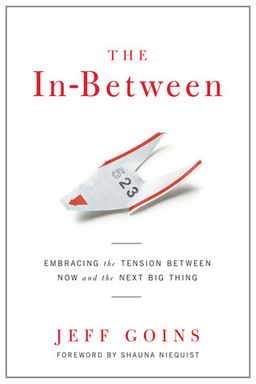
The In-Between cover

The In-Between

by Jeff Goins

The In-Between by Jeff Goins invites readers to savor life''s quiet, ordinary moments, revealing their profound impact on our identities. Through personal stories, Goins encourages letting go of control, embracing presence, and nurturing gratitude-a transformative approach to finding meaning beyond the next big thing.

Embracing Life in the In-Between

When was the last time you found yourself waiting—between jobs, passions, or relationships—and quietly wondered if the pause meant you were stuck? In The In-Between, Jeff Goins invites you to see that those waiting spaces are not detours but the actual road to who you are meant to become. He argues that life’s most transformative moments often happen when we're in transition—between the thing we just left and the thing we're desperately pursuing. Rather than rushing to the next achievement, Goins contends that learning to embrace these pauses is how we discover our truest calling.

Goins shares his own story—a musician who spent years chasing the wrong dream until discovering that his true passion wasn’t performing but writing. He went from playing guitar with fleeting enthusiasm to waking up early to write for the pure love of the craft. His journey models what he believes we all experience: a sacred tension between striving and surrendering, where our purpose patiently waits for us to notice it.

Learning to Slow Down

Goins challenges us to value the spaces we want to skip—the inconvenience of waiting, the uncertain middle. He argues that we live in a culture obsessed with productivity and instant results, where waiting feels wasteful. But what if the waiting itself is sacred time for transformation? The in-between teaches patience, reflection, and identity. This theme echoes spiritual thinkers like Henri Nouwen and Oswald Chambers, who describe waiting as an act of faith, not inactivity.

The Quiet Discovery of Calling

The book’s heart beats around the idea of “calling.” Goins’ narrative—shifting from rock star dreams to becoming a writer—illustrates that our true vocation often hides in familiar places we’ve overlooked. In his story, writing was always present, shadowing music like a quiet companion. Through stories of guitar practice, blogging, and his dialogue with friends, Goins shows that calling isn’t found by sheer ambition but by awakening to what has always been quietly calling you.

From Practice to Purpose

Throughout his reflections, Goins learns that mastery comes not from talent but from faithful practice. His friend Shane, a gifted guitarist, taught him that loving the craft means practicing even when it hurts. That lesson translates beyond music: finding your life’s work is about devotion, not just success. The hard work you put into something—especially when no one’s watching—reveals whether you’re connected to your calling.

Faith and Obedience in Creative Work

Goins ultimately frames vocation as an act of obedience to something larger than yourself. “God never promised success,” Shane tells him, “just the calling to do it well.” That theological core shapes the book’s message: our calling originates beyond ambition—it comes from divine prompting. Whether or not the world recognizes your work, doing what you’re made to do brings meaning. Discovering calling is less about arriving and more about surrendering to the work set before you.

Why This Matters

Goins urges readers to reconsider the waiting seasons of their lives not as obstacles but invitations. When you slow down and listen—to the subtle resonance of things you love, the repeated patterns in your interests—your calling begins to surface. Seen this way, waiting becomes formative, crafting the person capable of living the calling. The in-between is not empty space; it’s preparation disguised as delay. Through this lens, The In-Between becomes both a meditation and a practical guide for anyone navigating uncertainty. By embracing these transitions, you uncover the work and identity that have been quietly waiting for you all along.


Calling Is Remembering, Not Discovering

Goins proposes that finding your calling isn't about inventing something new—it’s about remembering what has always been within you. He realizes that writing had been a recurring thread throughout his life, whether through song lyrics, journals, or short stories. This discovery happens not through grand revelation, but through connecting the dots of past experiences and realizing that the clues were there all along.

The Power of Retrospection

Goins recounts how his pursuit of music turned out to be a shadow career—a stepping stone that pointed toward his true vocation. As he traveled and wrote about his band’s adventures, he unknowingly practiced his craft. His later blog posts and storytelling assignments revealed the voice he already possessed. In reflecting on these experiences, Goins discovered that remembering one’s calling is often more accurate than chasing abstract dreams.

Dreaming vs. Remembering

Modern culture tells you to dream big, to find an extraordinary purpose. Goins flips this idea by saying calling isn’t something distant you must chase—it’s something familiar you must recover. His failed pursuit of becoming a rock star wasn’t wasted; it was preparation. Similarly, the waiting seasons in your life are connective tissue between what was and what will be. Each minor passion and curiosity contains echoes of what truly calls you.

Obedience Over Ambition

Ultimately, Goins defines calling as patient obedience. When he finally admitted “I am a writer,” he wasn’t chasing fame—he was acknowledging truth. Dreams may excite you, but remembering grounds you. Your life’s work unfolds when you stop striving to be someone else and honor who you’ve already been becoming all along.


Shadow Careers and The Long Apprenticeship

Drawing on Steven Pressfield’s concept of “shadow careers” (from Turning Pro), Goins recognizes that we often pursue adjacent callings—things that look close to what we’re meant to do, but aren’t quite it. His years as a musician reflect this: creative, rewarding, but ultimately incomplete. Shadow careers serve a purpose—they prepare you, they train your muscles for the real work, even if you don’t see it yet.

Preparation Hidden in Detours

Goins’ detours—music gigs, blogging for nonprofits, managing teams—taught him writing, leadership, and discipline. These were apprenticeships disguised as distractions. He learned that every shadow job refines your craft, and the mundane work that feels irrelevant might be quietly shaping the person you need to become for your calling.

The Role of Apprenticeship

Goins praises the value of apprenticeship over quick success. He spent years learning to write by faking competence—until discipline blossomed into mastery. Like Pressfield’s insistence that “turning pro” means committing to your craft, Goins recognizes apprenticeship as sacred waiting. This is when calling matures from wish to work.

Transformation Through Practice

In each shadow phase, Goins discovered what mattered: the act of showing up. You might work in places far from your ideal dream, but those periods are classrooms for becoming who you are meant to be. The in-between acts as apprenticeship, equipping you quietly for your next chapter.


The Discipline of Creative Obedience

For Goins, creativity isn’t driven by inspiration—it’s a matter of obedience. Each morning he wakes at five to write, not because he feels like it, but because he’s compelled to. This mirrors his friend Shane’s relentless guitar practice. The discipline honors the calling itself, not the potential accolades. That devotion transforms creative labor into worshipful practice.

Calling Without Guarantees

Shane’s statement—“God never promised me success at guitar. He just called me to do it well”—captures this principle. You don’t pursue your purpose for fame or validation but because it’s something you can’t not do. Goins realizes this applies to writing: failure or mediocrity shouldn’t stop you if the work feels inevitable and right.

Practice as Devotion

Daily practice becomes spiritual work. Writing without expectation of publication allowed Goins to rediscover joy. It wasn’t self-promotion but sacred labor. The act of doing the work well—even unseen—refines character and faith. This echoes Pressfield’s notion that resistance is overcome when you commit fully, regardless of outcome.

Becoming Who You Are Through Process

Obedience shapes identity. You don’t wait until you’re successful to call yourself an artist, writer, or leader—you claim the title by doing the work faithfully. In performing small acts of obedience daily, your calling ceases to be an idea and becomes a lifestyle.


The Spiritual Dimension of Calling

Goins situates calling within a theological framework: it’s not self-generated but divinely initiated. He cites Oswald Chambers, who says true calling is mysterious—if you can define exactly how it came, it probably wasn’t a real calling. For Goins, vocation is a conversation between you and God, unfolding slowly across life’s waiting seasons.

Divine Prompting in the Ordinary

Goins doesn’t hear a dramatic voice from the heavens. Instead, his calling emerges through ordinary moments—writing reports for work, blogging for fun, reading books that resonate in his soul. Faith appears in the subtle alignments of passion and opportunity. The divine speaks through daily obedience, not grand gestures.

Calling as Relationship

Rather than treating calling as a solo quest, Goins sees it as relational: a dialogue between creator and creation. We are invited, not commanded, to step into what’s been prepared for us. This perspective brings gentleness to vocation—it’s not pressure to perform, but opportunity to collaborate with something sacred.

Faithful Waiting

Faith becomes the engine of the in-between. Waiting isn’t passive; it’s trusting that the next step will make sense later. You can rest in knowing that formation is happening now, even if clarity hasn’t yet arrived.


Turning Passion Into Practice

Passion alone doesn’t lead to fulfillment; practice does. Goins illustrates how his love for writing turned into a disciplined vocation through daily action. Like learning guitar, writing well requires repetition, patience, and persistence. Talent may spark curiosity, but practice sustains calling.

Process Over Perfection

Goins’ early frustration with slow progress on guitar mirrored his later challenges with writing. The lesson his father taught—don’t jump too far ahead, move slowly down the neck—became a metaphor for growth. Every skill, creative or spiritual, matures incrementally. The in-between is where proficiency and humility intertwine.

Joy in the Doing

For Goins, writing brought him pleasure even before anyone noticed. This pure satisfaction in the process validated his calling more than external success. The moment you start loving the act—not the applause—is when your vocation fully awakens.

Respecting the Craft

His conversations with Shane remind us that doing your craft well honors something sacred. Whether it’s sculpting, coding, teaching, or parenting, excellence reflects gratitude for the gift itself. To practice passionately is to live faithfully.


Becoming Versus Finding

Goins concludes that you don’t find your calling—you become it. Through consistent practice and honest reflection, your vocation transforms from potential into reality. The in-between offers space for becoming—where experiences shape you into someone capable of living that calling.

Transformation Over Destination

Goins’ realization that every stop on his journey—music, writing, leadership—had purpose reframes success as growth. It’s not about checking goals off a list but evolving into the person ready for the work. You can’t skip the middle; it’s where character forms.

Integration of Past and Present

Looking back, Goins sees his musical years weren’t wasted—they were essential preparation. Becoming isn’t discarding former paths but integrating them. Each failure, delay, and diversion becomes material for your identity, weaving disparate experiences into coherence.

Living the Calling Daily

For Goins, writing daily isn’t about arrival but continual becoming. You live into your calling by repeating faithful actions—showing up when inspiration fades, practicing when progress stalls. The in-between is where becoming happens. When you honor that, your calling stops being something distant—it becomes you.

Dig Deeper

Get personalized prompts to apply these lessons to your life and deepen your understanding.

Go Deeper

Get the Full Experience

Download Insight Books for AI-powered reflections, quizzes, and more.