
Idea 1
Becoming an Imperfectionist in Uncertain Times
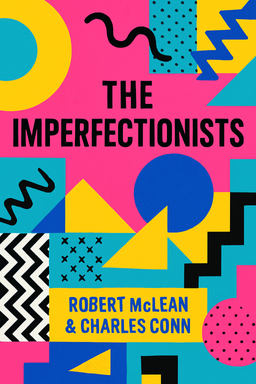
How do you make confident decisions when the future feels impossible to predict? In Strategic Mindsets for Uncertain Times, Robert McLean and Charles Conn argue that the key to thriving in chaos is not to chase certainty, but to embrace imperfection. They introduce the concept of the imperfectionist—someone who acts decisively without needing perfect information, who learns through experimentation, and who continuously adapts in an ever-shifting world.
At its heart, the book suggests that most traditional strategy is fantasy. You cannot plan with precision when technologies, markets, and global systems evolve faster than your five-year forecast. Instead, McLean and Conn call for a new way of strategic thinking, grounded in humility, curiosity, data-driven experimentation, and courage. They blend insights from philosophy, behavioral science, and decades of advising organizations—from Amazon to Patagonia—to explain how leaders can master uncertainty rather than fear it.
The World Has Changed—But Our Thinking Hasn't
The authors open with a sobering truth: uncertainty has exploded. Unlike the slow, predictable changes of the pre-industrial age, today's challenges—from artificial intelligence to pandemics—unfold at dizzying speeds. They cite staggering data: more new knowledge has been created since 2010 than in all prior human history. The lifespan of companies in the S&P 500 has plummeted from 61 years in 1958 to just 18 today. In this environment, traditional strategic planning, with its base-case forecasts and static assumptions, is doomed to fail.
And yet, many organizations still cling to outdated models—either making reckless, overconfident leaps (think Bank of America’s disastrous acquisition of Countrywide Financial) or freezing in risk-averse paralysis (like Blockbuster’s fatal failure to respond to Netflix). Imperfectionism, McLean and Conn argue, rejects both extremes. The sweet spot lies between betting the farm and doing nothing: the space where you experiment intelligently.
The Six Mindsets That Power Imperfectionism
The authors unveil six interconnected mindsets—curiosity, dragonfly eye, occurrent behavior, collective intelligence, imperfectionism itself, and show and tell—as the essential tools for navigating volatility. Each mindset reframes how you approach risk and uncertainty:
- Ever Curious: Ask bold questions that challenge assumptions, like Edwin Land wondering if instant photography was possible after his daughter asked to “see the picture now.”
- Dragonfly Eye: See problems through multiple lenses, combining different perspectives to find hidden opportunities, as Amazon did when widening its view to cloud computing.
- Occurrent Behavior: Experiment relentlessly and rely on real-time data, not outdated reports or unreliable expert opinions.
- Collective Intelligence: Tap into the wisdom of crowds and machines instead of relying solely on in-house expertise.
- Imperfectionism: Make strategic small moves, tolerate ambiguity, and evolve through trial and error instead of waiting for complete certainty.
- Show and Tell: Use storytelling and demonstrations—with evidence, visuals, and emotion—to drive action and convince others of change.
Together, these mindsets form a powerful operating system for uncertain times. They teach you to experiment like a scientist, think like a systems designer, and communicate like a great storyteller—a potent combination for any modern leader.
Why This Matters to You
You can’t predict the future—but you can prepare your thinking for it. Whether you’re a CEO facing technological disruption, a teacher navigating hybrid learning, or a nonprofit leader tackling social crises, imperfectionism invites you to exchange fear for curiosity. McLean and Conn call it “strategy in action”: not planning from the armchair, but testing, learning, and building resilience step by step.
Ultimately, Strategic Mindsets for Uncertain Times is both a toolkit and a mindset shift. It’s about seeing uncertainty as an opportunity for creativity instead of chaos. By blending data with humility, experimentation with empathy, and storytelling with strategy, imperfectionists don’t just survive disruption—they harness it.