
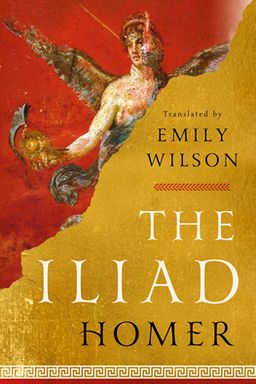
The Iliad cover

The Iliad

by Homer

The Iliad is a timeless epic that brings to life the dramatic final days of the Trojan War. Through the legendary hero Achilles, Homer explores themes of honor, fate, and divine intervention, creating a masterpiece that continues to inspire and captivate readers with its vivid portrayal of ancient heroism and the complexities of human emotion.

Honor, Wrath, and the Architecture of War

Why does the Trojan War begin not with armies but with rage? In Homer’s Iliad, the epic’s beating heart is Achilles’ wrath—a personal affront that grows into a public calamity. A quarrel over honor and authority between Achilles and Agamemnon spreads through the Greek camp, calls down divine intervention, and reshapes the entire arc of the war. You learn that Homer’s story is not just about battle—it is about how private emotion, social values, and divine will intersect to define civilization itself.

Human Conflict as Strategic Catalyst

The quarrel begins with the priest Chryses, who petitions for his daughter’s release. Agamemnon’s insult triggers Apollo’s plague, a visible link between impiety and public health. When Achilles calls a council and the seer Calchas exposes the cause, Agamemnon retaliates by seizing Achilles’ captive Briseis. That act of humiliation transforms a moral dispute into a military crisis: Achilles withdraws, depriving Greece of its greatest fighter. In Homeric logic, a single emotional rupture can immobilize an entire coalition—a timeless leadership lesson about pride, authority, and decision-making.

Divine Politics Above Human Affairs

When Achilles appeals to his mother, Thetis, she carries his grievance to Zeus. Her plea for vengeance becomes cosmic policy: Zeus agrees to punish the Greeks until they honor Achilles. You watch how the divine order mirrors the mortal one—Juno and Athena lobby one side, Venus and Apollo the other, and Zeus moderates their rivalries. The gods act as a parliament of competing agendas, shaping mortal wars in ways that reveal their own hierarchies. (Note: Homer’s divine world anticipates complex political realism—you might recall Machiavelli’s idea that power is always negotiated, never absolute.)

Society and Identity: From Catalogue to Civic Map

Book II’s catalogue of ships may look like logistics, but it is also anthropology. By naming each leader and region—Ajax of Salamis, Idomeneus of Crete, Menestheus of Athens—Homer defines the social architecture of war. You meet Greece not as a unified empire but as a federation bound by honor and reputation. Reputation (kleos), civic pride, and regional allegiance fuse into a living network of accountability. When Achilles withdraws, his absence is quantified—the missing Myrmidons are counted—and that numerical gap becomes a narrative motif for what happens when pride erases cooperation.

Heroism, Fate, and Human Choice

You encounter two primary models of heroism: Achilles’ search for immortal glory and Hector’s devotion to duty and family. Achilles weighs two futures—short life with fame or long life without legacy—while Hector faces death to defend Troy despite his family’s pleas. Homer makes clear that heroism is not solely triumph; it is the tragic negotiation between public obligation and private affection. Both men act under fate, yet their decisions give moral texture to destiny. (Compare this to Shakespeare’s tragic heroes: ambition colliding with moral limits produces the same timeless structure.)

Divine Intervention and Cosmic Limits

Throughout the epic the gods interfere—through dreams, disguises, seductions, and battles—but always within boundaries Zeus imposes. Juno’s seduction of Zeus through Sleep and Venus’ girdle buys Neptune time to aid the Greeks, showing how persuasion and intimacy serve as instruments of strategy. Zeus weighs fates on golden scales, asserting a cosmic hierarchy where even gods must obey order. The divine element transforms war into a theater of moral and metaphysical accountability.

Engineering, Strategy, and Tactical Adaptation

Under Nestor’s advice, the Greeks construct fortifications—a wall, trench, and palisade—to defend their ships. Hector’s Trojans adapt with flexible tactics, abandoning chariots and attacking on foot. These episodes teach logistics as leadership: engineering work builds morale but divine and interpretive omens still guide decisions. Homer integrates physical and symbolic architecture—the wall functions both as barrier and emblem of collective labor under divine scrutiny.

Cunning and Night Operations

In contrast to daylight heroism, Book X’s night raid by Diomedes and Ulysses shows that cleverness is part of valor. Their stealth mission, killing Dolon and Rhesus and seizing horses, reveals war’s moral gray zones. You see the epic validate both open courage and strategic cunning—an early recognition that intelligence can be as decisive as strength. (Note: This duality foreshadows the contrast between Odysseus’ cleverness and Achilles’ passion later in Greek tradition.)

Patroclus, Death, and Transformation

Patroclus’ death shifts the entire balance. His borrowing of Achilles’ armor to save the ships leads to overreach, divine interference, and fatal defeat by Hector. His death releases Achilles’ fury and returns him to battle—private friendship becomes public vengeance. Homer constructs this chain to show how emotional loyalty converts into geopolitical consequence: one man’s fall reshapes divine and human destinies alike.

Shield, Funeral, and Moral Resolution

The forging of Achilles’ shield by Vulcan and Thetis and its depiction of cities, stars, and daily life reconnect violence to the wider cosmos. Achilles’ reconciliation with Agamemnon restores political order and divine armor frames human existence. When Patroclus’ funeral and games follow, Homer uses ritual to turn grief into civic harmony—the pyre, sacrifices, and competitions redistribute honor and reforge community. Finally, Hector’s death and Priam’s ransom close the circle: pity and ritual overcome wrath, reasserting human dignity within the frame of fate.

Core takeaway

You finish the Iliad not with triumph but with reconciliation. Homer teaches that anger and grief must find ritual and political expression, that divine and human orders coexist in tension, and that leadership—whether mortal or divine—fails when pride eclipses common purpose.


Divine Strategy and Mortal Agency

Homer’s gods are not omniscient abstractions—they are political actors. Zeus rules with selective restraint, while Juno, Athena, Apollo, and Neptune act as diplomats and tacticians. You watch divine rivalry play out like a cosmic negotiation. Juno seduces Zeus to grant Neptune freedom to help the Greeks; Apollo rescues and equips Hector; Sleep and Hypnos interface between moral persuasion and deceit. This repeated pattern of divine interference reflects Homer’s vision of governance—a hierarchy regulated by oaths, persuasion, and compromise.

Omens, Oaths, and Cosmic Rules

Each divine act carries moral consequences. Sleep’s oath on the Styx affirms that divine commitments are enforceable contracts. When Zeus hangs the golden scales, fate becomes visible: Hector’s doom weighs heavier, legitimizing his death. You learn how omens translate divine intention into action—Priam’s eagle guarantees safe passage, Achilles’ talking horses foretell death, and dream visions spark battle shifts. These signs anchor cosmic law in narrative ritual.

Mortal Responsibility Within Constraints

Despite divine influence, humans remain accountable. Achilles chooses how to treat Hector’s corpse; Priam chooses to risk his life to ransom it. The interplay between fate and choice underscores Homer’s moral realism: destiny may set limits, but within those limits, deliberation defines virtue. Heroes act freely enough to shape memory, and their decisions echo civic order long after death.

Key lesson

Divine politics doesn’t excuse human failure—it magnifies it. The gods manipulate outcomes, but Homer insists humans still bear moral responsibility within the architecture of fate.


Leadership, Oratory, and Collective Decision

War depends as much on words as on weapons. Homer gives you the assemblies and embassies of leaders—Agamemnon’s command, Nestor’s wisdom, Ulysses’ strategic rhetoric—to show how persuasion structures action. You hear councils where speeches decide operations, morale, and unity. Each leader embodies a communication style: authority (Agamemnon), memory (Nestor), intelligence (Ulysses). Their interplay reflects Homer’s understanding of political management under stress.

The Embassy to Achilles

When Agamemnon sends Phoenix, Ajax, and Ulysses to persuade Achilles to return, the speeches fuse gift-offering with moral appeal. Achilles refuses, articulating his dilemma between glory and life. His defiance becomes a treatise on autonomy—the refusal to reduce honor to material exchange. By watching this scene, you see why deep-seated identity cannot be negotiated by diplomacy alone. (Note: it anticipates modern theories of motivation—values over incentives.)

Collective Deliberation and Counsel

When the Greek army builds walls or plans battle formations, collective speech directs labor. Counsel becomes logistics; advice becomes policy. Homer’s councils show that rhetoric embedded with precedent and empathy enables cohesion. Nestor’s long speeches cite history to anchor moral authority; Ulysses rebukes dissenters like Thersites to protect discipline. Leadership hinges on balancing persuasion with credibility.

Practical takeaway

Effective command relies on rhetorical solidarity—leaders must translate authority into shared meaning before armies obey.


Warcraft, Engineering, and Strategy

You can study Homer’s battle sequences as an ancient manual of military organization. The Greeks’ construction of fortifications and the Trojans’ adaptive assaults deliver insights into teamwork, resource allocation, and tactical innovation. Nestor masterminds building defenses; Hector leads flexible counterattacks. Each project turns strategy into social order—labor and logistics as extensions of morality.

Engineering as Collective Symbol

When Greeks build their wall and trench, you watch organization materialize under divine surveillance. Gods like Neptune and Zeus watch the progress, proving that even practical acts fit within cosmic orchestration. The wall grants temporary safety but also marks the Greeks’ dependence on structure—without cooperation, no defense stands.

Adaptive Tactics

Hector shifts from chariot to foot combat when terrain limits movement—a model of flexibility that anticipates modern strategic thinking. Trojans heed omens before attacking, blending psychological and practical intelligence. Homer portrays success not as brute dominance but as improvisation guided by observation and belief.

Cunning and Risk

Diomedes and Ulysses’ night raid introduces espionage. Through stealth and surprise, they gather intelligence, kill Rhesus, and secure victory. Homer treats cunning as moral neutrality—a necessary art of survival. War, he suggests, is a spectrum from honorable duel to covert efficiency.

Insight

In Homer’s world, strategic intelligence equals courage; adaptability defines victory.


Grief, Ritual, and Civic Renewal

After Patroclus’ death, Achilles’ mourning becomes Homer’s lesson in how societies process trauma. The pyre, sacrifices, and funeral games serve to rechannel grief into social order. Achilles sacrifices animals and captives, invoking Winds and gods as co-participants. You see ritual as therapy and politics—the structured conversion of chaos into meaning.

Funeral Games and Redistribution of Honor

The athletic contests—chariot race, boxing, wrestling, archery—reaffirm community values and rank. Competitions renew moral vitality: strength and fairness replace lament. Prizes restore balance among leaders, and divine favor punctuates results. (Note: this sequence shows how Greek culture bound war with sport and ceremony—victory disciplines violence.)

From Fury to Forgiveness

Priam’s journey to Achilles underscores ritual’s power: an aged enemy kneels before his son’s killer, invoking shared humanity. Achilles’ pity transforms personal rage into political mercy. Hospitality emerges as redemption. This ending converts revenge into reconciliation and re-establishes civic order through compassion.

Moral insight

Ritual doesn’t erase violence—it reinterprets it as social continuity. Homer closes by teaching how grief can rebuild legitimacy.

Dig Deeper

Get personalized prompts to apply these lessons to your life and deepen your understanding.

Go Deeper

Get the Full Experience

Download Insight Books for AI-powered reflections, quizzes, and more.