
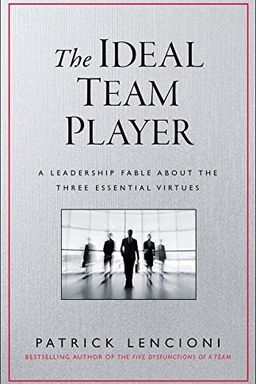
The Ideal Team Player cover

The Ideal Team Player

by Patrick Lencioni

The Ideal Team Player reveals the three virtues essential to effective teamwork: hunger, social smarts, and humility. Learn how to identify and cultivate these traits to build a cohesive, high-performing team that drives success in today''s competitive business landscape.

The Power of Being Humble, Hungry, and Smart

What makes someone truly indispensable on a team? Is it technical genius, charisma, or sheer hard work? Patrick Lencioni’s The Ideal Team Player answers with surprising simplicity—none of those alone are enough. He argues that the most consistently effective and inspiring team members share three essential virtues: humility, hunger, and people smarts. These traits together create what he calls an ideal team player, someone who elevates both the team’s performance and its morale.

Lencioni builds this argument through a leadership fable centered around Valley Builders (VB), a family-run construction firm in Napa Valley. When Jeff Shanley unexpectedly takes over the company from his ailing uncle Bob, he inherits two major construction projects, a messy culture, and a looming crisis. Through Jeff’s journey to save the business, Lencioni weaves practical lessons about identifying and cultivating team players who embody humility, hunger, and smarts—and how their absence can lead to dysfunction and decline.

The Core Argument: Teamwork Starts With Character

Teamwork, Lencioni insists, isn't just about collaboration techniques or motivational posters—it’s about character. If you’ve ever wondered why some groups thrive while others implode despite having talented people, this book provides the answer. Technical competence is essential, but when ego, apathy, or poor social awareness creep in, even brilliant individuals undermine team cohesion. The ideal team player model cuts through these issues by defining what real collaboration looks like on the inside: a humble mindset, a burning drive, and strong interpersonal intelligence.

Humility means recognizing that no role is beneath you and no success is yours alone. Hunger embodies the drive to take initiative and go beyond what’s required. Smart doesn’t refer to IQ but to emotional and social intelligence—the ability to navigate people with respect and empathy. A person who balances these three virtues fuels trust, healthy conflict, accountability, and results (Lencioni’s earlier model from The Five Dysfunctions of a Team).

The Narrative That Makes It Real

To make these ideas tangible, Lencioni embeds them in Jeff’s leadership story. Jeff inherits Valley Builders just as his uncle Bob faces a heart surgery—and a company with cultural cracks. Two ambitious projects jeopardize VB’s stability, and Jeff realizes that the company’s biggest problem isn’t systems or strategy—it’s people. The workforce is full of strong personalities who don’t play well together, and the leadership team lacks clarity on what makes someone a “team player.” Through humor, tension, and real work crises, Jeff leads Clare and Bobby—his pragmatic executives—to discover the power of these three qualities.

Their process unfolds step by step: analyzing failed hires, conducting candid interviews, and even re-evaluating long-time employees. The turning point comes when they sketch three overlapping circles labeled humble, hungry, and smart. As they test real names against the model, clarity emerges. Employees who were arrogant, lazy, or insensitive all lacked one of those virtues. “The magic,” Clare realizes, “is that if even one of these qualities is missing in a big way, you’ve got yourself a jackass.”

Why It Matters to You

You’ve likely worked with someone brilliant but intolerable, or personable but unreliable. Those experiences sap energy and erode trust. Lencioni’s framework gives you language and structure to diagnose and prevent such dysfunction. Whether you’re hiring, managing, or collaborating, the model provides a litmus test: Does this person demonstrate humility (low ego), hunger (drive), and people smarts (emotional awareness)? If not, issues will surface in accountability, engagement, and results.

Ultimately, The Ideal Team Player matters because it reframes teamwork from a set of skills into a moral endeavor. It suggests that being a great teammate isn't something you merely learn—it's something you become. In a world obsessed with technical achievement, Lencioni’s call to nurture these virtues is both countercultural and profoundly practical. As he writes elsewhere, “teamwork is not a virtue—it’s a choice.” And that choice starts with choosing humility, hunger, and smart human connection.


Humility: The Heart of Collaboration

Humility is Lencioni’s first and most indispensable virtue. In the Valley Builders story, humility shows up as a quiet power—the ability to respect everyone, from clients to laborers, without ego or status games. Uncle Bob personifies this trait; he listens to wealthy customers with patience and shows the same warmth to construction crews. His approach transforms the workplace culture into one where no one is above another. When Bob steps down, Jeff and his team realize that humility is what held VB together all these years.

Two Faces of False Humility

Lencioni distinguishes between two kinds of people who lack humility. The first is the overtly arrogant individual—the classic glory-seeker who thinks rules don’t apply to them. These people dominate conversations, dismiss others’ input, and crave attention. The second is subtler: those with false humility. They act self-deprecating but secretly crave approval or avoid responsibility under the guise of modesty. True humility, Lencioni says, is not about thinking less of yourself but thinking of yourself less (echoing C.S. Lewis’s definition).

The Cultural Ripple Effect

At Valley Builders, arrogance had a poisonous ripple effect. When team members stayed despite being “jackasses,” non-jackasses began leaving. The humble workers couldn’t bear the ego politics. Jeff learns that keeping one toxic high performer who lacks humility costs the team dearly. As he tells Bobby and Clare, “keeping jackasses is a bad idea—the non-jackasses start to leave.” This insight reshapes VB’s approach to hiring, aligning everyone around a new unofficial motto: “No jackasses allowed.”

How You Can Apply It

For you, humility means learning to spotlight others rather than yourself, listening before speaking, and owning mistakes openly. In hiring, you can gauge humility by noting how candidates describe achievements—do they emphasize “we” or “I”? In leadership, humility creates safety for honest feedback and vulnerability (similar to Brené Brown’s ideas in Dare to Lead). Lencioni’s message is simple yet transformational: without humility, trust can’t form—and without trust, teamwork collapses.

Key takeaway

Real humility isn’t about self-effacement—it’s about embracing equality. It’s the foundation that lets every other team virtue thrive.


Hunger: The Engine That Drives Teams

The second virtue, hunger, is Lencioni’s word for work ethic, passion, and self-motivation. In his fable, Bobby describes “Tommy Burleson,” a talented but indifferent employee who did only what was required—never less, never more. Tommy wasn’t lazy, but he lacked hunger. He was a “lovable slacker”—pleasant to work with but incapable of pushing projects forward. Jeff’s team learns that polite complacency can be just as deadly as arrogance.

Healthy Hunger vs. Toxic Ambition

Hunger manifests in two forms: healthy and unhealthy. Healthy hunger means taking initiative and owning results while respecting others. Toxic ambition, however, prioritizes personal gain over team success—the hallmark of “skillful politicians” like Ted Marchbanks. Ted was competent and driven but self-interested, manipulating relationships for advancement. He lacked humility, making his hunger corrosive. Lencioni warns that when hunger isn’t balanced by humility and people smarts, it turns destructive.

Developing Hunger on Your Team

Jeff and Clare learn that you can’t easily manufacture hunger—it comes from pride in the mission. Workers who understand how their tasks serve a larger purpose tend to work harder willingly. The leader’s role is to connect effort to meaning. When Jeff explained to Nancy how her project management affected people’s safety and jobs, he revived her motivation and interaction. Hunger, Lencioni notes, thrives when employees feel their contributions matter and managers model enthusiasm.

Why It Matters for You

If you lead others, hunger is contagious. Show visible commitment, take on difficult tasks, and celebrate grit, not just results. If you’re part of a team, maintain your personal drive regardless of recognition. As Lencioni advises, “Hungry people rarely have to be pushed to work harder—they push themselves.” Hunger creates momentum; it fuels deadlines, problem-solving, and responsibility, preventing the complacency that quietly kills performance.

Key takeaway

Channel hunger toward the team’s mission, not personal ambition. A hungry employee without humility becomes a politician; with humility, they become a powerhouse.


People Smarts: The Glue of Team Dynamics

The third virtue, being smart, refers not to intellect but to emotional and interpersonal intelligence—what Lencioni calls “common sense about people.” Smart teammates read a room intuitively. They sense tension, know when to speak or stay silent, and communicate with tact. In VB, the character Nancy Morris lacked this trait; she was hard-working and humble but socially tone-deaf, frustrating colleagues with blunt words and cold interactions. Jeff called her an “accidental mess-maker” because her intentions were good, but her delivery repeatedly caused chaos.

People Smart vs. Manipulative Charm

Lencioni contrasts genuine people smarts with manipulative charm. Ted Marchbanks, the polished executive, appeared socially smooth but used flattery for self-promotion. Jeff’s instinct catches the difference: Ted was smart about people in a strategic way, not an empathetic one. True smarts unite warmth with sincerity—they help you build trust instead of transactions.

Teaching People Smarts

While humility and hunger are largely internal qualities, people smarts can be improved through feedback. Jeff demonstrates this in his coaching conversation with Nancy. He asks whether she knows how her words affect others—a turning point that helps her self-reflect. When Nancy finally admits, “I’d like to say I can change…but I’m going to need help,” it marks the beginning of growth. Jeff’s gentle persistence and clear examples help her recognize patterns she never saw before.

Applying It in Real Life

You can strengthen people smarts by practicing active listening, empathy, and situational awareness. Observe how others respond to your communication, and calibrate accordingly. Leaders can coach team members by giving immediate feedback—“You might want to thank her for that effort”—in the moment rather than months later. Over time, these habits create emotional fluency that makes collaboration natural.

Key takeaway

Being smart about people means understanding both what you say and how it lands. Emotional intelligence is the oil that keeps a team’s engine running smoothly.


Diagnosing Dysfunction: Missing Virtues and Their Impact

Not everyone embodies all three virtues. Lencioni systematically categorizes what happens when one or more are missing, revealing why certain people make teams miserable. His six profiles vividly illustrate team dysfunction and offer clues for diagnosis and development.

1 for 3: Only One Virtue

  • Pawn: Humble but not hungry or smart. Kind and amiable but ineffective; contributes little.
  • Bulldozer: Hungry but not humble or smart. Ambitious but destructive; crushes team morale.
  • Charmer: Smart but not humble or hungry. Pleasant in conversation, but contributes nothing lasting.

2 for 3: Missing One Virtue

  • Accidental Mess-Maker: Humble and hungry but not smart—well-meaning yet socially clumsy (Nancy).
  • Lovable Slacker: Humble and smart but not hungry—liked by all but indifferent to results (Tommy).
  • Skillful Politician: Hungry and smart but not humble—driven and manipulative (Ted).

Each type is instructive. Leaders who learn these profiles gain what Lencioni calls “team diagnostic x-ray vision.” They can spot recurring patterns—unfulfilled potential, friction, or toxicity—and trace them to missing virtues rather than technical incompetence.

What You Can Do

Instead of labeling people as irredeemable, Lencioni cautions leaders to use these profiles for development, not punishment. With coaching, feedback, and accountability, many employees can grow their missing virtue. Only when someone refuses that opportunity—like VB’s foreman Tom—should you part ways. The lesson: culture correction is an act of compassion, not cruelty.

Key takeaway

Missing one virtue doesn’t make you a failure—it’s a growth opportunity. But missing two or more usually makes teamwork impossible.


Building a Culture of No Jackasses

The Ideal Team Player isn’t only about individual character—it’s about institutionalizing those virtues into company DNA. Jeff and Clare create a culture at Valley Builders where humility, hunger, and people smarts aren’t buzzwords but daily expectations. The process begins when they rewrite the hiring and evaluation systems from scratch, transforming abstract values into concrete behaviors.

Hiring for Character First

Lencioni outlines practical techniques like behavioral interviews, group panels, and candid reference checks. Clare trains recruiters to spot genuine humility by listening for collective pronouns (“we” more than “I”); hunger by asking about extra effort; and people smarts by observing body language. Leaders are encouraged to “scare applicants with sincerity”—make it clear that the company will hold them accountable daily for those virtues. This honesty filters out candidates who would otherwise fake it.

Assessing and Developing Existing Employees

Jeff later re-interviews all seventeen foremen. For those lacking one trait, he sets direct expectations: improvement is not optional, support will be provided, and leaving will be okay. This calm firmness leads most employees to change voluntarily; only two choose to leave without resentment. By insisting on personal growth, Jeff demonstrates Lencioni’s central claim—you protect culture not by firing, but by clarifying.

Embedding the Model Into Daily Life

VB’s turnaround shows how to institutionalize virtues through repetition. Jeff’s leadership team references “humble, hungry, and smart” in every performance review, meeting, and hiring discussion. Within a year, recruiting shifts from headhunters to word-of-mouth—good people attract good people. Turnover drops, morale soars, and clients notice the difference. Bobby sums it up bluntly: “We’ve almost become a jackass-free zone.”

Key takeaway

Culture isn’t built by slogans—it’s sustained through hiring discipline, managerial courage, and relentless focus on character.


From Teamwork to Life Work

In his closing reflection, Lencioni expands beyond workplaces. Humility, hunger, and people smarts, he says, define not only ideal teammates but ideal human beings. These virtues enrich marriages, friendships, and communities. The same traits that make you indispensable at work make you trustworthy and inspiring in life.

Humility as the Highest Virtue

Of the three, humility stands alone as transcendent. Lencioni cites Christ as the ultimate model of humility—someone who served others without pride or status. He calls humility “the antithesis of pride,” which he identifies as the root cause of all sin and division. In relationships, humility invites forgiveness and collaboration. Without it, love turns transactional.

Extending the Framework

Imagine living in a neighborhood where everyone acts humble, stays hungry to serve, and stays smart about people. Lencioni’s hope is precisely that—that the model becomes a code of living, not just managing. In churches, schools, and families, these virtues create harmony and shared purpose. The universal lesson: teamwork begins where ego ends.

A Lasting Application

If you’ve ever struggled with difficult collaborators or friends, use Lencioni’s lens. Ask: Are they missing humility, hunger, or smarts? Are you? Growth starts with identifying which virtue you can strengthen next. As simple as these words are, their combination reshapes relationships from competition to contribution.

Key takeaway

Being an ideal team player isn’t a professional strategy—it’s a way of being. Practiced consistently, these virtues create fulfillment far beyond work.

Dig Deeper

Get personalized prompts to apply these lessons to your life and deepen your understanding.

Go Deeper

Get the Full Experience

Download Insight Books for AI-powered reflections, quizzes, and more.