
Idea 1
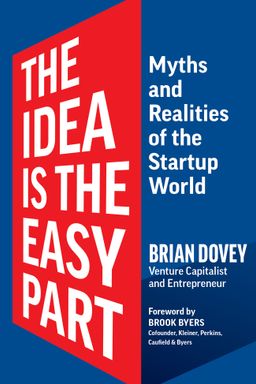
The Idea Is the Easy Part—Execution Is the Hard Part
What if everything you’ve ever been told about entrepreneurship was wrong? In The Idea Is the Easy Part, venture capitalist and startup veteran Brian Dovey shakes the foundation of Silicon Valley’s greatest myths. He argues that the hardest, most underappreciated skill in building a business isn’t coming up with a big idea—it’s the disciplined, resilient execution that turns any idea, good or bad, into a thriving, sustainable company.
Dovey contends that our culture glamorizes the wrong part of entrepreneurship. From Shark Tank to flashy startup memoirs, we glorify novelty and genius—the moment of the pitch, the billion-dollar breakthrough—while ignoring the messy, human grind of execution. His central claim is simple but radical: Ideas are cheap. Execution is priceless. Startups rarely fail because of bad ideas; they fail because founders underestimate the daily battles of management, adaptation, and persistence.
From Myth to Reality
Early in the book, Dovey dismantles popular illusions about entrepreneurs being young tech geniuses who strike gold overnight. Instead, he reveals real founders as ordinary people with grit, humility, and often gray hair—people driven by mission rather than ego. He shares how entrepreneurship has evolved from fringe to mainstream—once viewed as reckless, now celebrated as heroic—but warns that public perception is far disconnected from reality.
Drawing on decades of experience, Dovey shows that most successful ventures arise not from revolutionary ideas but from modest, well-executed improvements. He calls this method “some assembly required”—the art of integrating existing concepts in new ways. Think of Peloton merging fitness classes with streaming technology, or Five Guys reinventing the humble burger around quality and experience. A great idea can grab attention, but execution creates value.
Entrepreneurship as the ‘Pursuit of Opportunity Beyond Resources Controlled’
Dovey embraces Harvard professor Howard Stevenson’s classic definition of entrepreneurship: “the pursuit of opportunity beyond resources controlled.” In other words, entrepreneurs chase possibilities that exceed their current capabilities, figuring out how to obtain the people, capital, and partnerships they need along the way. That pursuit requires improvisation, persistence, and a taste for uncertainty—not just clever ideas.
He illustrates this truth vividly with the story of Align Technology—the maker of Invisalign braces. It's a perfect illustration of his thesis. The founders had a brilliant concept (invisible plastic aligners), but their success depended on grueling execution: refining manufacturing, convincing skeptical orthodontists, relocating teams across continents, and persisting through cultural and technical chaos. The “easy part” was the concept; every success afterward came from the hard part—execution.
Why Execution Matters More Than Genius
Dovey positions execution as a complex blend of clarity, discipline, and flexibility. You must distinguish the essential from the optional, stay focused amid endless distractions, pivot when plans fail, and solve unforeseen problems creatively. Whether managing a crisis, hiring a team, or building trust with investors, execution tests human character more than intellectual brilliance.
“A great idea poorly executed will almost always fail; an okay idea well executed will usually succeed.”
This one sentence distills Dovey’s worldview. He challenges aspiring founders to stop romanticizing inspiration and start mastering the realism of building systems, teams, and patience. Execution, in his words, is not glamorous—but it’s what separates the dreamers from the achievers.
A Human Approach to Venture Capital
Unlike typical finance-oriented guides, Dovey’s venture capital lessons emphasize humanity and empathy. He portrays VCs not as “vulture capitalists,” but as collaborative educators—coaches who work shoulder to shoulder with founders through adversity. Investors like him don’t just open their checkbooks; they help entrepreneurs learn to problem-solve, lead, and pivot. Venture capital, he insists, is not a transactional science—it’s a deeply human partnership built on trust, humility, and shared risk.
The book’s stories—from biotech breakthroughs to startup struggles—remind readers that progress in business, as in life, happens through trial and error. Dovey himself celebrates his failures, calling them his best teachers. His own journey—from corporate bureaucrat to startup founder to VC—mirrors the evolution that his readers are invited to embrace: moving from playing it safe to pursuing opportunity beyond comfort.
What You’ll Learn
Across seven major sections, Dovey guides you through essential aspects of entrepreneurship—from decoding myths and self-assessment, to crafting feasible ideas, getting financing, building teams, executing under pressure, and planning the endgame. Each chapter unmasks common misconceptions, using vivid startup stories from Survival Technology (EpiPen), Vivus, ReSound, and Geron. Through each lesson, you see that the secret to success lies less in invention and more in endurance.
By the end, you’ll recognize that what separates thriving enterprises from fading dreams isn’t the “lightbulb moment”—it’s the founders’ ability to keep the light on. Dovey’s message will resonate whether you’re launching your first startup or leading a growing company: ideas ignite the spark, but disciplined execution sustains the fire.