
Idea 1
The Engine of Creative Technology
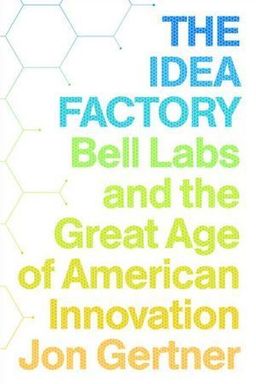
How do you design an institution that repeatedly invents the future? Bell Labs provides the answer. Across five decades, this "factory for ideas" transformed scientific discovery into global infrastructure — from the transistor and information theory to fiber optics and cellular networks. What made this possible was not a single genius or invention, but an organizational design that fused science, engineering, manufacturing, and mission under one roof. Bell Labs was never just a workplace; it was an institute of creative technology.
Created in 1925 under the AT&T and Western Electric partnership, Bell Labs embodied a corporate logic unusual for its time: basic and applied research explicitly linked to a single system goal — reliable, affordable, universal communication. This architecture—"one policy, one system, universal service," in Theodore Vail’s famous phrase—gave its scientists both security and scale to work on problems that spanned decades. The Labs became a living experiment in long-horizon, mission-driven innovation.
An Institution Built for Discovery
Frank Jewett, Harold Arnold, Oliver Buckley, and Mervin Kelly engineered the Labs not just as a physical plant but as a human system. At Murray Hill, corridors were designed long enough to force collisions among disciplines—chemists meeting physicists, mathematicians chatting with engineers. Kelly’s architecture encouraged "productive friction"—a culture where chance encounters could trigger major insights. The goal: combine the freedom of a university with the coordination of an industrial plant. As Arthur C. Clarke remarked, the Labs looked like "a factory whose production lines were invisible."
Funding from AT&T’s regulated monopoly insulated researchers from short-term market pressure. Yet the Labs stayed practical, because its customer—the national phone system—never stopped generating real problems to solve. The system itself was a "problem-rich environment": millions of circuits, repeaters, and operators constantly failing, evolving, and demanding incremental and radical solutions alike. This mix of autonomy and constraint turned Bell Labs into one of the most productive scientific institutions in history.
A Problem-Rich Engine of Discovery
You can think of the phone network as both laboratory and teacher. Each new expansion of the system exposed hidden challenges—in materials, physics, metallurgy, and human factors. Engineers learned to measure not merely signal quality but information itself, leading Claude Shannon to formalize information theory as a foundation for digital communication. Walter Shewhart’s statistical quality control turned manufacturing consistency into a science. Each problem, when solved, generated new concepts that echoed far beyond telephony—into computing, communications, and materials science.
Bell Labs thrived on this recursive process: system problems produced science; science produced solutions; solutions enlarged the system, which in turn generated new problems. The cycle transformed not just devices but disciplines.
People, Culture, and Collaboration
But structure alone is not enough. The Labs’ leaders—Jewett, Buckley, Kelly, later Baker—understood that breakthroughs depend on humans and culture as much as budgets. They assembled one of the most talented intellectual communities ever: Claude Shannon, William Shockley, John Bardeen, Walter Brattain, John Pierce, and many others. Recruited from universities like MIT, Caltech, and Chicago, these scientists enjoyed unusual freedom to pursue ideas within a shared mission. Kelly’s rule of thumb was clear: autonomy, yes—but always aligned with the system’s needs.
The postwar “Young Turks” like Shockley and Shannon embodied that spirit. Their study groups blurred boundaries between theory and experiment. Debates in the cafeteria led to Nobel Prizes. This collegial model—cross-disciplinary, intellectually open, yet rigorously managed—is what many research organizations still try to emulate today (the Santa Fe Institute and Janelia Farm are modern analogs).
From Science to Systems
Bell Labs operated on a continuum: fundamental science fed applied engineering which fed large-scale manufacturing at Western Electric. The transistor, perhaps its most famous contribution, followed this recipe perfectly. Bardeen and Brattain’s laboratory discovery in 1947 became Shockley’s theoretical innovation, which Jack Morton’s development teams and Gordon Teal’s single-crystal methods turned into a production technology. The same pattern recurred from radar to lasers, fiber optics, and digital switching. Bell Labs taught the world how to industrialize discovery.
A Legacy and a Warning
The Labs’ model flourished when monopoly stability met technological ambition. But that same structure later proved brittle. Antitrust prosecution and deregulation shattered the business logic that had sustained “one system.” After the 1984 breakup, the Labs’ funding and mission fragmented. By the 2000s, Lucent’s decline and corporate short-termism ended an era of institutional patience.
Bell Labs’ grand experiment leaves two intertwined lessons: large-scale, mission-driven research can change the world—but only when it protects long-term goals from short-term pressures. And while technology drives progress, human imagination, culture, and systems thinking sustain it. The story of Bell Labs is the story of intelligent organization itself: how to build environments where great minds can do their best work and where ideas become reality.