
Idea 1
The Science of Lasting Happiness
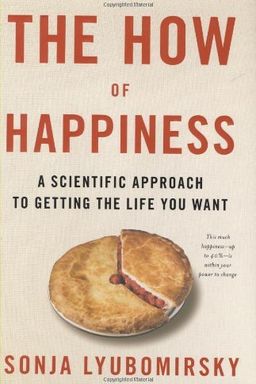
Why do some people seem naturally happier than others, and more importantly—can you become one of them? In The How of Happiness, psychologist Sonja Lyubomirsky answers that question with a resounding yes, grounded in rigorous science. Her central claim is that while our genetic set point and life circumstances do shape happiness, nearly 40 percent of our well-being is under voluntary control—through behaviors, habits, and ways of thinking that you can intentionally cultivate.
The Happiness Formula
Lyubomirsky’s signature model is the “pie chart” of happiness: approximately 50% determined by genetics, 10% by circumstances, and 40% by intentional activities. Twin studies (like the Minnesota Twin Registry) show identical twins share similar baselines even when raised apart, highlighting a biological influence. Yet, as Lyubomirsky warns, genes are tendencies—not destiny. Environmental triggers and habits determine whether those tendencies flourish or fade.
The 10% slice—life circumstances—includes money, looks, and marital status, but these factors offer only transient boosts. Lottery winners, cosmetic surgery patients, and those who marry experience initial highs but typically revert to baseline. The culprit is hedonic adaptation: our tendency to acclimate quickly to pleasure or pain. This adaptation, Lyubomirsky argues, can be slowed through gratitude, savoring, and variety, allowing positive experiences to last longer.
The 40 Percent Solution
That remaining 40 percent—our habitual thoughts and behaviors—is the roadmap of this book. It includes science-backed strategies such as practicing gratitude, cultivating optimism, performing acts of kindness, nurturing relationships, setting meaningful goals, achieving flow, meditating, exercising, and more. Each activity is validated by randomized trials. Lyubomirsky’s research team repeatedly found that people who intentionally engaged in chosen practices reported measurable, sustained increases in well-being compared to controls.
Yet not every activity works for everyone. This is where her notion of Person–Activity Fit becomes crucial. Like choosing the right exercise or diet, selecting strategies aligned with your values, strengths, and lifestyle predicts better adherence and outcomes. You can increase happiness systematically—just as you’d train for fitness—by identifying methods that resonate and tailoring frequency and variation to avoid boredom.
Evidence-Based Happiness
Unlike pop self-help, Lyubomirsky’s approach is grounded in empirical psychology. Her lab’s experiments use randomized assignments, controls, and repeated measures to test which activities cause real change. Gratitude journaling once a week improved happiness, but doing it three times weekly did not—because it felt rote. Acts of kindness performed in bursts (five in one day) worked better than distributing one daily. These nuances show that timing, variation, and sincerity determine success.
Lyubomirsky positions this scientific rigor as an antidote to the cultural myths equating happiness with wealth or beauty. In reality, sustainable happiness comes from how you direct attention, build relationships, and interpret life’s events. Her evidence converges with positive psychology pioneers like Martin Seligman and Barbara Fredrickson, emphasizing that repeated positive emotions create upward spirals of resilience and meaning.
How the Book Unfolds
The chapters that follow trace this 40 percent in action. You’ll explore cognitive strategies (gratitude, optimism, breaking rumination), social strategies (kindness, relationship investment), experiential engagement (flow, savoring), meaning and purpose (goal commitment, spirituality), and physical and behavioral supports (meditation, exercise, smiling). Each section shows how intentional activities resist adaptation and compound into durable well-being.
Core message
Through systematic evidence, Lyubomirsky shows that happiness is not a lucky accident. It is a skill—a set of cognitive, emotional, and behavioral habits that can be learned, practiced, and sustained.
By embracing these science-based tools and fitting them to your personality, you can actively design a happier life. The promise of The How of Happiness is both hopeful and pragmatic: you may not control your genes or every life event, but within that flexible 40 percent lies the freedom to shape how happy you are—and how long it lasts.