
Idea 1
Finance, Family, and Power: The Rothschild Revolution
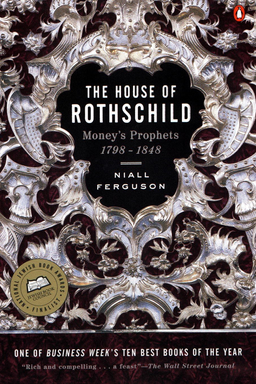
How can one family reshape world finance and politics without holding official office or public mandate? In The Rothschild Revolution, the story of Mayer Amschel Rothschild and his five sons unfolds as a transformation of finance into diplomacy, information into leverage, and family unity into global power. The book argues that the Rothschilds did not simply accumulate wealth; they built the infrastructure and principles of modern international finance—creating liquid markets, integrating states across borders, and turning private intelligence into public influence.
From Merchant Origins to Banking Leadership
You begin with Nathan Rothschild’s career as a Manchester merchant. His textile arbitrage—buying raw materials for cash, selling finished cloth on credit—embodied the logic of modern trade finance. When the Napoleonic blockade closed legal routes, Nathan smuggled bullion and cloth, turning risk into profit and establishing the foundations for his later banking house at New Court in London (founded 1811). These same instincts—speed, secrecy, and adaptability—became trademarks of the family’s global rise.
The Rothschild network evolved into five interlinked houses: London, Paris, Frankfurt, Vienna, and Naples. This “federal” partnership allowed them to operate as one multinational entity before multinational law existed. Through carefully constructed contracts and family rules, decision-making remained internal, capital circulations stable, and secrecy intact. Mayer Amschel’s will and the brothers’ contracts codified endogamy, excluded daughters from governance, and enforced joint deliberation—a legal version of the patriarch’s dying maxim: “keep your brothers together.”
War Finance and the Birth of Bond Liquidity
Between 1813 and 1815 the Rothschilds financed not only trade but war. Wellington’s campaigns depended on specie shipments and bill conversions managed by Nathan and his brothers. Their ability to move money faster than governments turned them into indispensable intermediaries. When peace returned, they converted wartime logistics into peacetime finance—underwriting sovereign debts and creating an integrated international bond market.
You see the innovation clearly in Nathan’s 1818 Prussian loan: denominated in sterling, paid in London, and amortised via British-style sinking funds. This model eliminated currency risk and drew British investors into foreign paper. It was the pivot from local finance to global liquidity, effectively anglicising European debt markets. Bonds became portable assets rather than local obligations—an invention that reshaped nineteenth‑century statehood.
Information as Currency
Speed became their next weapon. Before telegraphs, the Rothschild network of couriers, codes, and agents functioned as a proto high‑frequency trading system. They received market-relevant news—peace, war, ministerial resignations—hours or days ahead of competitors. Private letters (written in Judendeutsch, German in Hebrew script) carried political intelligence and trading instructions simultaneously. Mordechai Zucker’s later decoding of these letters exposed the real-time decision-making of the family.
From Waterloo couriers to messenger pigeons, the Rothschilds’ speed produced what the author calls “the information advantage”: proximity to power, rapid reception of news, and control over its release. When they used such speed to anticipate market swings—like the drop in French rentes preceding Thiers’ fall in 1840—they converted information into policy leverage.
Governance, Myth, and Reputation
Family governance was as calculated as finance. Endogamous marriages preserved capital; estates and patronage transformed wealth into legitimacy. Villas from Frankfurt’s Bockenheimer garden to Gunnersbury Park symbolised social emancipation from the ghetto. Balls and patronage of Mozart, Chopin, and Rossini turned bankers into cultural patrons while reinforcing aristocratic networks. Yet social exposure birthed hostility: caricatures, pamphlets, and anti‑Semitic attacks like Dairnvaell’s post‑Fampoux pamphlets recast the Rothschilds as sinister manipulators. Myths—such as the Elector of Hesse’s treasure rescue or Nathan’s Waterloo speculation—simplified complex business operations into moral fables or conspiracies.
The family managed image actively, using the press, philanthropy, and diplomacy to protect credibility. Episodes like the 1825 panic rescue of the Bank of England showed practical power: Rothschild bullion shipments saved the Bank from suspension, proving that cross‑border liquidity could stabilise nations. Their prominence also drew attacks, forcing them into reputation management through hospitality and press collaboration.
From Bonds to Rails and Industrial Capital
By the 1840s they shifted toward industrial finance—especially railways. Salomon’s Austrian Nordbahn and James’s Chemin de Fer du Nord linked sovereign credit with industrial expansion. Loans turned into shares, railways demanded ironworks, and finance merged with enterprise: Witkowitz and Austrian Lloyd shipping became Rothschild stakes. However, visibility brought vulnerability; incidents like the 1846 Fampoux crash sparked public backlash and intensified anti‑Jewish rhetoric tied to capitalist critique. The shift to industrial finance exposed them to new reputational and regulatory pressures.
Finance as Foreign Policy
Repeatedly, you see finance substituting diplomacy. Loans to Belgium, Austria, Russia, and even the Papacy followed one rule: lend only when great powers guaranteed peace and repayment. In crises—the Belgian separation, Polish revolt, or Damascus affair—the Rothschild network acted like shadow diplomats, coordinating press campaigns, humanitarian efforts, and financial signals to steer political outcomes. By restricting funds or selling bonds strategically, they could nudge governments toward compromise or fall, as with Thiers in 1840.
Continuity and Fragility
Nathan’s death in 1836 tested the system’s resilience. His will froze capital and mandated unity—a temporary safeguard for New Court. The transition worked, but authority decentralised. Paris and Vienna gained prominence while London focused on stability. During crises like 1847–1848, collective rescue via the London house and New York agent August Belmont showed that unity and liquidity still functioned, even amid revolution and economic contraction.
Core interpretation
The Rothschilds built not merely a fortune but a system: family governance as corporate law, information as financial weapon, and liquidity as geopolitical power. Their history is the blueprint for modern multinational banking—where speed, secrecy, and unity determine survival and influence.
Across wars, markets, and ministerial intrigues, the Rothschild story shows how private finance became a public force. You finish understanding that money, in their hands, was never just wealth. It was an instrument—of communication, credibility, and global coordination—that defined the architecture of nineteenth‑century capitalism.