
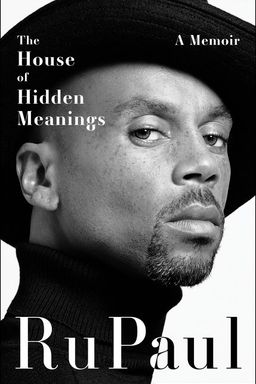
The House Of Hidden Meanings cover

The House Of Hidden Meanings

by Rupaul

The multiple Emmy Award-winning producer of “RuPaul’s Drag Race” traces his journey from his childhood in San Diego to becoming a pop culture icon.

Finding Yourself in the House of Hidden Meanings

When life feels like a swirl of disconnected scenes—childhood snapshots, heartbreaks, lucky breaks, and the odd miracle—how do you stitch them into a story that makes sense for you? In The House of Hidden Meanings, RuPaul argues that meaning isn’t found, it’s made. He contends that you become your truest self by learning to study your life like a detective—naming things, staging them, creating rituals of play—and by being brave enough to dismantle what no longer serves you so something new can rise in its place. The memoir is a masterclass in turning chaos into choreography, shame into showmanship, and personal myth into a usable map.

Across San Diego, Atlanta, New York, Miami, and Los Angeles, RuPaul tracks the patterns that shaped him: the ache of a father who didn’t show up, a mother (Toni) whose grit masked tenderness, and a TV screen that doubled as both mirror and portal. He shows you how those early scenes—like a backyard picnic his sister Renetta ceremonially names into existence—seed a lifelong thesis: magic is a choice, a practice, and often, a necessity. Drag becomes the most flamboyant vehicle for that thesis, not as costume alone, but as spiritual technology: identity made visible, archetype inverted, power reclaimed.

What This Book Says You Must Learn

RuPaul’s core argument is deceptively simple: the number one evil we face is unconsciousness. To wake up, you must accept that life comes in seasons of building and of demolition, and that both are sacred. He reframes ambition and sorrow as parts of a cosmic editing process—like Atlanta’s skyline, which must be razed to rise again. Along the way, he invites you into his “house of hidden meanings,” the inner room where you examine repetitive patterns, name your fears (usually love in disguise), and practice radical responsibility. The more you practice, the more playful you become—until play itself becomes your survival skill and your signature.

How the Story Unfolds

You’ll travel from a segregated San Diego childhood to an Atlanta public-access TV basement where a tribe forms on The American Music Show; from new wave sets at the 688 Club to the grimy glamour of New York’s Pyramid Club, Danceteria, and Boy Bar; from the heartbreak of first love (Mark) to the breakthrough of brand-building (posters declaring “RUPAUL IS EVERYTHING” and later “RUPAUL IS RED HOT”); from the cultural coronation as Queen of Manhattan to the pop-zeitgeist lift-off of “Supermodel (You Better Work),” shaped with Randy Barbato and Fenton Bailey.

Then the memoir dives into loss and repair: caring for his dying mother while appearing on MTV News, choosing sobriety amid the Miami condo-and-meth spiral with partner Georges LeBar, and learning that real power isn’t a drug, a gun’s recoil, a record contract, or a lipstick-stained kiss from Diana Ross—it’s the ability to stay present, to choose kindness, and to keep saying “goodbye” as you cross thresholds into who you’re becoming.

Why It Matters for You

If you’ve ever felt too odd for your context, too sensitive for your family, or too discouraged by delayed dreams, RuPaul offers a pragmatic mysticism. He shows how to make belonging (not just wait for it), how to build a brand when no gatekeeper is looking, how to turn a city into a studio and a heartbreak into a hinge. He also models what it means to face grief honestly—whether the grief is of a mother’s hard-earned death, a father’s lifelong absence, or the end of a season you thought would last forever.

Signal Phrase

“Life comes in seasons… You have to dismantle the old to make the space for something new.”

What You’ll Discover in This Summary

First, you’ll see how “make-your-own magic” starts in a backyard picnic and grows into a philosophy of performance, business, and care. Next, you’ll learn how RuPaul engineered belonging through DIY media and tribal play in Atlanta, and how drag becomes both healing and heresy—an answer to the tyranny of either/or. You’ll trace the discipline of brand-before-breakthrough, the marketing lessons baked into street posters, public access, and punk sensibility that culminate in a mainstream hit.

Then, you’ll walk through the heavy passages: the Saturn-return reckoning, the loss of Toni and the letting-go a good death requires, and the double mirror of Georges’s addiction and RuPaul’s own. Finally, you’ll land in an L.A. home remade by joy, sobriety, and hospitality—proof that you can build a life your childhood self would’ve trusted enough to walk into. Throughout, the book reads like a permission slip: to name your scenes, to watch your patterns, to play on purpose, and to keep stepping through doors—ding!—even when your hands are shaking.


Make-Your-Own Magic

RuPaul’s first big lesson arrives on a blanket in a San Diego backyard. His sister Renetta pours homemade peanut-butter cookies from a brown paper bag and christens the scene: “This is a picnic.” That naming act clicks. You can choose a framing that turns the ordinary into ceremony—and that choice creates magic. Throughout the memoir, you see him remake tough rooms and barren seasons by applying this early revelation like a spell.

Name It, Make It

As a kid in Michelle Manor—within sight of Mexico and the drive-in—RuPaul finds enchantment in television’s honest artifice. Credits acknowledge everyone is playing a role, a relief in a neighborhood where roles go unnamed but still rule. He performs for his mother, Toni—wrapping towels into wigs, selling “Coty!” at her Deco vanity—trying to puncture her storm-cloud mood with laughter. Naming the show (picnic, commercial, skit) is how he makes space to breathe.

He learns, too, that naming can soothe fear. When a second-grade lunch goes sideways and he returns to school in tears, the adults quickly rename the moment—handing him a hot dog and a seat by the principal. The world briefly reorganizes around his sensitivity. The message for you: when you’re different, you can still get your needs met if you can name them without shame.

Television as Portal and Policy

TV becomes RuPaul’s bohemian catechism. Edie Adams vamping in a fur coat and Honey West with a pet ocelot teach agency and audacity. Mission: Impossible’s set-piece cons reveal a people-truth: everyone has a lever; design the right scene, and you’ll move them. He also internalizes the era’s moral clarity—good vs. evil—while clocking how media expands the map for Black visibility (from blaxploitation at the drive-in to Flip Wilson’s Geraldine). Magic can be subversive and commercially potent at once.

Key Idea

“The number one evil we face is unconsciousness.” Naming the scene calls everyone to wakefulness—starting with you.

Mother-Tongue: Protection as Poetry

Toni—“Mean Miss Charles” to the block—models mantras as micro-ceremonies: “If they ain’t paying your bills, pay them bitches no mind.” She’s brusque, sometimes brutal (spray-painting BETTY on her husband’s Oldsmobile; nearly torching the garage after his infidelity), but her phrases function like rosaries. From her, RuPaul inherits a language toolkit: slogans that protect sovereignty and puncture bullshit. He’ll scale that instinct into marketing later: “RUPAUL IS EVERYTHING.” Then: “RUPAUL IS RED HOT.” You can do the same—find the sentence that gives your scene spine.

Magic as Survival, Then as Sport

As a child called “sissy” before he knew the term, RuPaul intuits he must turn marginalization into mise-en-scène. He refuses the inherited victim’s script he sees in parts of his Southern Black community (he’s explicit about epigenetic fear around water and dogs), and he cultivates a different inheritance: French contrarianism and fabulousness from Toni’s Acadian-Creole line. First, magic is survival—licking the salt from his father’s head during family TV time to claim closeness he rarely gets. Later, it becomes sport—moped joyrides, DIY bands, and set-building as a way to audition for a bigger life.

How You Can Use This

If your day feels dull or your history heavy, try naming-as-magic. Rename dinner with your kids a “premiere.” Announce a “rehearsal” before a work presentation and act it out. Use mantras as tools, not talismans (“Don’t take it personal” is a set note, not a personality). And when you feel shut out, build your own camera, like RuPaul does with public access and VHS movies. (Compare Julia Cameron’s The Artist’s Way: morning pages are another daily naming ritual.)

Beneath the sequins, this chapter of RuPaul’s life is your permission slip to stage your way through pain without denying it. The child in you still wants someone to declare, “This is a picnic.” Be that someone—name it, then nibble the cookie slowly enough to savor the show you’re making.


DIY Belonging in Atlanta

Atlanta is where RuPaul learns that if your tribe doesn’t exist, you can build one—and broadcast it. Lured by the mythos of Black reinvention (Mayor Maynard Jackson, the phoenix-as-city-seal, Jet and Ebony gospel), he moves with Renetta and her husband Gerald, who’s flipping Jaguars and Mercedes while Ru details cars with diamond-level precision. The city becomes a studio: public access, punk clubs, and potluck tapings form an ecosystem where belonging is engineered through play.

Public Access as Family Room

On The American Music Show—shot in James Bond’s basement apartment, VHS battery packs humming—RuPaul, Robin, and Josette debut as “RuPaul and the U-Hauls” to Junior Walker’s “Shotgun.” The set’s look (bookcases, tchotchkes, MLK memorabilia) says: this is a living archive. The vibe is DIY Camp meets Southern literati, with Dick Richards at the center, his credo clear: “If it ain’t fun, don’t do it!” RuPaul writes letters to get booked, then becomes a staple—proof that knocking on a weird door consistently is a networking strategy, not a quirk.

He meets Lady Bunny, Floyd, Lahoma, and Larry Tee; they form an orbit around clubs like the 688, Metroplex, and later New York’s Pyramid. Everyone brings a trick: Bunny’s lethal wit and Dusty Springfield drag; Floyd’s brat-prince charm; Larry’s conspiracy of meanings; Dick’s archivist eye. You can feel a proto-Internet forming—loose ties that amplify each other’s gigs long before social feeds. (Compare Patti Smith’s Just Kids for a similar boho-ecosystem in 1970s New York.)

Acid, Awakening, and Piedmont Park

A five-dollar tab opens the channel. On his first acid trip, guided by Cassie Banks, RuPaul steps into Piedmont Park and meets Mark, Anna, and Floyd at the pond. The world breathes. The child self—derailed by his parents’ domestic theater—rethreads the needle. That night launches a love story with Mark and a larger thesis: belonging is sensation plus companionship, and drugs that expand awareness can confirm truths you already suspected. (He’s frank that other drugs—freebase, meth—do the opposite.)

Field Note

DIY doesn’t mean alone. RuPaul’s tribe offers audience, archives, and aftercare. Your “American Music Show” might be a group text with a weekly ritual.

Costume, Community, and Consent

Atlanta’s Sundays oscillate between church morality and Cheshire Bridge reality: Donny, a preacher’s kid, speeds a Mustang to an apartment of trans women who “weren’t performing; they were living in drag.” That early scene—desire unashamed, performance unannounced—complicates shame scripts RuPaul absorbed from family drama. He isn’t quite ready to sip that reality; he later panics at the Underground bookstore gauntlet of men and jukebox porn. But those rooms plant seeds about visibility, power, and sexual economies he’ll thematize in drag.

How You Can Use This

If you’re craving community, build a channel before you build a castle. Think recurring, recordable, and ridiculous: a public-access energy that privileges spirit over polish. Invite whoever shows up. Let the kitchen-table vibe signal safety. Archive everything; your basement tapes might someday be your brand bible. And chase awe (walks, art, rituals) the way Ru chases the Atlanta air that tastes “like butter.” It’s hard to stay lonely when you’re busy being delighted together.


Duality, Drag, and Real Power

“You’re born naked, and the rest is drag.” The line—overheard by Mark at the Sweet Gum Head—becomes RuPaul’s Rosetta stone. Life’s deepest movements play out across dualities: love/fear, day/night, masculine/feminine, surrender/control. Drag, in this telling, isn’t just gender performance; it’s a technology to move beyond either/or, a way to test how power circulates and how you can reclaim it from the places you’ve lost it.

Power: Gun, Glamour, or Groundedness?

On a rainy field in Forest Park, RuPaul fires a redneck’s Uzi and feels omnipotent. He names the shock: intoxicating…and counterfeit. The gun’s power ends when the metal leaves your hands. Contrast that with the first time he goes high-femme at a Now Explosion wedding show: a white lacy party dress, hairy chest and all. The crowd’s desire is instantaneous and predatory. That, too, is a form of externalized power—conferred, not owned.

The third kind of power arrives later, in sobriety and self-stewardship. It’s the unshowy capacity to sit with pain, to be kind when New York sneers, to keep creating when love leaves. RuPaul distinguishes all three so you can, too: flash, fetish, and freedom feel different in your nervous system. Aim for the third.

Drag as Middle Path

Growing up a feminine Black boy, RuPaul learns he has “neither” of the two obvious powers: male dominance or conventionally feminine leverage. Drag short-circuits that scarcity by letting him be neither/both—claiming agency outside the binary. In Atlanta’s scene, “genderfuck” (smeared lipstick, combat boots, thrift armor) mocks the sanctity of identity categories. Later, the 1990s glamazon look—Soul Train hair, Donna Summer lips, Mathu and Zaldy’s custom gowns—smooths that rebellion into something palatable enough to seduce the mainstream. Both are honest; both are strategies. (Compare Judith Butler’s Gender Trouble for theory behind the practice.)

Practice Prompt

When stuck in an either/or, ask: What drag could I don to test a both/and? Try on a rival archetype at work for a week—quiet wizard instead of loud warrior.

The Sexual Hierarchy Lesson

RuPaul is candid about the painful loop of being desired only in drag. The first time he’s objectified fiercely is on that backstage night in a cinched Dior-esque dress; men’s attention spikes when he looks “like a girl.” He clocks the lesson: desire psychology is often lazy, coded, and costume-dependent. Rather than curdling into cynicism, he alchemizes it—creating “naughty-lite” pop that grandparents can love while smuggling in subversion. He refuses bitterness, which is its own black-market drag.

What Real Power Feels Like

In the end, real power is paying your own emotional rent. It’s refusing to let the mob mentality (from Westerns to Weatherford, Texas cops) dictate your choices. It’s cultivating the inner director who can say “cut” on a fear scene and “action” on one with more light. It’s remembering, as RuPaul insists, that the deadliest force is unconsciousness—and that drag, kindness, therapy, and 12-step rooms all move you toward wakefulness.

You don’t have to fire an Uzi or be a 7-foot glamazon to feel powerful. You have to notice where you outsource your power (to sex, to status, to spectacle), breathe, and reclaim it—not as armor, but as ease.


Brand Before Breakthrough

Before “Supermodel” hits Z100, RuPaul is already running a one-person creative agency. He films Starbooty on VHS, designs Xeroxed zines (If You Love Me, Give It to Me—One More Time!), and plasters Atlanta with snipes that shout a thesis: “RUPAUL IS EVERYTHING.” Then he ups the temperature: “RUPAUL IS RED HOT.” The lesson is stark—before the industry crowns you, your job is to crown yourself, then act accordingly.

Guerrilla Marketing 101

Snipes in New York inspire posters in Atlanta. The American Music Show doubles as test kitchen; the RuPaul Is Red Hot Revue becomes a touring product; Danceteria booker Ruth Polsky offers a foothold in Manhattan. Even setbacks become signals. A bathroom scrawl—“IN THE BLINK OF AN EYE, RUPAUL WILL FADE INTO OBSCURITY”—reads to Ru as a milestone: “You’re nobody until somebody hates you.” He manages the bits as a brand: consistent voice (joyfully subversive), consistent imagery (bigness, fun), consistent venues (clubs that love characters).

He models being product and producer—deciding performance order for the revue (open strong, feature friends, close stronger), crafting shows that make room for others (Lady Pecan, Opal Foxx), and embedding a finale ritual. The brand is inclusive, the star unmistakable. (Compare Seth Godin’s Purple Cow for the principle; Patti Smith’s tenacity in Just Kids for the vibe.)

Naughty-Lite: Trojan Horse Strategy

When the 1990s arrive, RuPaul calibrates. The genderfuck punk gives way to accessible glam: thigh-high boots, fitted minis, and later, couture from Mathu Andersen (makeup/hair) and Zaldy Goco (design). With Randy Barbato and Fenton Bailey—first seen as oracles in a Marriott Marquis lobby—he shapes music that smuggles subversion inside delight. Larry Tee pitches the “Supermodel” idea; Ru and Jimmy Harry write the version that lands. The resulting persona—two scoops Diana Ross, a pinch of Cher, a shake of Dolly, sealed with Disney warmth—feels inevitable because it has been patiently prototyped.

Brand Insight

“Act as if you’re already famous”—but back it with consistent craft, community uplift, and ritual. Delusion without delivery is just glitter.

Winning the Toughest Room

New York can be cold. Madonna’s break-room scowl becomes an object lesson in selective empathy. But the Queen of Manhattan pageant—crowned at La Palace de Beauté amid confetti—confirms the strategy. If you can win East Village cynics without bitterness, you can win America. Shortly after, he’s cheek-kissed by Diana Ross, misspelled by Aretha Franklin (“Ruth Paul”), and flown to Milan by Gianni Versace—literal supermodels circling the metaphorical one.

How You Can Use This

Think of your brand as a revue with room for others and a throughline only you can provide. Name your thesis out loud. Show up where your people actually gather (or make the room if it doesn’t exist). Iterate in public. When the bigger door opens, you won’t be faking; you’ll be scaling. And never underestimate the power of an inviting wink—naughty-lite often disarms the very gatekeepers who feared you yesterday.


Saturn Return and Saying Goodbye

Around 27–30, astrologers say Saturn returns to your birth position and asks: What in you is hollow? What must be rebuilt? RuPaul’s Saturn-return arc is brutal and clarifying. He shuttles between breakthroughs (radio play, Versace shows) and breakdowns (homeless nights in New York, Madonna’s withering eye, a deportation-level mishap at Gatwick). The throughline is a practice of goodbye—letting go of old scripts, old armor, and, most wrenchingly, his mother, Toni.

The Good Death and the Living Room

After MTV airs a segment of RuPaul declaring, “You’re born naked and the rest is drag,” he sits with Toni in the same living room where he once sold “Coty!” to her reflection. “Nigga, you are crazy,” she says—pride coded in their shared tongue. He tends her as she dies: cleaning her, carrying her, hearing her final blessing relayed through granddaughter Morgan. The scene fuses spectacle and sacrament—proof that the same hands that glue a lash can turn hospice into holiness.

Toni’s lifelong grudge (spray-painted cars and slashed Dior knockoffs) becomes a caution. He concludes: she died of cancer—and of a grudge. He vows to loosen his own grip. (Compare Joan Didion’s The Year of Magical Thinking for death as daily discipline; also, Anne Lamott on forgiveness as survival.)

Dismantling as Discipline

In the Prologue’s Atlanta return, RuPaul watches a skyscraper reduced to rubble. He remembers: “You have to dismantle the old to make the space for something new.” This isn’t just metaphor—it’s method. He dismantles brand versions that calcify (from genderfuck to glamazon to executive host), relationships that dead-end, and even the notion that fame is the point. Kindness becomes the north star; the scuffed-knee version of cosmic power replaces the Uzi’s counterfeit.

Saturn’s Question

What are you clinging to that would love you more if you let it go?

How You Can Use This

Expect your late twenties (or any disruptive season) to require two moves: 1) ruthless editing (of grudges, gigs, and self-stories), and 2) ritualized softness (language that blesses, rooms that gather). Decide what you’ll carry across the threshold and what gets left on the curb—Toni joked the city could bury her for all the taxes she’d paid; in that gallows humor lives a practical checklist for nonattachment.

Saying goodbye repeatedly—on porches as a boy, in dressing rooms as a star, at hospice as a son—doesn’t make you hard. It makes you porous enough to host the new season when it knocks. Ding!


Love, Addiction, and Radical Responsibility

The great romance arrives like a music-video twist: in platform boots at Limelight. Georges LeBar—towering, tender, wearing a fuzzy cropped jacket and dancing like “an absolute freak”—lifts RuPaul off his feet. Unlike earlier crushes (Lamar’s porch sweetness; Mark’s push-pull; David’s emotional unavailability), Georges is a solvent for the old spell: for once, RuPaul can be the one who’s cherished, not the chaser. Then the Miami condo chapter cracks that idyll open—and becomes the most important mirror in the book.

From Glam to Rehab

Between BRIT Awards gigs with Elton John and sunlit days at the Raleigh Hotel, Georges is getting thinner in Miami and supervising a renovation that keeps misfiring. He finally says it: “I am addicted to crystal meth.” RuPaul moves fast: Jefferson Memorial, intake, 12-step at the South Beach Clubhouse. In the meeting, a seventy-one-year-old woman tells Ru’s story in her own mouth—club highs, inner invisibility, booze as buffer. He recognizes himself and his own expanding habit (champagne backstage, weed all day, solo coke): sobriety isn’t just Georges’s assignment; it’s his, too.

They split to save what remains. Georges keeps working his program in Miami; Ru flushes stashes in L.A., meets therapist Donna, and rebuilds from the studs out.

Rebuilding a Home You Can Enter

In Lake Hollywood, RuPaul creates the opposite of his childhood home. He throws Sunday hip-hop parties with stripper poles, New Jersey–accent nights, and A Thousand Chers themes. He invites nieces, nephews, neighbors, and new sober friends. Roscoe’s chicken arrives by the tray. The freeway’s hum—once a childhood lullaby in San Diego—returns as sound design for a life you don’t have to dissociate from. Home becomes an open set you’re proud to stand in.

Radical Responsibility

You can’t control partners, parents, or peers. You can only control your scene: your daily practices, your rooms, your rituals—and your next line.

What Love Looks Like, Grown

Even apart, Ru and Georges stay in tender orbit—roller-skating at Moonlight Rollerway, biking the Golden Gate, calling daily. The old spell (needing someone to fix the father-wound) loosens. RuPaul recognizes the danger of being propelled by fear (“terminal uniqueness” in recovery-speak) and re-chooses joy as motive: color, music, laughter, creativity. If show business continues, it must be in service of that.

For you, the template is plain: tell the truth quickly, accept your assignment fully, and build a house your younger self would feel safe in. Recovery, like drag, is a practice of intentional scene-setting, one day at a time.

Dig Deeper

Get personalized prompts to apply these lessons to your life and deepen your understanding.

Go Deeper

Get the Full Experience

Download Insight Books for AI-powered reflections, quizzes, and more.