
Idea 1
Predictable Irrationality and the Human Mind
Why do you consistently overpay, procrastinate, cheat a little, or fall for bad deals even when you know better? Dan Ariely argues that these patterns are not the random quirks of foolish individuals—they are predictable irrationalities built into human psychology. In his groundbreaking research across behavioral economics and social psychology, from MIT labs to hotel lobbies, Ariely exposes how context, emotion, social norms, and subtle cues, rather than conscious reasoning, drive most human decisions.
At the core, Ariely contends that you cannot judge value, fairness, or morality in isolation. Instead, you constantly anchor, compare, justify, and rationalize based on the relative options or social frames around you. This systemic irrationality doesn’t just produce mistakes; it creates opportunities—what Ariely calls “behavioral design”—to build better markets, policies, and lives once you understand these predictable errors.
Relativity, Context, and the Illusion of Value
You rarely value things absolutely. The decoy and relativity experiments—like The Economist subscription choices or Williams-Sonoma’s breadmaker pricing—show that context defines value more than intrinsic worth. When marketers add an intentionally inferior option, you gravitate to the product that appears relatively better. This illusion explains why you may buy the mid-priced wine, not because of taste, but because it feels like a reasonable compromise.
Anchoring extends this illusion across time. Ariely’s “SSN auction” studies, where arbitrary social security digits shifted people’s willingness to pay by hundreds of dollars, prove that your first exposure to a number sticks. Prices, salaries, and expectations become coherent around early anchors—even if they began as nonsense.
Emotion, Arousal, and the Hot–Cold Gap
Human reasoning breaks down in emotional or “hot” states. The Berkeley sex arousal study revealed that men wildly underestimated how desire would change their moral and risk judgments—willingness to forgo condoms, consider unethical acts, or pursue unsafe behavior increased dramatically. The practical message: when calm, you imagine you’ll stay rational, but passion rewrites your priorities. To protect yourself, use precommitments and structural guardrails—cool-headed contracts for your hot-headed future self.
The Many Faces of Irrational Choice
Ariely reveals several distinct but interlocking patterns. “Free” isn’t just another price—it distorts judgment, triggering emotional excitement that outweighs rational analysis (as seen in the Lindt truffle vs. Hershey’s Kiss experiment). Social norms, equally, create irrational dynamics: people may work harder for a heartfelt favor than for small cash payments, because money shifts the frame from social to market norms, suppressing intrinsic motivation. Even gifts can backfire if their price is disclosed—price makes kindness transactional.
Ownership intensifies these distortions. Once you possess something—whether a coffee mug, a house, or a pair of basketball tickets—you inflate its value dramatically. This “endowment effect” combines pride, attachment, and loss aversion: giving something up hurts twice as much as gaining something equal feels good. Ariely shows that you not only overprice personal goods but also cling to bad investments and emotional commitments because loss looms so large.
Moral Psychology and the Fragility of Honesty
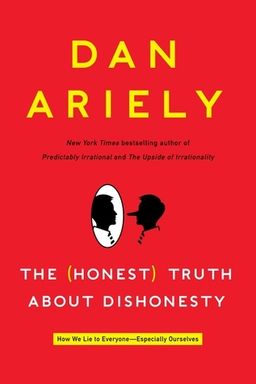
Much of our moral behavior runs on what Ariely calls the “fudge factor”—a built-in buffer that lets you cheat a little without feeling corrupt. In his matrix experiments, people never lie maximally, but cheat by small margins that preserve a self-concept of honesty. Physical and psychological distance—paying with tokens rather than cash, or bending golf rules indirectly—magnifies that buffer. Yet moral cues can shrink it dramatically: signing an honor code, recalling the Ten Commandments, or making the decision public virtually eliminates cheating.
Ariely extends this to trust and culture: dishonesty spreads contagiously. When people watch a peer cheat without consequence, their own moral boundaries loosen, especially if the cheater seems part of their in‑group. Cheating is social, not solitary; it grows in environments that reward clever bending of rules. (Note: This mirrors Robert Cialdini’s social proof concept and Philip Zimbardo’s lessons on situational power.)
From Individual Bias to Institutional Design
What ties these strands together is a simple insight: irrational tendencies are systematic. Because they repeat predictably across people and situations, we can redesign systems to compensate for them. Ariely’s “Save More Tomorrow” plan uses precommitment to fight procrastination and time inconsistency. His transparency lessons for firms—signatures at the top of forms, honest defaults, immediate apologies to defuse customer vengeance—all translate psychology into practical architecture.
Across domains—sexual behavior, pricing, ethics, and trust—Ariely urges you to acknowledge, not deny, irrationality. Rationality rarely guides real-life behavior, but by recognizing cognitive biases, emotional triggers, and contextual levers, you can structure choices to align your actions with your values.
Core message
You can’t change human nature—but you can understand and design for it. Once you see how predictable your irrationalities are, you gain the power to live, buy, decide, and act more wisely.