
Idea 1
Conquest, Memory, and Repair
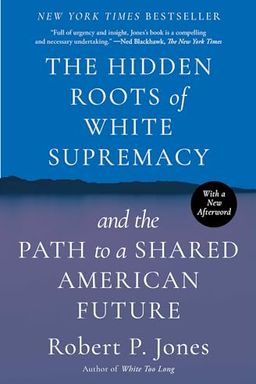
How do you track a single thread that ties conquest-era theology to modern law, racial violence, and today’s fights over memory and repair? This book argues that the Doctrine of Discovery—born in fifteenth-century papal bulls and European imperial practice—provides the deep grammar of American dispossession. It shows how this doctrine moved from church decrees to courtroom doctrine, from royal charters to U.S. policy, and then hardened into the civic habits that normalized Indigenous land theft, the plantation economy, and white supremacy’s violence against Black and Native communities. The book’s second claim is just as urgent: truth-telling, memorialization, and reparative action can unwind some of that inheritance, but only if you pair moral clarity with legal and material change.
The through-line you need
Start not in 1619 or 1776, but in 1493. Papal bulls like Inter Caetera and Dum Diversas authorized Christian crowns to claim non-Christian lands and hold non-Christians in “perpetual slavery.” That logic became the legal scaffolding for centuries. You see it domesticated in Chief Justice John Marshall’s 1823 opinion in Johnson v. M’Intosh, which said “discovery” gave sovereigns title and left Native nations only a diminished “right of occupancy.” From there flow federal Indian law, treaty-busting, removal policies, and the reallocation of land and wealth to white settlers.
The book follows this thread across geographies. In Mississippi, Choctaw dispossession cleared the ground—literally—for a cotton economy powered by enslaved African labor; Emmett Till’s 1955 murder surfaces as a downstream consequence of that order. In the Upper Midwest, broken annuity promises and rigged trade created starvation that helped spark the 1862 Dakota War; the state answered with military tribunals, the largest mass execution in U.S. history at Mankato, and deportations to Crow Creek and Santee. In Oklahoma, the Dawes Act, Boomer agitation, and staged land runs translated communal homelands into private parcels for whites, while oil wealth in Osage County triggered a guardianship regime and a murderous “Reign of Terror.” Tulsa’s 1921 massacre then shows how civic, legal, and even religious institutions collaborated to erase accountability and memory.
Why starting at 1493 changes your map
Begin with 1493 and you see religion and law fused from the start. Hernando de Soto’s crucifix-planting (celebrated in William H. Powell’s U.S. Capitol painting) wasn’t just piety; it was a juridical performance of the Requerimiento—a public script announcing that conquest had divine and legal sanction. When Americans later insist this is a Christian nation, they often draw unknowingly on the same mythic current that turned dominion into a moral good. That’s why fights over school curricula, anti-CRT laws, and who deserves land and sovereignty feel existential: they contest the country’s original moral script. (Note: Scholars like Robert J. Miller detail how discovery doctrines migrated into U.S. and Commonwealth jurisprudence; the book builds on that legal history and connects it to civic life.)
Tangled, not parallel, histories
You’re encouraged to drop the tidy Black–white binary. Indigenous dispossession and African chattel slavery are distinct but entangled systems. In Mississippi, the 1830 Treaty of Dancing Rabbit Creek (Choctaw Removal) made room for plantations whose profits depended on enslaved labor; Reconstruction’s promise gave way to Black Codes, lynchings, peonage, and convict leasing. That same legal-rhetorical machine—grounded in discovery logic, racial hierarchy, and a civilizing mission—legitimated both the theft of land and the extraction of labor. Emmett Till’s lynching, Duluth’s 1920 murders, and Tulsa’s 1921 massacre all sit inside that longer ecology of sanctioned racial violence.
From silence to memorial repair
The book also gives you a civic playbook. Where local leaders chose silence—Duluth hiding its lynchings, Tulsa framing massacre as a “riot”—denial metastasized. Where communities faced truth, public identity shifted. Tallahatchie County’s Emmett Till Memorial Commission (ETMC) paired apology and education with courthouse restoration to catalyze economic renewal and interracial dialogue. Duluth’s Clayton-Jackson-McGhie Memorial emerged from grassroots research and ritual, then became a living civic institution that anchors vigils and policy conversations (the posthumous pardon of Max Mason in 2020 is one fruit). These cases show you how memory work, done honestly and locally, can pry open space for structural change.
What repair demands
Repair needs three pillars: truth, material redress, and structural reform. LandBack examples—the return of Blue Lake to Taos Pueblo; Tuluwat Island to the Wiyot; acres to the Onondaga—prove restoration is possible. Church bodies have begun to repudiate the Doctrine of Discovery (Episcopal Church, World Council of Churches; Jesuit reparations efforts), but apologies without assets or legal change risk symbolism. In Tulsa, centennial truth-telling built museums and visibility, yet formal reparations lag; survivors like Viola Ford Fletcher still petition for justice. Your takeaway is pragmatic: build durable institutions, name the legal architecture that did the harm, and fund the remedies at a scale matching the theft. (Compare David Treuer’s proposal to return national parks to tribal stewardship as a system-level idea.)
Key Idea
This book’s core argument is simple but sweeping: doctrines born of conquest still structure our laws and moral imagination; to choose democracy over domination, you must pair honest memory with legal and material repair.
If you’re an educator, official, or faith leader, the path forward is clear: teach the full history from 1493 on; connect local harms to national doctrines; and invest in returns—of land, wealth, and power—to those whom the law once declared “discoverable.”