
Idea 1
Memes, Minds, and the Mechanics of Social Meaning
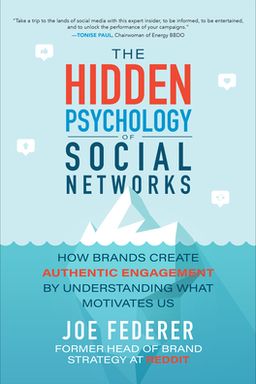
Joe Federer’s book explores the hidden psychology of online behavior—the cultural DNA of social platforms—and how brands can use it to craft ideas that truly spread. Rather than treating viral posts as accidents, he argues that culture evolves through memes, and memes have machines: the formats, contexts, and environments that carry them. These two parts—the idea and its vessel—form the backbone of every successful piece of social communication.
Federer draws from biology, psychology, and neuroscience to show that just as genes need bodies to replicate, ideas need formats optimized for transmission. You don’t just make content—you build a meme machine. Each chapter expands this metaphor into a dynamic model of how ideas behave across networks, mindsets, and hemispheres of the human brain.
Memes as cultural replicators
Federer returns to Richard Dawkins’s original concept of memes—units of culture that compete for attention and replication. This genetic metaphor reframes social content as evolutionary artifacts. You don’t win because your post is beautiful; you win because your meme machine enables the idea to survive screenshot loss, recontextualization, and social friction. He compares movie scenes, image macros, and viral challenges to demonstrate how survival advantages differ by format. Impact font survived the early internet not for aesthetic reasons but because of legibility and its resilience under compression—a perfect example of natural selection among meme machines.
The psychology inside social spaces
Federer extends Freud’s Id, Ego, and Superego into social network archetypes: Ego networks such as Facebook and Snapchat express managed selves among friends; Superego networks such as Instagram and Twitter represent ideal, performative identities; and Id networks like Reddit and 4chan invite candidness and exploration. This mapping explains why the same post thrives in one place and fails in another. Where identity is public, people share what helps them look good. Where anonymity reigns, they value honesty, depth, and tools. Understanding these mindsets is crucial to designing effective meme machines.
The neuroscience of social creativity
The book builds on Iain McGilchrist’s hemispheric theory: the right brain seeks novelty, empathy, and experiences; the left brain categorizes, organizes, and represents identity. Online spaces divide similarly—Id networks operate like the right brain (exploratory, experiential), while Ego and Superego spaces follow the left brain (representational and rule-bound). When people encounter unfamiliar creativity in familiar channels, they often reject it. Therefore, Federer urges brands to introduce novelty safely: surround surprise with credible, familiar cues to prevent cognitive chaos.
From principles to tactics
Throughout the book, Federer distills principles—add value, design self-contained meme machines, invite personal connection, design for specific actions, and maintain brand ownability. He connects each to network psychology and creative mechanics, showing how Ziploc’s life-hack posts succeed as Ego-network tools for competence signaling; Beats’ customizable “Straight Outta Somewhere” lockups thrive in Superego spaces as badges of identity; and UNIQLO’s candid Reddit participation earns trust in Id communities. These aren’t anecdotes—they form templates for how to behave authentically in distinct psychological environments.
Novelty, behavior, and long-term trust
Federer warns that novelty without grounding creates chaos. Gap’s logo flop, BP’s tone-deaf slogan, and Tropicana’s packaging debacle illustrate the danger. The antidote is honest narrative and community validation: test surprises first in right-brain spaces, explain changes transparently, and deliver consistency afterward. When novelty aligns with brand truth—as in Nike’s SNKRS drops or Magic Castle’s Popsicle Hotline—it sparks joy rather than confusion.
The flow between experience and representation
The book’s unifying insight is cyclical: ideas move from experience (right brain, community, Id networks) to representation (left brain, social identity, Ego/Superego networks) and back again. Brands should design for both states—create participatory behaviors or experiences that right-brain communities can co-create, then repurpose those authentic stories into badge-worthy narratives for left-brain audiences. Old Spice’s Dungeons & Dragons class, for example, began as a genuine playable experience before being amplified through shareable storytelling.
Federer’s central premise
Memes—and all social content—evolve like living things. To thrive, they must pass through psychological, cultural, and neurological filters. Your job is not to chase virality but to engineer propagation: design ideas and vessels that fit how real humans think, feel, and connect online.
By integrating evolutionary biology, Freudian psychology, and hemispheric neuroscience, Federer gives you a model for modern brand behavior: listen deeply, design light and self-contained meme machines, deliver novelty with care, and connect experiences to representations that users want to share. What emerges is a practical, ethical, imaginative method for making creativity that lasts longer than a meme cycle—it builds cultural meaning that sticks.