
Idea 1
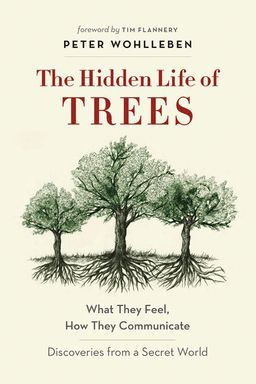
The Hidden Life of Trees: The Secret World Beneath the Canopy
Have you ever wondered what happens in a forest when no one is looking—how trees grow, communicate, and sometimes even take care of one another? In The Hidden Life of Trees, forester and author Peter Wohlleben invites you into this secret world, revealing that forests are not collections of passive wooden giants but intricate, living communities that feel, share, and remember. Wohlleben’s core argument is simple yet astonishing: trees are social beings. They communicate, cooperate, and even nurture their young, functioning much more like families or societies than mechanical organisms.
Drawing from decades of first-hand experience managing a forest in Germany’s Eifel Mountains and from scientific research (including collaborations with forest ecologist Suzanne Simard), Wohlleben contends that forests operate as interconnected superorganisms through underground networks of roots and fungi—what scientists have dubbed the ‘wood wide web.’ Through these connections, trees exchange nutrients, warn each other of danger, and maintain a shared equilibrium that ensures the entire forest thrives. In Wohlleben’s words, a tree alone is not a forest.
Forests as Living Communities
At the heart of Wohlleben’s thesis is the provocative idea that trees create and sustain communities similar to human societies. Strong, healthy trees will feed the weak ones by sharing sugars through their roots, protect each other from harsh weather, and collectively regulate light and moisture to ensure everyone’s survival. Just like elephants protect the sick and injured in their herds, beech trees in Wohlleben’s forest have been observed nourishing stumps of felled comrades for centuries—keeping them alive through shared energy and root connections.
These acts of care are not fleeting gestures but part of a long-term survival strategy that allows forests to exist in stable harmony for thousands of years. A lone tree, he explains, is vulnerable—it will grow faster but also die sooner. In contrast, trees rooted in community grow slowly yet develop dense, resilient wood capable of withstanding centuries of storms and change.
The "Wood Wide Web" and Tree Communication
Science adds substance to this poetic vision. Researchers like Dr. Suzanne Simard have demonstrated that trees communicate via underground fungal threads linking their root systems. Through this “wood wide web,” nutrient-rich and information-laden signals pass between tree species. Wohlleben makes this complex world vivid: when a giraffe begins munching on an African acacia, the acacia emits distress chemicals (like ethylene) to warn nearby trees. In response, neighboring acacias produce bitter tannins to repel more grazers. Similarly, European beeches and oaks transmit distress signals through electrical impulses that travel slowly—only a third of an inch per second—yet effectively coordinate defense strategies across the forest floor.
This means that trees don’t merely react to the environment—they perceive it. They “listen” through chemical scents, “taste” the saliva of invading insects, “speak” through pheromones, and possibly even produce subtle crackling sounds under the ground that other roots can detect. Such revelations transform trees from passive scenery into sentient participants in a vast, pulsating web of life.
Rethinking Forest Management
Wohlleben’s work also challenges our modern relationship with nature, particularly the way industrial forestry reduces trees to economic units for lumber. He argues that this mechanistic approach has stripped trees of their complexity and dignity. In managed forests, trees are cut young—never allowed to form deep roots or relationships. Their communication networks are severed, and their ability to care for one another collapses. The result: barren, short-lived plantations vulnerable to drought, disease, and storms. By contrast, in forests where human interventions are minimized, trees grow not only older but wiser, supporting intricate webs of life from mosses and mushrooms to birds and insects.
Wohlleben’s vision is both ethical and ecological: if trees live in communities, we should treat forests like living entities worthy of respect. Sustainable forestry, he suggests, means letting trees fulfill their natural social and ecological roles—growing at their own pace, dying naturally, and nourishing those that follow. It’s not just forestry reform he’s after but a deep cultural reawakening—a new awareness that the forest is not a resource but a relational partner in the web of life.
Why It Matters
Wohlleben’s revelations force you to look differently at the next tree you pass. When you walk through a forest, you’re entering a society with rules, etiquette, and even hierarchies. You’re walking through a conversation—a biochemical orchestra of life. Understanding this hidden world, he argues, is essential to solving the crises of deforestation and climate change. Forests regulate temperature, store carbon, and produce moisture—the Earth’s lungs and water pumps. When we destroy them, we don’t just lose trees; we dismantle ancient intelligence that keeps our planet habitable. In this sense, The Hidden Life of Trees is more than natural history—it’s a manifesto for reconnection, a reminder that human well-being is rooted in the same soil as the forest’s.