
Idea 1
The Hero’s Journey and the Grammar of Myth
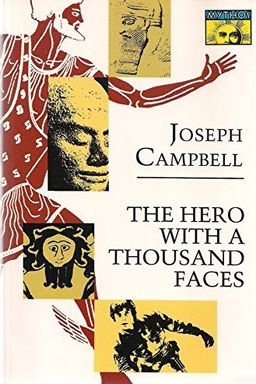
Why do the same stories unfold across centuries and continents? In The Hero with a Thousand Faces, Joseph Campbell argues that myths everywhere follow a single skeletal pattern—a monomyth—the universal narrative of transformation known as the Hero’s Journey. This pattern reveals a deep psychic process that repeats from tribal initiations to modern films: separation from the familiar world, trials and revelations in a deeper realm, and a return to share a boon with the community. Campbell synthesizes mythology, psychoanalysis, and comparative religion to show that myth is the mirror of the psyche itself, and its grammar can orient both personal and cultural renewal.
The structure of transformation
Campbell divides this recurring journey into three movements—Departure, Initiation, Return. In Departure, the hero hears the Call to Adventure and may first refuse it. A frog in the spring or a chance dream may carry this cosmic summons; the refusal follows as the desire to cling to comfort and identity. Supernatural aid soon arrives—a mentor, charm, or divine helper—granting courage to cross the threshold into the unknown.
In the Initiation stage, tests, temptations, and revelations transform the hero. The belly of the whale symbolizes death to old forms; trials with the goddess and atonement with the father represent reconciling feminine nourishment and masculine law, the two poles of human psychic life. Apotheosis follows—a state of divine insight—and yields the boon, a gift or knowledge to restore society. Finally, the Return demands reintegration: the hero must cross back to ordinary life and convey the boon effectively. As myth endlessly warns, failure to return or refusal to translate insight into social action risks stagnation or despair.
A psychological map
Campbell’s key innovation is reading this external journey as an internal pattern. Myths are not quaint tales but symbolic representations of your own psychic development. When you dream of passage, water, or monsters, you enact the same symbolic grammar found in ancient epics. Jung’s archetypes—the anima, animus, shadow, and Self—structure this mythic landscape. When the hero meets the goddess, you experience integration; when he atones with the father, you face authority and conscience. The myth becomes an active mirror for psychological transformation.
Clarissa Pinkola Estes, expanding Campbell’s insight, calls myth the “secret opening through which the inexhaustible energies of the cosmos pour into human cultural manifestation.” Stories are the technology by which societies transmit these energies. Ritual and meditation anchor them so that insights move from dream to communal practice. Each myth you study thus resembles both a map for consciousness and a tool for maintaining cultural continuity.
The universal resonance
Campbell’s examples—from Gilgamesh, Jesus, Buddha, Odysseus, and Inanna to modern folk tales—show the universality of the monomyth. The hero’s tasks vary but the pattern does not: crossing the threshold, enduring deathlike dissolution, gaining a unified vision, and returning with healing for the world. Even creation myths mirror this rhythm: the cosmic void gives rise to form, decays, and renews itself, reflecting the same cycle of emergence, dissolution, and rebirth found in every life.
Campbell’s challenge for you
You are always somewhere within the journey: called to adventure, tested in descent, or tasked with sharing the boon. To live mythically is to treat your experiences as rituals of transformation rather than accidents. The point is not to chase heroic glory but to learn the grammar of renewal—to let decline, suffering, and insight follow their natural sequence so that new life can be born.
The book finally turns toward practical application: myth as therapy, ritual as social technology, and storytelling as cultural medicine. Campbell and Estes invite you to see myths as living patterns—not as archives of past religions but as open guides for navigating meaning in modern life. Whether through dream, creative work, or community ritual, you continue the ancient work of renewing the world through story.