
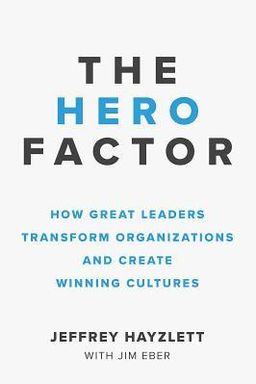
The Hero Factor cover

The Hero Factor

by Jeffrey Hayzlett with Jim Eber

In ''The Hero Factor,'' Jeffrey Hayzlett explores how true leadership balances profit with people, creating a culture that fosters loyalty and sustainable success. Through real-world examples and inspirational stories, learn how to transform your organization by living your values and empowering others.

The Hero Factor: Building Companies of Courage and Character

Have you ever wondered what truly separates good leaders from legendary ones? Those who not only build profitable organizations but also inspire loyalty, trust, and lasting impact? In The Hero Factor: How Great Leaders Transform Organizations and Create Winning Cultures, Jeffrey Hayzlett contends that the difference lies in a simple, powerful equation: Operational Excellence plus Hero Intensity equals your Hero Factor. This is not just about profits—it’s about the balance between results and values, performance and purpose.

Hayzlett argues that heroic companies are built deliberately. They’re not accidents of circumstance or charisma; they result from leaders who pick a side. You can’t straddle the fence between caring only for the bottom line and genuinely valuing people. If you walk in the middle, he warns, you’ll get “squished like a grape.” True hero leadership, he insists, is a conscious choice to build organizations that grow profits and make a difference.

The Hero Factor Equation

At the core of Hayzlett’s philosophy is the “Hero Factor Equation”: Operational Excellence (doing what you do superbly) plus Hero Intensity (living your values and valuing others) equals your Hero Factor. This equation becomes a mirror for how leaders can evaluate themselves and their organizations. On a scale of 0 to 20, Hayzlett invites readers to score their company’s commitment to excellence and integrity. He divides organizations into six categories—Heroes, Good Companies, Wannabes, Bottom Liners, Struggling Do-Gooders, and, at the bottom, Zeroes (the “hopeless asshats,” as he calls them with characteristic blunt humor).

A Hero company operates with abundance—it believes success grows when leaders care deeply for people as they pursue performance. A Bottom Liner focuses relentlessly on numbers, while a Struggling Do-Gooder cares passionately but can’t manage operations. The challenge is finding balance between doing well and doing good, and maintaining that balance even when times are hard.

Why Culture Is the Real Competitive Edge

Hayzlett insists that culture—how your people feel about your leadership and the values of your company—is not a soft concept. It’s measurable, visceral, and critical to sustainability. Culture is “something you feel,” he writes. It defines how people behave when no one is watching, how they respond to change, and whether they’re proud to belong. When companies forget to value others during change—as Liberty Tax did when it went public—they lose what he calls Hero Intensity and risk collapse. Success without culture eventually turns toxic.

Through emotional, real-world stories—from a janitor turned millionaire to companies recovering from cultural crises—Hayzlett demonstrates that businesses thrive not because of spreadsheets but because of relationships. He showcases leaders like Nido Qubein at High Point University, who transformed a struggling institution into a thriving campus by creating a sense of belonging down to the smallest detail—like noticing a candy wrapper on the ground.

Leadership as a Moral Choice

In Hayzlett’s view, hero leadership is not a title—it’s a moral stance. It’s about courage. Like the Cheyenne Dog Soldiers who anchored themselves to the ground and vowed never to retreat, hero leaders tie their values to their organization and refuse to budge, even under pressure. They stand up for what is non-negotiable and fight for their people long after others have sold out. This courage—to make tough calls, to fire people who don’t fit, to protect what’s right—is what turns competence into character.

A Call to Pick a Side

From beginning to end, Hayzlett’s call to action is consistent: you have to pick a side. Be a Bottom Liner, a Hero, or something in between—but be honest about it. Don’t claim to espouse lofty values while treating employees or customers as disposable. Duplicitous cultures, he warns, “leave a trail of debris through your organization like a comet.” Hero leaders choose clarity. They balance their north star—Operational Excellence—with compassion, transparency, and trust. They stand where others equivocate.

Why It Matters Now

In a polarized world, Hayzlett believes that hero leadership may be the antidote to cynicism. His argument resonates far beyond corporate walls. The book challenges readers to redefine success not merely as wealth but as legacy—to ask, “What will my hero legacy be?” The implication is clear: it’s time to step up. You don’t need superpowers, just courage, conviction, and a commitment to value others as much as profit. Do so consistently, and you transform your organization into a Hero company—one that thrives operationally, serves people deeply, and leaves the world better than it found it.


Operational Excellence: The Foundation of Performance

Hayzlett’s starting point is simple: you can’t be a hero without being competent. Operational Excellence is the bedrock of sustainable success—the systems, accountability, and discipline that make your company reliable. He defines it as “execution of a business strategy that leads to real, consistent, and reliable results that are measurable and sustainable.”

Understanding Operational Excellence

Companies that achieve Operational Excellence know how to do the fundamentals right. Their products exceed industry standards. Their services consistently delight customers. They measure outcomes, control costs, and adapt quickly to changing environments. Every process—from hiring to innovation—is intentional. These are the “just the facts, ma’am” metrics that underpin success.

But Hayzlett emphasizes that excellence is not static. It evolves. General Electric, Kodak, and Sears once symbolized mastery in their industries, yet each eventually lost relevance by failing to adapt. In a faster, disruptive economy, Operational Excellence demands constant reinvention.

Why It’s Not Enough

The twist: Operational Excellence alone does not make you heroic. A company that masters efficiency but neglects integrity becomes a Bottom Liner. Think of organizations that worship quarterly earnings while burning out employees or damaging communities. Profit without people is short-lived. Hayzlett contrasts this mindset with leaders who tie financial discipline to cultural care. Christine Ehrich, CEO of Industrial Solutions Network, for example, obsessively protected her team’s jobs during a downturn, finding creative ways to sustain the business rather than cutting staff. That balance between pragmatism and compassion defines hero performance.

Adapting Through Innovation

Hayzlett cites companies like 1-800-Flowers.com that constantly evolve their operational model—from phone orders to AI-driven conversational commerce—without compromising their humanity. CEOs Chris and Jim McCann built systems that leverage technology but still prioritize relationships. Their mantra: “Build relationships first, do business second.” Operational Excellence, then, is inseparable from the human side of enterprise. To stay operationally excellent, you must systematically strengthen trust and creativity—not just processes and profits.


Hero Intensity: Values and Valuing Others

Once you’ve mastered performance, Hayzlett says, you must elevate principle. Hero Intensity is the emotional, ethical, and relational power of leadership—how authentically you live your values and how deeply you value others. It transforms ordinary companies into cultures people love.

Living Your Values

Hayzlett begins with the basics: write your values down, make them visible, and embody them daily. Authenticity beats rhetoric. He cites Catherine Monson of Fastsigns International, whose core values—integrity, accountability, continuous improvement, and empathy—are literally displayed on “street signs” in her headquarters. Employees can recite them, live them, and explain them to customers. In contrast, organizations that advertise virtue but fail to live it—like McDonald’s in its handling of harassment scandals—destroy credibility. Words without action create zero trust.

Valuing Others

Hero Intensity also requires honoring people—not as commodities but as partners. Hayzlett tells the story of Dave Sanderson, a sales manager and survivor of the Hudson River plane crash, whose company responded to his ordeal with cold transactional indifference. They asked if he was “going to Michigan next week” instead of asking how he was. That moment revealed how organizations lose Hero Intensity: when they treat people as numbers instead of humans. Sanderson eventually left to teach companies to care, proving that cultures built on empathy generate loyalty and performance.

Building Trust Through Culture

Hayzlett insists culture is the living pulse of Hero Intensity. “People don’t serve companies; they serve leaders,” he reminds readers. Leaders who coach, listen, and share credit create environments of psychological safety—similar to what Google tried to achieve through Project Aristotle but failed to sustain. Hero cultures make people proud to contribute, not afraid to speak. Authentic values unite teams and build resilience so the organization can adapt and thrive across generations.


The Courage of Conviction: Standing for Values

Hayzlett’s chapter on courage reframes leadership as moral warfare. Heroes, he says, are defined by their willingness to anchor themselves to their principles—like the Cheyenne Dog Soldiers who staked their ground and refused to retreat. Their values are non-negotiable; they don’t bend in the political wind.

Defending What Matters

You must define what you will never compromise. For Ray Dalio of Bridgewater Associates, it’s radical transparency: everything’s on the table, nothing hidden. For Chick-fil-A, it’s the “closed-on-Sunday” commitment rooted in rest and family time. For REI, it’s closing on Black Friday to honor community and the outdoors. These decisions might temporarily hurt profits but strengthen long-term trust and identity. Courage often costs something—it’s the price of integrity.

Testing Your Non-Negotiables

Hayzlett encourages leaders to write and test their non-negotiables: What would you die professionally to defend? Will you fire a major client who demands unethical behavior? Tom Landry of Allegiance Staffing did, walking away from a lucrative partnership with Igloo Coolers rather than betray his company’s principles. Such acts amplify Hero Intensity by proving that courage is action, not talk.

Balancing Righteousness and Evolution

Hayzlett warns against falling on your own “values sword.” Rigid righteousness excludes others and stifles growth. Even Chick-fil-A, he notes, evolved by serving free food to victims of the Orlando nightclub shooting, honoring humanity over custom. Hero leaders hold tight to their core but open their arms wider. Courage isn’t about defiance—it’s about evolving definitions of integrity to remain inclusive, resilient, and real.


Inclusive Leadership: Building Cultures That Welcome All

Hero cultures thrive through inclusion, not conformity. Hayzlett takes on one of the toughest workplace tests—diversity and voice—through stories like Google’s firing of engineer James Damore. Google’s intentions were noble; it wanted gender balance. But its execution lacked psychological safety, a concept first championed by researcher Amy Edmondson and echoed by Hayzlett: people must feel free to speak without fear.

The Risk of the Echo Chamber

Damore’s memo exposed the dilemma of modern culture. He criticized Google’s bias toward one ideology but reinforced his own stereotypes. In firing him, Google maintained operational safety but lost inclusivity. Hayzlett argues that true Hero leadership welcomes dissent; it doesn’t silence discomfort. Cultures should listen courageously, not cancel courage. As he puts it, “In an echo chamber, you don’t hear anything but your own voice.”

Inclusion as Strategy

Inclusive leadership, Hayzlett says, is practical—not political. It improves Operational Excellence because innovation relies on difference. He highlights Tricia Benn’s diverse team at Rogers Communications, which thrived through the 2008 recession because its members challenged each other’s perspectives and solved problems creatively. Diversity drives resilience; sameness breeds stagnation.

Choosing the Future Over the Past

Hayzlett’s message to leaders is blunt: pick a side—the future or the past. Inclusive cultures prosper; exclusive ones shrink. From NBA locker rooms that embrace player expression to companies elevating women founders through initiatives like All Raise, he illustrates how inclusion builds both moral and market advantage. The next heroes, he says, will be those who welcome all kinds of people to the table—and give them influence.


Decisiveness and Reconsidering People

Hero leaders must be decisive yet grounded. Hayzlett believes indecision is cultural rot—it invites confusion and breeds mediocrity. He cites Catherine Monson and Bill Wallace, who train their organizations to act firmly when values are violated: immediate correction or removal of those who don’t fit. Decisiveness is about moral clarity, not impulsive reaction.

Knowing When to Let Go

Hayzlett makes a nuanced point: some people fail because of misconduct; others simply no longer fit evolving values. Hero leaders must coach them up, reassign, or release. He recalls firing a misaligned manager who later thanked him, recognizing it freed him to grow elsewhere. Compassionate decisiveness preserves respect while protecting culture.

The Human Capital Revolution

Reconsideration extends to how we think about people entirely. Hayzlett cites experts like Dave Ulrich, known as the “father of modern HR,” who calls for rebranding human resources as human capital—a transformative value center, not compliance. HR teams, he says, could be the bridge between values, talent, and external mission if leaders empower them.

From Stabilizers to Fixers

Drawing from Rachel MK Headley and Meg Manke’s iX Leadership, Hayzlett presents four personality “culture types”: Independents, Stabilizers, Fixers, and Organizers. Fixers, he says, are the bridge that translate visionary chaos into structured progress. Understanding these differences helps leaders coach teams through change without losing cohesion. In short, decisiveness begins with listening, continues with coaching, and ends with clarity.


Giving More, Not Just Back

Hayzlett ends his book with generosity—the ultimate test of hero leadership. Hero companies don’t just give back; they give more. They make philanthropy part of their DNA, empowering employees to participate in shared purpose.

Stories of Hero Giving

He opens with Rob Ryan of Ascend Communications, who shared $2 billion from his merger with Lucent Technologies with every employee—from janitors to executives—turning many into millionaires. Then comes Hamdi Ulukaya of Chobani, who gave 10% of his company’s value to employees and created jobs for immigrants and refugees. These acts weren’t charity; they were cultural investments that made people owners in the mission.

Active vs. Passive Giving

Hayzlett challenges leaders to distinguish between passive charity—cutting a check—and active hero giving—personal engagement, time, and leadership. Passive giving feels good briefly; active giving transforms lives. He points to Jim McCann’s Smile Farms initiative, which employs people with disabilities through 1-800-Flowers. Or Belden Manufacturing’s drug-treatment jobs program that gives recovering addicts a second chance. These aren’t marketing stunts; they’re commitments to human dignity.

Empowering Others to Give

Finally, Hayzlett advocates decentralized generosity—letting employees decide how they give. At Barnhart Crane & Rigging, groups of staff direct half the company’s charitable funds. At Nyoobe, each team member leads a cause. Such empowerment connects values to action and ensures giving remains heartfelt and sustainable. For Hayzlett, this is legacy leadership—the kind that cares beyond profit and inspires others to rise. In the end, heroes measure success not in numbers, but in lives changed.

Dig Deeper

Get personalized prompts to apply these lessons to your life and deepen your understanding.

Go Deeper

Get the Full Experience

Download Insight Books for AI-powered reflections, quizzes, and more.