
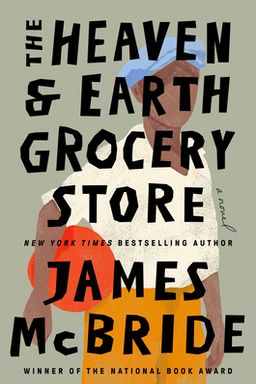
The Heaven & Earth Grocery Store cover

The Heaven & Earth Grocery Store

by James McBride

The Heaven and Earth Grocery Store is a captivating tale set in 1920s and 30s Pottstown, Pennsylvania, where a Jewish-owned grocery store becomes the heart of a diverse community. Amidst themes of love, resilience, and unity, the novel delves into the lives of unforgettable characters navigating societal tensions and personal trials.

Community, Power, and Moral Responsibility on Chicken Hill

What does it mean to belong in America when race, religion, and class pull in opposite directions? In The Heaven & Earth Grocery Store, James McBride uses the small world of Chicken Hill—a mixed neighborhood of Blacks, Jews, Italians, and immigrants—to explore how ordinary people weave fragile bonds of solidarity amid structural inequality. The novel’s argument is bold: community survives not through shared identity but through acts of everyday interdependence that cross boundaries of faith and color. Yet those same acts unfold under the looming presence of institutional power—police, doctors, municipal authorities, and the state—that can erase the vulnerable at any moment.

The Setting as Moral Laboratory

Chicken Hill functions like a social experiment. On one street you find Jews keeping a shul and selling groceries; in the next alley, Black families washing laundry or playing jazz. Moshe and Chona Ludlow’s store—the Heaven & Earth Grocery—is its beating heart. They give credit, extend care, and refuse to segregate their clientele. This mingling of commerce and conscience defines the community’s rhythm: trade becomes a form of trust, and service becomes a moral practice. But tension lurks everywhere—the Klan parade on Main Street, the white-owned dairy’s water monopoly, and the institutional eyes that watch from the hilltop Tucker School or Pennhurst asylum.

Intersecting Lives and Hidden Networks

Through characters like Moshe, Chona, Addie, Nate, Paper, and Bernice Davis, you see how lives intertwine in the shadow of prejudice. A sick woman’s recovery depends on challenges to social norms: a Black neighbor cooks her meals; a Jewish man pays off corrupt inspectors; women on both sides of the racial divide spread warnings about state agents. In this world, survival is not abstract—it’s a form of choreography, where each person’s moral motion depends on others’ quiet bravery.

(Parenthetical: McBride’s portrait echoes the social mosaics in works like Toni Morrison’s Home and Isaac Bashevis Singer’s immigrant tales—stories where geography itself enforces moral test.)

The Plot’s Moral Core

The narrative revolves around Dodo—a deaf Black boy whose life becomes a battle between community care and institutional control. After a misunderstanding involving Chona and the predatory Doc Roberts, the authorities seize Dodo and send him to Pennhurst State School, an emblem of bureaucratic cruelty disguised as charity. What follows is part tragedy, part resistance narrative: networks of women, porters, and union men conspiring to retrieve him from the system’s grip. Each character—Jewish or Black, male or female—must decide how much law-breaking justice requires. The result is a mosaic of cross-community ethics forged in necessity.

Faith, Art, and the American Dream

Moshe’s theater and Malachi’s mystical bakery extend the book’s moral questions into spiritual terrain. Can commerce coexist with conscience? Can art reconcile exploitation and dignity? Moshe books acts across racial lines—Yiddish comics beside Black jazz legends—and risks his livelihood to make space for joy in a divided town. Malachi, a wandering baker-mystic, embodies another ethos: faith expressed through absurd generosity. His challah heals more hearts than it sells. These men’s divergent paths reveal the novel’s central proposition—that moral value lies not in success but in how one treats the powerless.

Institutional Violence and the Need for Solidarity

At Pennhurst, Dodo meets Monkey Pants, a disabled boy who invents a finger-code alphabet so they can speak in the silence of confinement. Through this fragile friendship, McBride shows that even in institutions built to erase humanity, people invent language, love, and resistance. When community networks—led by Isaac Moskovitz, Nate, Miggy Fludd, and Pullman porters—organize Dodo’s rescue, it stands as a counter-narrative to state power: an underground alliance of compassion. Water thefts, tunnel escapes, forged tickets, and coded communications all become metaphors for reclaiming moral sovereignty.

The Central Argument

McBride ultimately argues that America’s moral history is written in its small, defiant acts of kindness. Chicken Hill’s people are bound by practical solidarity—wells hooked secretly to share water, groceries extended on credit, rescues carried out through improvised networks. Yet these acts remain risky because power rarely punishes cruelty and often criminalizes care. The book asks you to see community not as nostalgia but as resistance, and to recognize that freedom depends on neighbors who refuse silence when others suffer.


Interdependence and Resistance on Chicken Hill

Chicken Hill is both a place and an argument about how society works when the official order fails. Jews, Blacks, Italians, and poor immigrants live together in proximity that breeds obligation. You watch bakeries, theaters, and groceries form a mutual economy of survival. Moshe’s theater thrives because Black audiences support it; Addie and Nate’s care sustains Jewish households. The same intimacy that creates friendship also exposes everyone to collective danger, because prejudice can ignite at any moment.

Race, Space, and Everyday Power

The geography is moral architecture: Pottstown’s wealthy live above; Chicken Hill lies below, both literally and figuratively. The slope of land mirrors the slope of power. When the Klan marches through Main Street, the Hill’s residents huddle but continue sharing resources. That stubborn cooperation is defiance. Where the city’s laws divide, neighbors invent informal systems of exchange—Borrowed flour and milk from Bernice, gossip-information from Paper, credit from Chona’s ledgers—all form a social safety net stronger than formal insurance.

Informal Governance and Female Authority

Women wield invisible power here. Chona’s grocery doubles as political salon; Addie’s kitchen becomes triage for sickness and crisis; Paper’s rumor network operates as early-warning system. They embody leadership without title. When state agents or police intrude, it’s the women who coordinate response—hiding Dodo, feeding the sick, or counteracting false rumors. Their labor and wisdom provide moral continuity that formal institutions deny.

Commerce, Faith, and Survival

Moshe and Chona represent two poles of immigrant survival. He wants prosperity and assimilation through show business; she insists on ethical life through community service. Their grocery’s motto—Heaven & Earth—captures this tension between spiritual duty and worldly need. In their story, McBride illustrates that interdependence on Chicken Hill is practical theology: faith expressed through shared survival rather than doctrine.


Love, Trade, and Conscience in Marriage

Moshe and Chona’s marriage anchors the book’s emotional and ethical center. Their relationship dramatizes the old immigrant question: how far can you chase prosperity before losing your soul? Moshe translates hustle into holiness—seeing risk as divine sign—while Chona insists holiness is patience, fairness, and Torah study turned into daily kindness. You experience their tension each time Chona refuses to profit from neighbors’ debts or to abandon Chicken Hill for wealthier streets.

Ethics Against Economics

Moshe’s theaters bring American fame—but at the cost of moral quiet. He books acts across racial lines, paying bribes to keep the doors open, arguing that music integrates the town better than sermons. Chona disagrees: inclusion without justice is performance. Their debates give voice to two versions of the American dream—the pragmatic and the prophetic. When illness strikes her, that dream collapses into the immediate question of care: who will feed, nurse, and protect when institutions fail?

Illness and Communal Reciprocity

Chona’s frailty reveals the Hill’s strength. Neighbors appear with soup, bread, and song. Nate prays silently while Addie scrubs the floor. These gestures reassert that compassion is the community’s real currency. Even Moshe’s practical bribes—paying off inspectors or buying medicine—acquire moral weight because they secure others’ safety. You learn that love, here, is logistical: credit sheets, packed lunches, watching over a deaf child upstairs.

The Moral Choice

Chona’s decision to hide Dodo crystallizes her worldview. Law says surrender him; conscience says protect him. Moshe wavers but ultimately follows her lead. Their choice costs them peace and profit but preserves dignity. Through them, McBride asserts that devotion without moral action is hollow. Marriage, like community, becomes sacred not by ritual but by shared risk for others’ welfare.


Dodo and the Cost of the State

Dodo’s story pulls together the novel’s ethical threads. A deaf child of color in the 1930s stands at the intersection of every exclusion: racial hierarchy, ableist bureaucracy, and poverty. His muteness exposes who listens and who doesn’t. When Doc Roberts and the police seize him for institutionalization, the question is not medical—it’s moral: who has the right to define care?

From Home to Captivity

Raised by Addie and Nate, integrated into Chona’s store routine, Dodo contributes small tasks that give him belonging. Then state power intrudes. What officials call protection—placement at Pennhurst—becomes confinement. The moment law replaces love, humanity erodes. McBride stages the grocery struggle and Dodo’s fall from the roof as a metaphor for the peril of bureaucratic benevolence: good intentions turned mechanized cruelty.

Inside Pennhurst

Within the asylum’s wards, routine masks violence. Dodo meets Monkey Pants, who invents a finger code so the boys can communicate—thumb for A–E, index for F–J, and onward. Through this fragile language, McBride shows how oppressed bodies invent new speech. The friendship, ending in tragedy, reframes disability not as deficit but as dynamic creativity. When Monkey Pants disappears after assault by the attendant ‘Son of Man,’ Dodo’s solitary finger raised to the dark becomes symbol of survival through gesture.

Institutional Critique

Pennhurst’s horror is bureaucratic, not monstrous. Abuse hides behind forms, schedules, and polite doctors. The novel indicts an entire system that turns compassion into paperwork. You come away understanding that progress without empathy is another form of neglect—and that communities, however flawed, often protect better than institutions claiming enlightenment.


Malachi and Moral Comedy

Malachi’s arrival on Chicken Hill infuses the story with humor and mysticism. He’s both fool and prophet—a baker who ruins pies yet revives spirits. His wandering faith bridges old-world Judaism and new-world absurdity. Through him, McBride questions how holiness operates outside strict institutions. Can a man who fails in business still redeem lives? The answer, embodied in Malachi’s dance and blessing, is yes.

Ritual as Play

Malachi prays through performance. He weaves Yiddish song and Hasidic dance into daily acts, reminding you that religion can be lived as joy, not rule. When he gives Chona a crooked challah that coincides with her recovery, you confront mystery: coincidence or miracle? McBride leaves it ambiguous, urging respect for irrational goodness.

Comic Disruption and Moral Vision

Malachi’s failures expose societal blindness: townspeople mock him for incompetence yet rely on his warmth. His wandering letters from Chicago show resilience born of faith, not finance. Moshe envies him because he answers to conscience beyond markets. Malachi’s presence implies that redemption often arrives through unlikely channels—the broken baker, the mad prophet—instead of the powerful.

Spiritual Function

He becomes narrative yeast: a small ferment that makes the moral dough rise. His brimming faith contrasts with the town’s cynical hierarchy. Malachi insists that sacredness hides in daily bread—literal and figurative—and this belief prepares you to see the later rescues and sacrifices not as miracles but as worked blessings.


Authority, Law, and Corruption

Formal authority in the novel—doctors, police, city councils—appears less as guardian than as predator. Doc Roberts’ medical coat shields prejudice; city inspectors exploit bribes; the police maintain order for the privileged. You realize quickly that in Pottstown, credibility tracks complexion and title, not evidence. Gossip and class perception decide truth.

Rumor and Reputation

After the store incident, the town believes Doc’s version because he’s white and educated. Chona’s prior activism, Addie’s race, and Dodo’s deafness render them untrustworthy to officials. McBride crafts this imbalance to expose how structural bias converts rumor into law. Reverend Spriggs’ casual disclosure to state agents sets tragedy in motion—proof that virtue without caution can still harm.

Infrastructure as Leverage

The subplot about water theft reveals another face of power. The shul’s secret well hookup—originally crafted by Shad Davis to keep worship possible—turns into weapon for political blackmail by Gus Plitzka and his cronies. Fatty’s illegal midnight drilling dramatizes how marginalized groups must hack public systems to survive. Water thus becomes code for access: who drinks freely, who pays, who risks arrest to keep faith alive.

Moral Lesson

By linking rumor with resource control, McBride frames authority as a double deceit: narrative control (who is believed) and material control (who owns the pipes). The community’s resistance—hidden wells, shared credit, underground rescue—exposes corruption not as anomaly but as structure. You are left wary of any institution that demands obedience without accountability.


Rescue, Solidarity, and Moral Compromise

The rescue of Dodo is the novel’s thrilling and theological climax. It mobilizes a hidden network of porters, union brakemen, Jewish businessmen, Lowgod healers, and neighborhood women. Each participant bends or breaks conventional morality to make mercy possible. McBride defines this coalition as America’s truest congregation—bound not by creed but by conscience.

Improvised Infrastructure of Care

Isaac Moskovitz leverages theater connections; Marv recruits railroad men; Paper coordinates through Pullman porters; Miggy and Bullis from Hemlock Row channel ancestral routes and tunnels. Every link functions through trust built over years of shared labor. The operation’s success—moving Dodo from Pennhurst to safety via the Tanker Toad train—demonstrates how solidarity uses existing systems (trains, unions, prayer) against the hierarchies that built them.

Moral Ambiguity

Yet rescue exacts cost. Fatty’s team commits theft and possible homicide beneath the manhole; Nate kills the abusive Son of Man during the escape. McBride refuses to sanitize these acts. He asks whether justice ever exists without sin when institutions sanctify cruelty. The law remains intact on paper, but moral legitimacy transfers to the dispossessed who act out of love.

A New Definition of Justice

By the novel’s end, the community’s improvisation becomes a sermon: justice is what ordinary people build when systems collapse. No court blesses them, yet their clandestine courage creates real safety. McBride suggests that moral progress often begins in illegality—and that empathy, not authority, is the bedrock of civilization.

Dig Deeper

Get personalized prompts to apply these lessons to your life and deepen your understanding.

Go Deeper

Get the Full Experience

Download Insight Books for AI-powered reflections, quizzes, and more.