
Idea 1
Building the Human Heart of Transformation
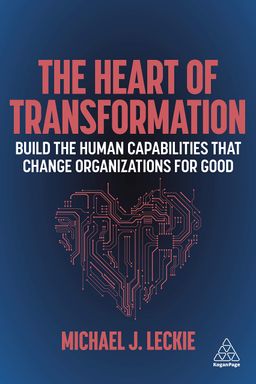
How do organizations truly change—not just in their processes or technology, but in the hearts and minds of their people? In The Heart of Transformation, Michael J. Leckie argues that successful, sustainable transformation begins not with digital tools, structural redesigns, or lofty strategies, but with people. What drives lasting change, he contends, is the cultivation of six core human capabilities that enable individuals—and therefore their organizations—to adapt continuously, learn deeply, and care enough to transform for good.
Leckie’s central claim is that transformation isn’t something done to people; rather, it happens through them. Drawing on decades of experience at GE, Gartner, and other global organizations, he offers a powerful shift in perspective: organizations don’t exist—only people do. Systems, technologies, and frameworks will fail unless the humans inside them possess the heart and behavioral flexibility to create change together. Real transformation, he argues, comes when people operationalize curiosity and care, building habits that reinforce empathy, learning, courage, and trust.
The Core Argument: Digital Requires Human Transformation
In a world where technology evolves faster than human systems, Leckie observes that businesses are suffering from what he calls a “fifth-generation technology, second-generation human systems” problem. While organizations adopt advanced digital tools, they often retain outdated mindsets shaped by industrial-era management. The result? Disconnected cultures, change fatigue, and resistance. The real gap isn’t technological—it’s human.
To bridge this gap, Leckie introduces six interrelated capabilities that form the “heart” of transformation: Exploring Before Executing, Learning Before Knowing, Changing Before Protecting, Pathfinding Before Path Following, Innovating Before Replicating, and Humanizing Before Organizing. Each one shifts a traditional business habit into a new way of being—centered on exploration, empathy, and courage rather than compliance and control.
A Model of Six Transformative Capabilities
Exploring Before Executing anchors transformation in curiosity—the willingness to ask questions before acting. Learning Before Knowing replaces certainty with active learning, pushing individuals to unlearn assumptions and focus on growth. Changing Before Protecting challenges our natural instinct to defend the status quo, embracing risk and vulnerability instead of safety. Pathfinding Before Path Following reframes leadership as discovering rather than dictating; leaders focus on values-driven direction, not rigid control. Innovating Before Replicating prizes experimentation and long-term thinking over mere duplication of past success. Finally, Humanizing Before Organizing reminds us that people—not processes—make organizations thrive, urging leaders to see colleagues as whole humans rather than job functions.
Together, these six human capabilities form what Leckie calls the “heart of transformation.” They operate not as a hierarchy but as interdependent muscles—each strengthening the others. Developing them means transforming how we think, converse, and behave daily, one question and one relationship at a time.
Why This Matters Now
In the age of digital acceleration, organizations face what Leckie describes as adaptive change: shifts that can’t be managed through traditional plans and processes. Adaptive change means learning while doing, solving problems no one has solved before, and dealing with emotional, cultural, and psychological resistance. In this context, leaders can’t rely on rigid models—they must lead with empathy, curiosity, and self-awareness.
By rehumanizing transformation, Leckie also redefines leadership. A leader is no longer the one with all the answers, but the one willing to ask better questions. Leadership becomes an act of service: enabling others to explore, learn, and change. The heart—symbolic of courage, care, and action—becomes the metaphor for sustainable transformation. If you want your organization to change for good, you need to first strengthen the individual heartbeats that power it.
From Theory to Application
Leckie grounds his framework in storytelling rather than theory. He opens with his own experience learning to swim—an allegory for change itself. At first, progress feels messy and uncomfortable, but through practice and reflection, new behaviors become second nature. The same applies to organizational transformation: you start imperfectly, choose one behavior to practice, reflect regularly, and keep going.
Throughout the book, Leckie blends personal narratives with corporate case studies—from GE’s failed digital pivot (a cautionary tale of executing without exploring) to Microsoft’s revival under Satya Nadella, who modeled “Changing Before Protecting” by leading with vulnerability and empathy. These stories make the six capabilities vivid and actionable, demonstrating how the human side of change determines whether technologies and strategies succeed.
The Promise of a Heart-Led Future
Ultimately, The Heart of Transformation is a call to courage. Leckie challenges you to recognize that transformation isn’t about managing systems but nurturing souls—helping people care enough to change themselves and each other. Whether you’re a CEO reshaping culture, an HR professional guiding growth, or simply an individual facing change, the path forward begins within. By strengthening curiosity, compassion, and authenticity in yourself, you seed transformation that lasts—transformation with heart.