
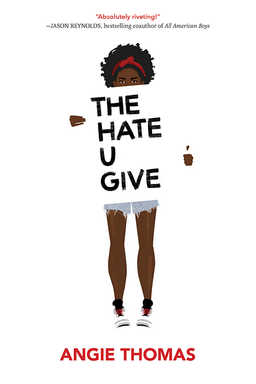
The Hate U Give cover

The Hate U Give

by Angie Thomas

In ''The Hate U Give,'' Starr Carter witnesses her friend''s tragic death at the hands of police, propelling her into a fight for justice. Navigating two contrasting worlds, Starr must find her voice amidst societal upheaval and racial tension, ultimately becoming a powerful advocate for change.

Identity, Voice, and Survival Between Worlds

What happens when your very identity depends on which street you're standing on? In The Hate U Give by Angie Thomas, you meet Starr Carter—a sixteen-year-old navigating two incompatible worlds. She lives in Garden Heights, a predominantly Black neighborhood marked by love and hardship, and attends Williamson Prep, a mostly white private school where she’s the token representative of diversity. The book’s central argument is that learning to speak in both languages—to code-switch across class, race, and belonging—is not hypocrisy but a form of survival, an act of strength that reveals the cost of living through systemic injustice.

Thomas builds this narrative around a single act of violence: Starr witnesses her childhood friend Khalil’s death at the hands of a police officer. That trauma becomes the turning point that forces her to reconcile her two selves—and to find one voice that can survive the contradiction. You begin the book with Starr’s careful calibration at school, self-editing her slang and emotions to fit a polite standard, while in her neighborhood she must project strength and street credibility to avoid ridicule. It’s exhausting duality. (Think of Zadie Smith’s concept of “double consciousness”—the awareness of how you are seen multiplied by who you truly are.)

Two Worlds, One Person

At Williamson, Starr trims parts of herself—she doesn’t tell Hailey or Maya that she’s from a tough neighborhood, hides that her dad owns a local grocery store, and even filters her online presence. She’s afraid of being labeled “angry” or “ghetto.” But Garden Heights demands a different kind of code; she wears hoodies, toughens her tone, and distances herself from people who think her private-school education makes her “bougie.” Through this split, Thomas shows that respectability politics don’t protect you—they just disguise vulnerability. Being “two Starrs” is lonely, and when Khalil dies, the balance collapses. She can’t stay quiet in both spaces anymore.

The Shooting and What It Changes

The shooting itself is both intimate and political—a single moment captured with relentless clarity. Officer 115 shoots Khalil three times after misreading a gesture; Starr watches her friend die beside her. What strikes you isn’t just the violence but how instantly Khalil becomes a national headline before his humanity is even known. The details conflict—media calls him a “suspected drug dealer”—but Starr knows he was simply trying to help his mother repay King, the local gang leader. The world’s willingness to rewrite Khalil’s story becomes a mirror of how society erases Black lives to preserve institutional narratives.

After the shooting, Starr enters a landscape of controls—police questioning, legal obligations, and moral traps. Detectives interrogate her like a suspect rather than a witness, and her parents debate whether she should testify. Uncle Carlos, a cop himself, pushes for cooperation, while Big Mav insists on demanding justice publicly. This isn’t procedural neutrality; it’s how trauma gets filtered through systems designed to protect authority more than people. When Starr’s witness statement becomes national news, she must decide whether to stay anonymous or speak on television. That choice—visibility versus safety—defines her path forward.

Turning Grief Into Action

Grief spirals outward: funerals turn into protests, protests turn into riots, and hashtags turn into headlines. Ms. Ofrah from Just Us for Justice mentors Starr, teaching her how advocacy works within media frameworks, and how protest can shift power without losing moral center. Starr learns that speaking publicly is not about fame—it’s about reclaiming narrative. Her television interview reframes Khalil’s story, explaining why he sold drugs and insisting he was not part of King’s gang. That act restores his dignity and breaks Starr’s silence, transforming personal pain into collective truth.

Family and Community As Anchor

Underneath the protest lies family—the Carters, who embody different philosophies of protection. Lisa fears exposure; Maverick demands accountability; Uncle Carlos bridges law and love. Their home becomes a pressure chamber of safety plans, street loyalty, and moral debate. Starr’s parents show her that survival in a broken system requires both courage and strategy: sometimes you stay quiet to protect your own, sometimes you speak out to protect others. Ultimately, their bond is what allows Starr to move from witness to activist. Even amid the riots that burn Big Mav’s store, the neighborhood shows solidarity—neighbors rebuild together, proving that resistance isn’t only shouting; it’s showing up.

Thug Life and Structural Forces

Thomas threads Tupac’s concept—“The Hate U Give Little Infants F***s Everybody”—as the book’s thesis. The phrase means that what society teaches its children—neglect, violence, inequality—returns multiplied. You see it in Khalil’s life, DeVante’s choices to flee King, and Maverick’s past as a former gang member. Each choice is shaped less by moral failure and more by lack of opportunity. (In economic sociology, this is called structural constraint—when choices are narrow because systems are rigged against you.) By tracing Khalil’s death back to these constraints, Thomas argues that injustice isn’t accidental; it’s engineered by generations of scarcity and bias.

From Silence to Legacy

Starr’s evolution—quiet schoolgirl to tear-gassed protestor standing on a police car—is more than symbolic. It’s the journey of learning how to keep dignity in systems that strip it. She discovers bravery isn’t absence of fear but its transformation. Momma tells her, “Brave doesn’t mean you’re not scared.” That line reframes courage for everyone watching injustice unfold—it’s not heroism; it’s persistence. The book closes with rebuilding: the Garden cleaning debris, neighbors like Mr. Lewis offering their shops, and Starr’s vow to keep speaking Khalil’s name. Her final act isn’t vengeance—it’s remembrance and rebuilding, a promise that grief can become action, and action can lead to community healing.

Core Message

You learn that voice, when born from pain, becomes resistance. The Hate U Give argues that systemic hate starts young, but so does resilience. Starr’s choice to speak ensures Khalil’s humanity survives—and that silence will never erase memory again.


Dual Identity and Code-Switching

You notice early that Starr’s life splits across two realities with competing rules. At Williamson Prep she is composed, academic, and stately—a version trained to evade stereotypes. In Garden Heights she is instinctive, streetwise, and fiercely loyal. Angie Thomas uses this contrast to explore how racial and class boundaries force self-editing. Starr doesn’t change herself for pleasure; she does it for safety. The fictional distance between her two lives feels emotional: being fully honest in either world risks losing the other.

Language as Protection

At Williamson, Starr polices her own vocabulary and tone—she avoids slang or frustration—even when classmates joke about stereotypes. Hailey’s “fried chicken” remark and “unfollowing” of Starr’s Tumblr after seeing Emmett Till posts show how social media becomes a mirror for race discomfort. (Note: Thomas captures microaggressions with surgical detail; small, coded acts that accumulate as exhaustion.) At home, Starr loosens her speech, expressing emotion freely with Kenya and Seven. The contrast reveals how code-switching becomes emotional armor—the ability to survive changing contexts without collapsing.

School, Friendship, and Collision

The collision between her worlds happens when Khalil’s death goes public. Hailey refuses to acknowledge its racial dimensions, Maya tries to mediate, and Starr’s fury finally breaks the silence. The fight at school shows how personal grief intersects with social blindness. Thomas doesn’t stage this as a tidy moral victory—it’s messy, showing that privilege resists confrontation even from friends. Starr’s fight is less about Hailey’s cruelty and more about reclaiming emotional truth.

Personal Costs

Code-switching drains identity. Starr has to balance affection for Chris, her white boyfriend, with anxiety over stereotypes of interracial dating. Her silence about Khalil damages trust. Later, when Chris learns of her witness role, his hurt mirrors what she fears most—being pitied. The relationship humanizes the tension between empathy and exploitation. Starr realizes authenticity means accepting discomfort, even risking rejection.

Dual Identity Seen Clearly

Living two worlds isn’t failure—it’s survival practice. Starr teaches you that adaptation can be both shield and prison, and that freedom begins when voice replaces performance.


Justice, Law, and Institutional Distrust

When legal systems enter the story, they’re not neutral—they’re filtered through culture, power, and bias. Starr’s participation in the DA interviews and grand jury shows how institutions can invalidate victims by questioning them instead. Detectives focus on Khalil’s reputation instead of the officer’s actions. That framing exposes procedural bias disguised as professionalism. It’s policy language used to preserve authority.

How Power Frames Narrative

Officer 115’s father’s TV interview proves how quickly media becomes propaganda. By emphasizing fear—the officer “feared for his life”—networks reroute sympathy. Just Us for Justice counters by centering humanity through Ms. Ofrah’s advocacy. This narrative tug-of-war demonstrates how official channels manipulate truth before courts even act. Starr’s family learns that protection requires legal strategy, emotional endurance, and media control simultaneously.

Law and Family Dilemmas

Uncle Carlos wants procedure; Maverick wants revolution. Their disagreement illustrates generational trust gaps—between institutional reform and street accountability. When Starr testifies, she’s not simply describing facts; she’s translating trauma into acceptable syntax. Thomas effectively critiques how justice demands linguistic polish from those grieving. Starr’s nausea at recounting the shooting symbolizes what testimony costs survivors.

Law as Language

Procedure hides power. The novel shows how framing determines truth—how victims’ voices must fight not only for justice but for translation into systems that often don’t listen.


Community, Grief, and Activism

You witness how Garden Heights mourns together, transforming pain into organized resistance. Khalil’s funeral begins solemnly but ends as manifesto—Ms. Ofrah’s pronouncement that the officer walks free ignites marches and chants. Thomas portrays this evolution not as inevitability but choice: grief can isolate or galvanize. The community alternates between peace and unrest, revealing how suppressed anger seeks outlet when justice stalls.

Protest and Performance

At Williamson, students’ “Justice for Khalil” walkout becomes partly performative—many join to skip tests—showing how privilege dilutes activism. Meanwhile Garden Heights burns, and Starr’s presence shifts activism into lived reality. Her decision to stand on a police car and speak through a bullhorn marks her full transformation from witness to leader. The scene’s imagery—smoke, tear gas, sirens—contrasts chaos with clarity: she’s no longer invisible.

After the Fire

Riots destroy Big Mav’s store, yet neighbors immediately organize to repair. Mr. Lewis donates his barbershop space, Goon (a gang member) guards the family, and strangers bring water and milk to wash tear-gas burns. This shared rebuilding suggests activism’s second phase: repair. Thomas wants you to see rebellion and restoration together—not opposites but stages in justice pursuit.

Communal Power

Grief without silence creates momentum. The Garden teaches that activism begins at funerals but survives through reconstruction.


Family and Protection

Family defines how people navigate danger in Thomas’s world. The Carters are a case study in strategic love—each member protecting Starr in a different way. Lisa manages safety quietly, Maverick channels defiance, Uncle Carlos bridges the street-law divide, and Seven shields with loyalty. These layers make protection both ethical and logistical.

Protective Conflict

Lisa’s instinct to keep Starr hidden contrasts with Maverick’s insistence on justice. Their arguments reveal how trauma splits priorities. When police threaten, Lisa wants retreat; Maverick wants confrontation. Their synthesis—guard yet speak—becomes the family ethos. The later decision to move to Brook Falls shows pragmatic survival rather than surrender.

Extended Family and Community Bridges

Uncle Carlos and Maverick embody moral tension between system participation and opposition. Both use their influence—Carlos offers police authority; Maverick channels neighborhood trust—to defend Starr and DeVante. The alliance between official protection (Carlos) and street solidarity (Goon) complicates binary notions of safety. Thomas shows how real security arises from hybrid collaboration.

Protection as Negotiation

Family survival demands balancing silence and speech, law and loyalty. The Carters prove that protection isn’t passive—it’s continuous moral choice.


Thug Life and Economic Pressure

Tupac’s phrase “The Hate U Give Little Infants F***s Everybody”—spelled THUG LIFE—anchors the book’s philosophy. It means injustice begets injustice: what communities suffer young becomes the society’s future chaos. Thomas personalizes this idea through Khalil, DeVante, Brenda, and Maverick—all shaped by scarcity and systems that punish survival strategies.

Cycles of Survival

You see how poverty limits choices: Khalil sells drugs to fund his grandmother’s chemotherapy; Brenda battles addiction; DeVante steals from King to save siblings. These acts aren’t moral collapse—they’re desperate adaptations. By portraying gang life as a substitute institution, the novel reframes criminality as structural consequence. (Sociologist William Julius Wilson’s “disconnection from legitimate economy” echoes here.)

Power and Exploitation

King manipulates grief and rumor—placing a bandana on Khalil’s coffin to brand him gang—and uses intimidation to perpetuate fear. DeVante’s decision to inform on King marks the book’s pivot toward accountability. Starr’s televised truth-telling destroys King’s narrative economy—honor traded for lies.

Social Feedback Loop

THUG LIFE isn’t slogan—it’s system diagnosis. Hate given to youth cycles outward until every layer of society pays the price.


Grief, Guilt, and Responsibility

Guilt anchors Starr’s transformation. She revisits every second of Khalil’s death, wondering if her presence could have changed anything. Thomas details trauma as repetition—the grand jury testimony forces Starr to rehearse pain for strangers until it becomes unbearable. Her vomiting during retelling conveys that memory isn’t dormant; it’s embodied.

Moving Through Guilt

Starr’s guilt morphs into anger as new truths surface: Khalil’s drug sales were self-sacrifice. That revelation reframes responsibility—from personal to systemic. Family and community provide absolution—Uncle Carlos admits bias, Maverick apologizes for absence, and Lisa teaches resilience. This web of accountability heals through honesty, not denial.

Responsibility as Action

Momma defines bravery as fear endured with purpose. Starr channels that wisdom into activism: interview, protest, solidarity. The book ends in vow—Starr promises not to be silent. Grief becomes memory, and memory becomes duty. Responsibility here isn’t punishment; it’s continuation.

Healing Defined

To heal, you must speak. The Hate U Give teaches that testimony itself is therapy when truth dismantles erasure.


Rebuilding and Forward Vision

By the end, Garden Heights becomes symbol of survival. After protests and fires, residents clean rubble, rebuild stores, and resume life. Thomas depicts recovery as collective ritual: Mr. Lewis giving his shop to Maverick, neighbors washing tear gas with milk, and children painting signs of solidarity. You learn rebuilding is activism too—quiet, physical, and ongoing.

Mutual Aid and Continuity

Community solidarity replaces despair. The Carters’ plan—to move for safety yet stay connected—shows how hope exists between relocation and remembrance. Starr’s voice ensures Khalil’s story stays alive beyond violence, linking individual healing to civic persistence.

Lessons in Restoration

Thomas closes with resilience as verb, not feeling. Repairing charred stores, protecting neighbors, and remembering names are collective memory work. You finish understanding that systemic pain demands systemic rebuilding—including empathy and defense of truth.

Final Message

Justice doesn’t end at verdict—it continues through rebuilding. When voices sustain memory, communities survive hate.

Dig Deeper

Get personalized prompts to apply these lessons to your life and deepen your understanding.

Go Deeper

Get the Full Experience

Download Insight Books for AI-powered reflections, quizzes, and more.