
Idea 1
The Happiness Advantage: Redefining Success Through Well-Being
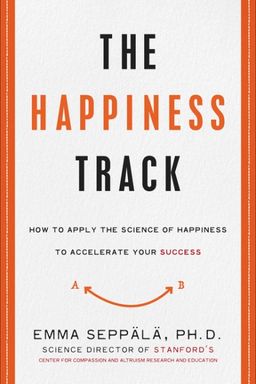
When was the last time you felt truly happy and at ease—not because you achieved a goal, but simply because you were present? In The Happiness Track, psychologist Emma Seppälä challenges our culture’s obsession with achievement at any cost. She argues that we’ve been taught all the wrong formulas for success—work harder, stress more, push beyond our limits—and yet these “success strategies” are destroying both our happiness and our performance. The book’s central claim is deceptively simple but profound: happiness isn’t the result of success—it’s the fuel for success.
Seppälä draws from decades of research in psychology, neuroscience, and organizational behavior to show that our drive to constantly chase the future, control our emotions, and outcompete others actually undermines our resilience, creativity, and relationships. Through stories—from Silicon Valley students burning out under pressure to leaders who learned that calm and compassion outperform aggression—she reveals that people who cultivate inner well-being are not only happier but also more productive, influential, and sustainable in their success.
The Myths That Hold Us Back
We live by six damaging myths about success: that you should never stop accomplishing, embrace stress as a virtue, persevere at all costs, focus narrowly on your niche, play only to your strengths, and look out for number one. These ideas create a hamster-wheel mentality of constant striving and psychological strain. Seppälä contrasts this mentality—captured by the “Stanford Duck Syndrome,” where students glide calmly on the surface but paddle furiously underneath—with scientific evidence that shows how overdrive erodes performance and happiness.
A New Model for Sustainable Success
Instead of perpetuating burnout, Seppälä proposes six evidence-based keys to fulfillment and effectiveness: living in the present, cultivating resilience, managing energy through calm, allowing creative rest, practicing self-compassion, and showing kindness toward others. Each principle dismantles one of the old myths and replaces it with habits proven to strengthen well-being and high performance.
For instance, living in the present challenges our obsession with future goals by showing that true charisma and productivity come from undivided attention. Cultivating resilience through breathwork and mindfulness helps you recover quickly from challenge—something athletes and elite performers already know. Managing energy through calm replaces the false idol of stress-driven excitement with steady focus and emotional balance. Creativity, often lost in our multitasking culture, reemerges when we allow ourselves to play and be idle. And by transforming self-criticism into self-compassion, we restore motivation and confidence while preventing burnout. Finally, compassion toward others replaces cutthroat competition with trust and collaboration—the lifeblood of lasting success.
Why It Matters Now
Seppälä’s message couldn’t be timelier. In a world addicted to speed and constant connection, rates of anxiety, depression, and disengagement are soaring. Yet research consistently shows that happiness strengthens cognition, immune function, creativity, and relationships—the very foundations of thriving organizations and communities. Her stories of veterans using breathwork to heal trauma, executives rediscovering calm, and leaders inspiring loyalty through compassion transform happiness from a soft ideal into a hard strategy for performance and leadership.
Core Insight
Success is not the trophy at the end of suffering—it’s the natural outcome of a mind that’s present, resilient, calm, self-compassionate, creative, and kind. By reversing the cultural logic of achievement, Seppälä offers not only a new definition of success but also a roadmap for living with fulfillment.
Throughout this summary, you’ll explore each of these six keys, learn how they counter the misplaced faith in stress and overdrive, and see how adopting them can transform both your inner life and your external success. Ultimately, The Happiness Track invites you to trade exhaustion for thriving—and to redefine achievement itself as an expression of happiness rather than its price.