
Idea 1
Measuring Happiness and Governing the Inner Self
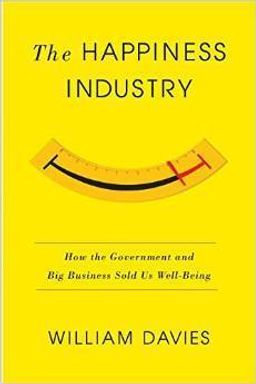
How did happiness, once a private moral aspiration, become a measurable public project? The book traces a sweeping shift—from Bentham’s utilitarian calculus and nineteenth‑century psychophysics to contemporary mood‑tracking apps and workplace wellness dashboards. Across centuries, the same ideal recurs: that subjective feelings can be translated into objective data for managing people, institutions, and societies.
Today, well‑being is not merely felt; it is tracked, priced, and optimized. Governments issue national happiness reports, social media platforms conduct emotional experiments, and employers recruit ‘chief happiness officers.’ The claim behind it all is simple but profound: if you can measure what you feel, you can change it. Yet this promise also redistributes power—from citizens and patients to those who design the metrics and interpret the data.
From Bentham to Big Data
The book opens with Jeremy Bentham’s eighteenth‑century dream of quantifying pleasure and pain—the “hedonimeter” idea that would let governments pursue the “greatest happiness of the greatest number.” Bentham’s students of measurement, from Gustav Fechner’s psychophysics to Edgeworth’s imagined machine of constant pleasure recording, launched a tradition of optimism about turning subjective states into numbers. That fantasy, revived by economic theory and neuroscience, built the foundation for today’s self‑tracking technologies and neuroeconomic models equating dopamine spikes with monetary reward.
The Economic and Political Turn
Through William Stanley Jevons’s redefinition of value as subjective utility, markets became instruments for reading desire. Money served as a universal yardstick of wanting. Later, the Chicago School solidified this logic, redefining competition and profit not as dangers but as proofs of efficiency. Regulators came to treat powerful, profitable firms as social goods rather than monopolistic threats. Under neoliberalism, “competitiveness” became a creed, displacing ethical argument with numerical rankings. Measurement thus replaced moral reasoning as the common vocabulary of governance—a shift that both promised objectivity and suppressed democratic debate about what should count as well‑being.
The Rise of Managerial and Therapeutic Control
In the workplace, the early twentieth‑century Taylorist obsession with efficiency gradually gave way to “therapeutic management.” From Elton Mayo’s Hawthorne experiments to Hans Selye’s stress research, managers learned that mental states could be optimized alongside movements. Contemporary firms blend surveillance, wellness programs, and positive‑psychology coaching to cultivate the “resilient” worker. Happiness becomes a form of human capital; distress becomes a performance deficit to be corrected rather than a social signal of injustice.
Psychiatry, Neuroscience, and the Quantified Psyche
Parallel developments in psychiatry show how diagnostic and pharmaceutical systems mirror economic measurement. The mid‑century discovery of antidepressants like iproniazid and imipramine reframed sadness as a biochemical imbalance, while the 1980 DSM‑III codified hundreds of disorders into checklists that could be easily standardized, billed, and treated. The arrival of Prozac and SSRIs marketed the idea that selfhood itself could be recalibrated chemically. As metrics displaced interpretation, psychiatry ceded interpretive authority to data‑driven algorithms and insurers.
Surveillance, Markets, and Social Engineering
By the twenty‑first century, those impulses merged into the “quantified lab”—a society where social media, facial‑scanning software, and smartphone sensors continuously extract behavioral and emotional data. Projects like Facebook’s 2014 contagion experiment or Dartmouth’s suicide‑prediction systems turn populations into experimental material. Behavioral economics extends this dynamic by reframing altruism, fairness, and reciprocity as resources for social control. Whether through “pay‑it‑forward” cafés or nudging public health compliance, your generosity and emotion become levers for optimization.
Rethinking Well‑Being
Against this tide, the book closes by urging a political re‑anchoring of happiness. De‑medicalizing unhappiness and rebuilding democratic, cooperative institutions—such as care farms, co‑owned businesses, and advertising‑free commons—offer ways to restore agency. Instead of treating suffering as a malfunction within brains, the author proposes addressing the economic and institutional structures that produce it. The moral is clear: happiness measurement can illuminate collective choices, but only if it serves social justice rather than surveillance and profit.
Viewed together, these historical and contemporary strands show how the quest to measure happiness binds moral philosophy, economics, psychiatry, and data politics into one project: governing the inner life. You inherit both its tools and its traps. The challenge now is to reclaim measurement for genuinely collective flourishing rather than turning every heartbeat, smile, or purchase into someone else’s profit metric.