
Idea 1
The Rider, the Elephant, and the Architecture of the Mind
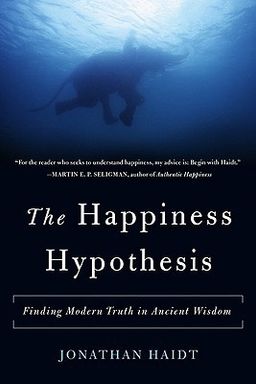
Why do you so often fail at doing what you know you should do? Jonathan Haidt’s central metaphor in The Happiness Hypothesis is that you are both a rider and an elephant: the rider represents your conscious reasoning, and the elephant embodies your automatic, emotional, and instinctive processes. You may think the rider is in charge, but most of the time, the elephant leads and the rider merely rationalizes its movements afterward. This image grounds the book’s exploration of psychology, morality, and happiness through dual-process models of the mind and the interplay between reason and emotion.
Four Divisions of the Mind
Haidt organizes modern psychology around four divisions: mind versus body, left versus right hemisphere, new versus old brain, and controlled versus automatic processing. Together, they show how deeply divided yet coordinated you are. The body and gut have semi-independent systems—the 'second brain' of 100 million neurons—revealing that reason is never disembodied. Split-brain experiments (Michael Gazzaniga) expose the left hemisphere’s 'interpreter' inventing justifications after the fact. Evolutionary layering adds another divide: your limbic system pursues rewards and attachment, while the neocortex builds abstract plans. These ancient systems coexist uneasily in modern contexts.
Finally, the automatic versus controlled division maps onto two processing systems: the elephant’s fast, associative habits and the rider’s deliberate planning. Most behavior—walking, social judgment, even moral decisions—originates in automatic processes. Conscious reasoning is often post-hoc narration, as David Hume predicted: reason serves emotion, not commands it.
The Limits of Self-Control
Because the elephant dominates daily life, willpower alone rarely transforms you. Studies by John Bargh show how automatic priming—elderly words slowing your gait—guides action beneath awareness. Walter Mischel’s marshmallow experiment proves that the rider can’t fight the elephant directly but can distract and reframe its impulses through clever strategies. Similarly, Daniel Wegner’s 'white bear' studies reveal that suppressing thoughts backfires because the automatic mind tirelessly checks for forbidden ideas. Recognizing these biases leads to more compassionate self-management: you don’t fail because you lack logic, but because you fight your evolutionary design.
Practical success depends on shaping circumstances, not scolding yourself. Change your environment to limit temptation, build habits through repetition, and reward small progress. Self-control is a cooperative game—train the elephant through consistent reinforcement so the rider can guide with ease.
A Mind of Likes and Fears
Haidt introduces the 'like-o-meter,' your elephant’s affective system that instantly tags experiences as good or bad. This is the bedrock of intuition and social preference. Research by Brett Pelham shows you even favor names resembling your own (Dennis becomes a dentist). Evolution biased the like-o-meter toward negativity—bad news and threats evoke stronger, longer reactions because survival depended on vigilance. This 'negativity bias' shapes your daily emotions, marriage dynamics, and economic decisions (losses hurt more than equivalent gains).
Retraining the Elephant
You can’t argue the elephant into new habits, but you can retrain it. Haidt identifies three proven methods: meditation (cultivating attention and serenity), cognitive therapy (restructuring harmful thoughts), and medication (using SSRIs to correct crippling affective patterns). Each alters emotional responses more than intellectual beliefs, proving that happiness is largely a function of tuning the elephant’s automatic systems. Meditation reduces reactivity, CBT helps the rider coach new interpretations, and antidepressants reopen emotional bandwidth for growth.
Core Message
Understanding the divided mind’s architecture is the foundation for moral humility, self-compassion, and realistic change. The secret is not control but cooperation: teach the elephant gently, redesign your habitats, and let the rider focus on guidance, not domination.
This framework sets the stage for everything that follows in Haidt’s inquiry—how emotions guide moral life, how relationships bind us into societies, and how happiness emerges from aligning the rider and elephant in pursuit of meaning.