
Idea 1
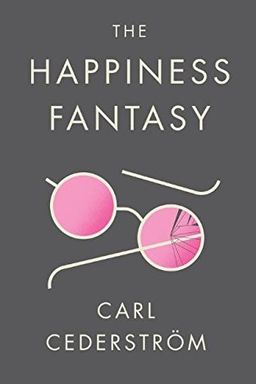
The Happiness Fantasy: How Self-Fulfillment Became a Market Ideology
Have you ever felt that the constant pressure to “be your best self” might be making you miserable? In The Happiness Fantasy, Carl Cederström asks us to reconsider what we mean by happiness—and how our modern obsession with self-actualization has become a tool of control rather than liberation. Drawing on history, psychoanalysis, and cultural critique, Cederström argues that the very fantasy meant to free us—the idea that happiness lies within, waiting to be unleashed—now traps us in cycles of self-optimization, performance, and exhaustion.
He calls this guiding illusion the happiness fantasy: the belief that happiness comes from realizing your true potential, living authentically, and embracing pleasure—but only if you also play by the market’s rules. Over the past century, this fantasy has shifted from a countercultural dream of liberation to a corporate and political ideology that sustains inequality and masks exploitation.
Tracing a Century of Emotional Evolution
Cederström begins by reminding us that every era creates its own version of the “good life.” The ancients equated happiness with virtue or contemplation, Christians tied it to devotion and suffering, and Enlightenment thinkers framed it as a natural human right. The modern West, however, equated happiness with individual self-realization. From the mid-twentieth century to today, we’ve been told that being happy means being authentic, productive, and endlessly self-improving—a message that sounds empowering but, as Cederström reveals, often serves commercial and political ends.
This transformation began in the early 1900s with Austrian psychoanalyst Wilhelm Reich, whose radical ideas linked happiness to sexual authenticity. It exploded in the 1960s with the rise of the counterculture, when people sought to free themselves from rigid institutions through love, pleasure, and self-expression. But as decades passed, those same ideals were absorbed into corporate culture, turning rebellion into branding.
From Liberation to Domination
Cederström’s central argument is that the happiness fantasy began as a sincere quest for personal and sexual liberation, only to be co-opted by neoliberal capitalism. What was once a call to reject authority is now used by corporations to encourage compliance. Employees are told to “be themselves” at work while over-performing and self-branding. Self-help gurus, advertisers, and politicians exploit the language of inner potential to convince people that their failures are personal rather than systemic. In this world, unhappiness becomes an individual moral failure rather than a social symptom.
Cederström’s diagnosis isn’t limited to workplaces. He shows how contemporary consumer culture pushes a form of compulsory joy—an injunction to enjoy, travel, work, and love passionately, no matter the cost. Even drugs, once associated with rebellion, are reframed as “smart tools” for productivity and creativity. In this society, happiness has ceased to be a collective vision of flourishing; it has become an individual burden of proof.
Why Happiness Became a Cruel Obligation
To understand why this fantasy took root, Cederström explores how it mirrors Western morality. We are told to be authentic, work hard, and enjoy responsibly—but entirely on our own. Under the guise of empowerment, these narratives erase interdependence and solidarity. When Tony Hsieh’s Zappos tells employees to “be themselves and have fun,” it’s not championing freedom—it’s demanding emotional labor, authenticity as performance. When Donald Trump invokes “untapped potential,” he’s channeling the same logic that Esalen and the human potential movement popularized fifty years earlier, but in the service of profit and power.
By the book’s end, Cederström declares the happiness fantasy dead, symbolically concluding it with Trump’s presidential victory—an era when “authenticity” and “success” fused into a grotesque caricature. The book concludes with a call to imagine new, collective models of happiness built not on self-mastery but on empathy, solidarity, vulnerability, and truth. Happiness, he suggests, can only be reclaimed when it ceases to be a performance and becomes a shared, social project.
In short, The Happiness Fantasy charts the historical rise and fall of modern happiness culture—from Reich’s sexual utopia to corporate mindfulness workshops—and argues that our obsession with inner freedom has simply made us better workers, consumers, and competitors. By exposing this paradox, Cederström invites you to rethink what it means to live well: perhaps not to optimize yourself endlessly, but to imagine happiness as an act of community, care, and resistance.