
Idea 1
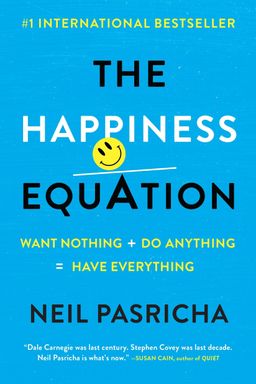
The Happiness Equation: Want Nothing + Do Anything = Have Everything
What if happiness wasn’t something you had to earn after success, but something you could start with to transform your whole life? In The Happiness Equation, Neil Pasricha argues that the way most of us think about happiness is completely backward. We’ve been taught to follow a formula of “Work Hard → Achieve Success → Be Happy,” but Pasricha flips it on its head: “Be Happy → Do Great Work → Achieve Big Success.”
At its heart, this book reveals that happiness isn’t the reward at the end of achievement—it’s the starting point that fuels everything else. Drawing from psychology, philosophy, and personal experience—including his own journey through burnout, divorce, and rediscovery—Pasricha distills his findings into nine actionable “secrets” designed to guide you toward contentment (‘want nothing’), freedom (‘do anything’), and true fulfillment (‘have everything’).
Reversing the Happiness Formula
Pasricha opens with a bold declaration: the happiness model we’ve been fed by society doesn’t work. If you’ve ever said, “I’ll be happy when…”—when you get the job, the promotion, or the house—you’ve already fallen into the trap. Each success simply moves the goalpost. The fix? Snap the phrase “Be Happy” off the end of your life’s equation and stick it at the beginning. When you be happy first, your mindset radically changes. You become more creative, more resilient, and even more productive. Harvard research (referencing Shawn Achor’s The Happiness Advantage) backs this up: happy people are 31% more productive and three times more creative than their peers.
Once you understand that success flows from happiness—not the other way around—you realize how important it is to intentionally cultivate positive emotion before chasing goals. The rest of the book explains how to do that through deliberate habits, mindset shifts, and practical rules.
The Three Stages of Fulfillment
Want Nothing teaches that contentment isn’t apathy—it’s freedom from endless craving. It’s about letting go of the Culture of More, rewiring your ancient survival brain, and practicing scientific habits that boost happiness in the present. Pasricha shares seven evidence-backed habits such as walking three times a week, noting five gratitudes, and engaging in acts of kindness.
Do Anything reminds us that freedom doesn’t come from having nothing to do—it comes from doing something that matters. Through stories of retired teachers, astronauts, and friends in demanding careers, Pasricha shows that work—when it aligns with meaning—gives us social ties, structure, stimulation, and a sense of story. He dissects the broken concept of retirement and resurrects the Japanese idea of ikigai—a reason to get out of bed each morning. Freedom, he argues, is the ability to shape your time around purposeful action.
Have Everything doesn’t mean accumulating wealth or achievements—it’s about self-acceptance, confidence, and authenticity. Here Pasricha introduces ideas like “The Do Circle,” which flips procrastination by taking action before you feel ready, and “The Confidence Box,” which shows how to build self-respect by embracing both yourself and others with generosity. The journey culminates in authenticity: the courage to live as your true self.
Why It Matters Now
In a world obsessed with “more”—more followers, more productivity, more goals—Pasricha’s work is an antidote. He blends warm humor, psychological studies, and intuitive stories (like the “Mexican fisherman” parable or the “Nun Study” proving positivity lengthens life) into a roadmap for a saner life. Each chapter feels like a conversation with a thoughtful friend—the kind who asks uncomfortable questions like: “Are you working for yourself or against yourself?” and “How many of your decisions actually make you happier?”
Ultimately, The Happiness Equation argues that we can all learn to live as if we “already won the lottery.” You’ve already got life, breath, people to love, and enough to begin. Pasricha doesn’t promote a one-time revelation, but a lifelong practice: Be happy first, do what matters, accept yourself completely. When those three ingredients combine, you don’t just improve your mood—you redesign the equation of your entire life.