
Idea 1
The Missing Fourth Trimester and the Baby’s First Language
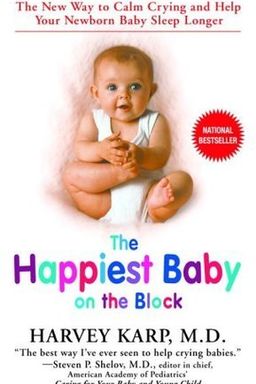
Why do newborns cry so much, and what are they really asking for? Dr. Harvey Karp argues that the chaos of early parenthood stems from one central biological fact: human babies are born three months too soon. This concept of a “missing fourth trimester” reshapes how you see crying, soothing, and early development. The first three months after birth, Karp says, are really an extended gestation outside the womb — a continuation of the environment the infant still expects. If you can recreate the sensations of the uterus, you can give the baby what evolution didn’t finish.
The Evolutionary Compromise
Human babies arrive neurologically unfinished. Compared to a foal that gallops within hours, a newborn can barely coordinate eyes or limbs. Karp traces this back to “the great eviction”: as human brains grew larger across evolution, mothers had to give birth earlier so heads could fit through the pelvis. The price of intelligence was early birth. Thus, the newborn’s brain expects continuous motion, warmth, and sound — a womb that suddenly vanishes after delivery. The result: a baby who’s physically safe but emotionally disoriented.
What the Womb Provided
Inside the uterus, babies are surrounded by constant stimulation: snug boundaries, darkness, rhythmic movement, and maternal white noise. After birth, those comforts vanish and the baby enters a silent, gravity-filled world full of bright lights and stillness. To the infant, this change feels like a sensory free-fall. The key to soothing lies in imitating what’s missing — rhythm, sound, and containment. This realization forms the foundation of Karp’s “Cuddle Cure,” a repeatable calming method based on womb-like cues.
Why Conventional Explanations Fall Short
Traditional explanations for colic — gas, allergies, or parental stress — each explain pieces of the puzzle but not why nearly all babies cry most from weeks two to six, then improve around three months. The fourth-trimester frame predicts this pattern perfectly: as self-soothing brain circuits mature, the need for external calming declines. This makes crying not a disorder but a developmental signal — a baby’s request for the missing womb.
Learning the Baby’s First Language
The newborn’s first language is sensation, not words. You communicate safety through touch, motion, sound, and containment. Nisa from Botswana, who keeps baby Chuko in a snug sling, naturally provides this sensory dialogue — and her infant rarely cries. In contrast, U.S. parents like Suzanne and Don, before learning Karp’s method, felt desperate as their baby Sean screamed for hours nightly. Once they recreated the womb — tight wrap, loud shushing, jiggly motion, and sucking — Sean’s crying collapsed within minutes. This dramatic shift underscores that the problem isn’t parental failure but miscommunication between species: adults speak logic, infants speak sensation.
The Gift of Perspective
Seeing the first months as a “missing trimester” transforms guilt and confusion into calm understanding. When your baby cries, it’s not manipulation but biology. You’re not spoiling; you’re finishing the job evolution started. This mindset also helps guard parental mental health. Colic no longer feels like an accusation — it’s an invitation to reconnect through rhythm, touch, and white noise. (Note: Karp adds that around 5–10% of babies with prolonged fussiness have medical causes such as reflux or food sensitivities; medical evaluation remains essential.)
Key takeaway
Your task isn’t to teach a baby calmness but to imitate the womb until the baby’s brain grows into calmness. For the first three months, you become the fourth trimester.
By reframing crying as a developmental need — and by understanding that soothing is about physiology, not psychology — parents gain both a toolkit and a new lens: every cry is a conversation, and every calm moment is a reminder that empathy begins in biology.