
Idea 1
Power, Memory, and Control in Margaret Atwood’s Gilead
Margaret Atwood’s The Handmaid’s Tale asks you to imagine how ordinary life—houses, words, and gestures—can be reengineered into a system of total control. The novel’s world, Gilead, arises from environmental crisis and political fear, but its true machinery is domestic and linguistic: the reordering of rooms, rituals, and vocabulary into instruments of obedience. Through Offred’s fragmented and deeply personal narration, Atwood makes you experience how control operates not only through punishment but through the minutiae of daily life: a prayer said at a Soul Scroll, a garden gate guarded by an Eye, a dress sewn in a prescribed color.
If you follow the book closely, three interlocking themes emerge. First, the physical geography of Gilead—the gym turned dormitory, the house turned prison—shows how space itself can train submission. Second, social roles and rituals transform intimacy and maternity into public service. Third, memory and secret speech become the means by which individuals resist erasure. Each of these threads helps you see how power functions when totalitarianism enters bedrooms and conversation, not just laws and armies.
Domestic Space as Political Instrument
You first encounter Gilead through its rooms: varnished floors of a gym, lights that cast discipline over sleep, windows that barely open. Offred’s assigned quarters have been modified to remove both danger and freedom—no chandeliers, no mirrors, no rope-bearing fixtures. Every architectural choice signals the state’s doctrine: obedience through spatial confinement. (Note: Michel Foucault made a similar observation in Discipline and Punish, where surveillance and architecture build docility.) As you move through Gilead’s homes, you begin to understand that power thrives by disguising control as domestic order.
Roles, Dress, and Social Architecture
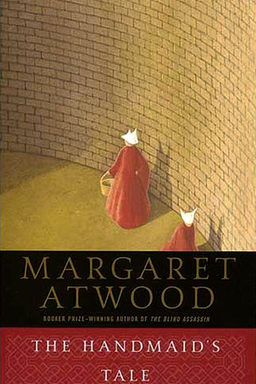
The next layer of control is social scripting. Clothing establishes hierarchy: red for Handmaids, blue for Wives, green for Marthas, and khaki for Aunts. Rituals such as the Ceremony or Birth Day convert personal acts into moral performance. Aunt Lydia trains women to internalize obedience through the language of privilege: to be confined is to be ‘safe’, to be invisible is to be ‘pure’. Through repeated rituals—walking two-by-two, saying “Blessed be the fruit”—the regime makes behavior automatic. When you see this world, you realize law has become choreography; emotion itself is scripted.
Language and Storytelling as Resistance
Yet within that choreography, people find fissures. Offred’s act of storytelling is a rebellion. She speaks her memories aloud, addresses you directly, and names what Gilead forbids naming. Through remembering her mother’s feminism, her life with Luke, and her lost child, she reclaims selfhood. Even forbidden phrases—scratched Latin on a cupboard, whispered jokes with Ofglen—carry resistance. Language becomes a form of survival, a secret economy of meaning beneath official speech. (Note: this strategy recalls George Orwell’s linguistic resistance in Nineteen Eighty-Four, where writing the truth itself is subversive.)
Surveillance, Fear, and Spectacle
Fear seals obedience. Gilead’s public executions—the Wall with dangling bodies, Salvagings and Particicutions—make terror visible and communal. Citizens learn morality by witnessing punishment. Offred’s numbness after watching a hanging speaks to how violence becomes routine; once horror persists daily, people normalize it. The omnipresent Eyes and Guardians extend this surveillance beyond spectacle into everyday caution. You come to realize that in Gilead, not watching is as dangerous as being watched.
Reproduction and Political Theology
At the novel’s center lies reproductive control. The Ceremony transforms sex into civic obligation, with Wives and Handmaids arranged like parts of a ritual tableau. Birth Days turn childbirth into public spectacle, reinforcing the belief that fertility is divine property. Offred’s body, reduced to “a vessel,” becomes the regime’s economic unit—a biological resource. Compassion, love, and desire are overwritten by theology and bureaucracy. You begin to see how the language of sanctity justifies commodification.
Desire, Complicity, and Small Rebellions
No one in Gilead is purely victim or villain. The Commander alternates between cruelty and paternal kindness, offering contraband books and meetings of Scrabble. Serena Joy enforces oppression yet aches with jealousy and resentment. Offred’s affair with Nick blurs desire and survival; her choices are pragmatic rather than heroic. These ambiguities matter: they reveal that resistance rarely occurs in clean oppositions but in compromises. To endure injustice sometimes means to bend without breaking—a lesson echoed across totalitarian histories.
Memory, Archive, and Future Interpretation
The book closes with the “Historical Notes,” where future scholars analyze Offred’s recovered tapes. This shift reframes the narrative as testimony, reminding you that stories of oppression survive through fragile archives—through someone’s voice preserved, analyzed, perhaps misunderstood. The tension between Pieixoto’s detached scholarship and Offred’s visceral experience highlights how easily documents can sanitize pain. In this sense, Atwood’s novel is not only dystopia but also warning: that history itself can collude with forgetting.
Core Insight
By converting everyday spaces, language, and rituals into tools of subjugation, Gilead shows how totalitarian control begins not with decrees but with habits. Offred’s fragments—of memory, desire, and speech—reveal the only real counterforce available: the act of remembering and telling.
When you finish the novel, you recognize the paradox at its center: that the means of oppression—domestic space, language, ceremony—are also the means of resistance. Every whisper, memory, and story becomes an act of reclaiming humanity. Atwood leaves you with no certainty of escape, only the understanding that identity can persist even under silenced tyranny.