
Idea 1
The Black Republican Grift
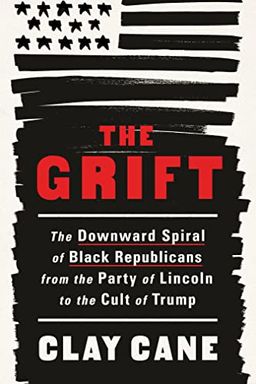
How can you tell principled ideological diversity from opportunism that harms the very people it claims to represent? In The Black Republican Grift, Clay Cane argues that a specific pattern has emerged over 150 years: a recurring set of Black public figures who rebrand themselves to gain proximity to power, money, or fame while advancing or excusing policies that weaken Black political power. Cane’s central claim is blunt: the modern Black Republican grift is not about sincere conservatism; it’s about shape-shifting for personal advancement, even when that requires community betrayal.
The book equips you with a working definition of the grift and three hallmarks: shape-shifting rhetoric, community betrayal, and proximity over principle. Crucially, Cane separates genuine ideological variety (think Colin Powell or Edward Brooke, who sometimes bucked party orthodoxy) from theatrics that trade racial cover for material harm (from Clarence Thomas’s jurisprudence to Tim Scott’s voting record). He urges you to judge by pattern and payoff, not soundbites.
Where the pattern begins
Cane starts with the original meaning of Black Republicanism: Frederick Douglass and Radical Republicans who demanded federal power to secure freedom, voting rights, education, and safety. Douglass’s relentless pressure on Abraham Lincoln, his insistence on Black suffrage, and his critique of colonization plans reveal a template for principled engagement: hold power accountable, even when it wears your party’s label. You see Reconstruction’s brief realization of that vision—Black voter registration around 80% in 1868, elected Black officials like Hiram Revels and Blanche Bruce, and public education gains—followed by organized white backlash and elite Republican retreat.
(Note: Cane draws on Lerone Bennett Jr.’s revisionist view of Lincoln to puncture hagiography and re-center Black agency. The lesson mirrors works by Eric Foner on Reconstruction: rights on paper require federal enforcement.)
From accommodation to modern media tokens
When federal protection faded, a countertradition rose: accommodation and Black capitalism. Figures like Booker T. Washington and Isaiah Montgomery traded political demands for limited economic opportunity. In the 20th century, Republican leaders repackaged this logic as "Black capitalism"—Nixon’s Minority Business Enterprise and showcase projects like Soul City—often starved by conservative gatekeepers after they had served their optics purpose. Cane shows how this logic returns under Trump as a celebrity economy: Omarosa, Candace Owens, Diamond and Silk, and Herschel Walker get rewarded for spectacle and loyalty, not policy competence.
The media machine amplifies the grift’s performance half: cable producers and social platforms prize a Black face saying systems are fine and individuals should bootstrap. The utility half is political: these figures give cover to voter suppression, weakened civil-rights enforcement, and trickle-down schemes dressed as community uplift. You’re invited to look past the image to the ledger of votes, budgets, and court rulings.
The stakes you can measure
Cane grounds the pattern in consequences. Clarence Thomas, who benefited from race-conscious openings, has authored or joined opinions limiting voting-rights protections and action on systemic discrimination, while invoking a personal narrative that sidesteps structural remedies. Tim Scott markets a "cotton to Congress" arc, but his votes against the John Lewis Voting Rights Advancement Act, his weak policing bill that preserved qualified immunity, and his defense of opportunity zones—often a windfall for wealthy investors—tell a different story. At HUD, Ben Carson’s budget cuts, attempted rollback of fair-housing rules, and management scandals show how inexperience plus ideological contempt can hollow out protections many families rely on.
Cane also maps how this politics intersects with democratic erosion. After 2020, Republicans advanced hundreds of restrictive voting proposals; Daniel Cameron joined efforts challenging Pennsylvania ballots while his handling of the Breonna Taylor case raised deep concerns about selective prosecution. The through-line is clear: spectacle smooths the path for policies that shrink Black political power and civic equality.
Your role in breaking the cycle
This is not a counsel of despair. Cane returns to the Reconstruction model and to mid-20th-century visions like the Freedom Budget (A. Philip Randolph, Bayard Rustin, and Martin Luther King Jr.) to argue for a federal, race-conscious, and worker-centered approach: living wages, robust housing enforcement, voting rights with teeth, and targeted capital for existing local businesses. He points you to organizing vehicles—Black Voters Matter, Fair Fight, Color of Change, NAACP, National Urban League—and insists that down-ballot focus and turnout in off-year cycles decide whether protective laws hold or wither.
Key Idea
Judge leaders by alignment with community-protective policy, not by identity claims or personal grit stories. Follow power, incentives, and outcomes rather than vibes.
If you want a simple test, Cane offers one: track the pattern and payoff. When a high-profile conversion coincides with donor access, airtime, or appointments—while the record shows votes or rulings that weaken voting rights, fair housing, or school equity—you’re watching the grift at work. The antidote is civic muscle: vote, organize locally, demand federal enforcement, and refuse to mistake tokens for transformation.