
Idea 1
The Grid: Machine, Culture, and Transformation
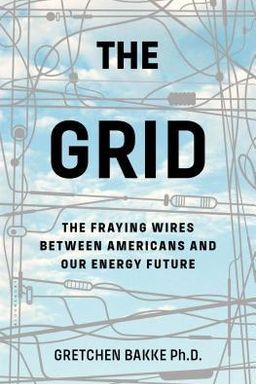
When you flip a light switch, you rarely think about the colossal system behind that simple act. Gretchen Bakke’s The Grid reveals that the U.S. electrical grid is not merely hardware—it’s a living hybrid of engineering, law, culture, and habit. She calls it the twentieth century’s largest machine, shaped as much by political and economic choices as by physical physics.
The book’s central theme is that the grid’s fragility is cultural as much as technical. You live within its invisible logic: a network designed for predictable fuels, centralized control, and social stability. But that same architecture now strains under variable renewables, distributed generation, and changing expectations. Bakke argues that understanding this system as a cultural artifact—as much about values as wires—is essential to shaping its future.
A Machine That Grew With America
From Edison’s Pearl Street station and arc lamps to Niagara Falls and the alternating‑current revolution, the grid evolved alongside U.S. urbanization. Figures like Samuel Insull created the regulated monopoly model—protected territories, rate-making, and massive central stations—which made electricity reliable and cheap. The grid’s design reflected an era that believed bigger was better: large steam turbines, economies of scale, and universal service. Rural electrification and New Deal dams extended that model nationwide.
Yet those very design convictions—centralization, steady growth, and legal monopolies—now limit adaptation. Modern technologies like rooftop solar and microgrids challenge the old economic assumption that everyone buys from one utility. In Bakke’s view, the grid’s hardest problem is neither technical nor financial but philosophical: how can a centralized twentieth‑century machine coexist with a decentralized twenty‑first‑century energy culture?
Culture of Invisibility
You rarely notice substations, pylons, or transformers because successful infrastructure hides itself. This invisibility is designed and cultural: regulators ensured steady voltage and fixed rates so citizens could trust electricity without understanding it. But invisibility breeds neglect. The average U.S. customer endures about six hours of outage annually—far worse than Japan or Germany—and these figures trace the age and strain of the underlying equipment and incentives.
Behind every outlet sits a century of layered laws and logic: utilities engineered stability by keeping decision-making centralized and public concern minimal. That invisibility is breaking as blackouts, renewable stress, and climate disasters make the grid newly visible. Once people realize the system is aging and interconnected, cultural legitimacy becomes as vital as engineering innovation.
The Challenge of Transition
The book walks you through history and into crisis. It shows how the Carter‑era PURPA law, deregulation in the 1980s, and renewables in the 2000s fractured the old consensus. Today’s efforts—from smart meters to microgrids—seek balance between resilience and autonomy. But Bakke warns: you can’t patch an old structure with new gadgets alone. Real change requires re‑imagining the grid’s cultural contract—how citizens, corporations, and governments share responsibility for generation and reliability.
Central insight
The grid mirrors who Americans are: ambitious, decentralized, improvisational, and often unwilling to notice hidden complexity until something fails. Bakke invites you to see electricity not as magic but as a cultural system whose renewal demands both technical and social imagination.
Across the book’s arc—from Edison’s first lamps to wind farms paid to shut off—Bakke shows that the grid’s future depends on reconciling the physics of flow with the politics of trust. Electricity turns out to be less about electrons and more about relationships: between consumers and utilities, between local independence and collective resilience, and between the visible light above you and the invisible machine beneath.