
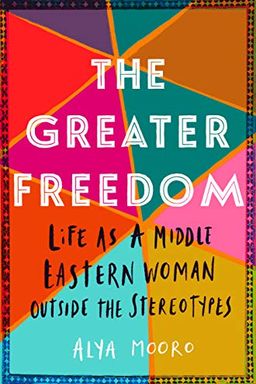
The Greater Freedom cover

The Greater Freedom

by Alya Mooro

The Greater Freedom by Alya Mooro is a powerful exploration of identity, culture, and empowerment. Through personal anecdotes and interviews, Mooro examines the pressures and stereotypes faced by Arab women living in the West, offering profound insights into self-discovery and cultural integration.

Power, Race, and Reform in Wilson County

How do you trace the slow construction of freedom in a place designed to suppress it? This book follows that question across nearly a century in Wilson County, North Carolina, showing how the struggle for civil rights unfolds not as a single dramatic event but as a layered transformation of economy, law, and everyday life. You see how people move from dependence in the tobacco fields to organizing for schools, housing, and political representation. The central argument is that Wilson’s path to racial justice runs through the intersection of economic structures, legal contests, and civic organization—each stage built on the struggles and compromises of the one before it.

The Economic Engine and Social Hierarchy

Wilson’s bright-leaf tobacco economy provides the original architecture of inequality. Industrial warehouses and merchant networks concentrate wealth among white elites while relegating black and poor white families to tenants or seasonal laborers. The cycle of planting, curing, and selling structures every other aspect of daily life—from school calendars to migration patterns—and creates a constant tension between dependence and autonomy. When Mark Sharpe’s family manages to buy the farm they once tilled, his gain defies the trap of tenancy, showing how limited yet significant acts of ownership could become the seeds of local leadership.

Violence and Legal Order

That economy rests on coercion. Jim Crow violence—public lynchings like Oliver Moore’s in 1930, biased courts, and everyday intimidation—functions as the enforcement arm of white supremacy. These are not aberrations but central mechanisms of control. When courts sentence black defendants harshly or deny medical care to black patients, the system turns brutality into legality. The insight here is that law itself becomes an instrument of racial order, requiring legal strategy, not just moral protest, to dismantle it.

Civic Foundations and the Rise of East Wilson

Against this backdrop emerges the civic infrastructure of East Wilson: churches like Jackson Chapel, the Men’s Civic Club, women’s organizations, and labor unions. These spaces cultivate leadership, distribute information, and coordinate collective action. They allow you to see the granular fabric of the civil rights movement—the Sunday meetings, voter drives, and classrooms that precede direct protest. Argie Evans Allen’s founding of the Negro Library or Reverend Talmadge Watkins’ organizing networks exemplify how black institutions created the scaffolding for later challenges to city power.

From Equalization to Political Mobilization

Litigation—anchored by local leaders like Mark Sharpe and lawyers such as John Wheeler—becomes both tactic and teacher. Early suits for school equalization yield tangible results (new high schools and buses) while equipping citizens with procedural knowledge and organizing habits. The path from these court battles to G.K. Butterfield, Sr.’s electoral breakthrough in 1953 shows how legal activism evolves into practical politics: civic reform turns votes into seats, and seats into bargaining power, even as the system retaliates with new barriers like at-large voting rules to dilute black strength.

Reform, Resistance, and the Long Movement

After Brown v. Board, North Carolina perfects a style of bureaucratic moderation—symbolic compliance that perpetuates segregation through paperwork and procedural delay. The Pearsall Plan’s pupil-assignment laws reveal a state that manages dissent with administrative finesse rather than open defiance. Meanwhile, local leaders debate tactics: the Men’s Civic Club favors negotiation to avoid backlash, while youth and working-class activists push direct action. 1960s sit-ins, wade-ins, and protests show that young students transformed moral conviction into strategy, linking Wilson to the broader wave of southern activism.

Structural Battles and Everyday Justice

By the late 1960s, the fight shifts from integration to survival. Economic mechanization, housing neglect, and welfare exclusion expose the unfinished business of civil rights. Grassroots groups like the Wilson Community Improvement Association (WCIA), trained by the Foundation for Community Development, frame poverty and housing as political issues. Organizers such as Fannie Corbett and Clarence Hoskins lead campaigns to secure water, sewer, and safe homes—turning protest into municipal leverage. Their work grounds the movement in material justice rather than symbolism.

Core Argument

Freedom in Wilson is not a single turning point but a continuous negotiation between local power and organized community response. Economic change determines opportunity, law enforces hierarchy, and collective action reconfigures both over time.

When you finish this story, you see how Wilson becomes a microcosm of the southern transformation: from a tenant-based economy to a civic democracy still wrestling with inequality. The book invites you to read the civil-rights struggle not as a series of triumphs, but as a dynamic ecosystem of actors—farmers, preachers, women, lawyers, and students—who slowly push the boundaries of justice in a world built to contain them.


The Tobacco Order and Jim Crow Foundations

Understanding Wilson begins with tobacco. From the late 19th century onward, bright-leaf production turns the town into a global market hub, driving population growth, class stratification, and racial hierarchy. Economic structures—warehouse markets, merchant credit, bank loans—concentrate power in a few white hands, leaving tenants and factory workers economically dependent. In 1940, over three quarters of county farmers are tenants, most of them white but functioning within the same exploitative system that governs black laborers’ fates.

You see how the tobacco calendar controls every rhythm of life. Winter seedlings, summer primings, fall auctions—each stage dictates income and insecurity. Labor is familial and seasonal, binding women and children to cycles of exhaustion and uncertainty. Rural schooling and urban employment both bend around this agricultural schedule, embedding inequality into time itself.

Violence as Enforcement

The economic order is sustained by physical terror. The lynching of Oliver Moore in 1930 demonstrates that public violence is a civic ritual meant to enforce labor discipline as much as racial hierarchy. Courtroom bias mirrors the mob: “Negro law” produces sentences that naturalize inequality, while extralegal threats—such as the repeated shootings at activist Mark Sharpe’s home—punish anyone daring to challenge the system.

Insight

Violence and law are not opposites; they are twin mechanisms for stabilizing economic power and discouraging resistance.

Economic Aspiration and Contradiction

Even within coercion, individuals carve spaces of autonomy. Sharpe’s land purchase via a federal loan illustrates how federal programs sometimes enable incremental mobility. Yet these outliers are fragile victories within a field tilted against independence. The tobacco economy grows a thin black and white middle class of merchants and educators who mediate between labor and capital but rarely challenge the racial status quo.

The contradiction is profound: the same system that fosters modest prosperity—through markets, schools, and civic order—also cements racial hierarchy and dependency. Tobacco’s prosperity funds public buildings and political order, but its labor relations determine the social architecture of Jim Crow Wilson, shaping the decades of struggle that follow.


Building East Wilson’s Civic Universe

Once you turn to East Wilson, you find the organizational base that transforms private endurance into public activism. Churches, clubs, women’s associations, and unions overlap to produce what the book calls a civic universe—a parallel society of black autonomy within segregation. These institutions supply the social capital necessary for sustained resistance and for training new generations of leaders.

Institutions of Leadership

Jackson Chapel First Baptist stands at the center. Reverend T.A. Watkins turns sermons into organizing lessons, building what he terms “Watkins’ Wheel,” a network connecting voter drives, welfare programs, and youth groups. Meanwhile, the Men’s Civic Club (MCC), formed in 1939, unites professionals to press city officials for services and representation through decorous negotiation. They win libraries and policing reforms but often exclude the working-class perspective, revealing an internal class tension inside the movement’s very institutions.

Women and Unions

Women’s organizations fill crucial gaps. Argie Evans Allen’s Junior Women’s Club establishes the Negro Library—an educational milestone decades before desegregation. Tobacco factories, where many black women work, become schools of democratic practice when women join unions like the TWIU and FTA. Their collective bargaining over wages doubles as political education. These efforts normalize activism as daily work, not exceptional heroism.

Key Point

East Wilson’s civic ecology translates segregation’s isolation into solidarity. Churches provide legitimacy, clubs provide access, and unions provide numbers—together they turn community into strategy.

In this way, East Wilson becomes both a refuge and a launchpad: the place where ordinary people test forms of power before confronting the city directly. Every later campaign—from school suits to youth marches—draws on structures built in this hidden world of faith, respectability, and working-class determination.


Law, Politics, and Tactical Moderation

Legal strategy in Wilson merges pragmatism with long-game vision. Mark Sharpe’s lawsuit for school equality in 1949 crystallizes a method: pressure local authorities through credible litigation threats while preparing for national reform. Lawyers like John Wheeler and M. Hugh Thompson tap NAACP networks to bring professional expertise and connect rural grievances to the national civil-rights agenda. The tactic pays immediate dividends—two new black high schools—without yet breaking segregation’s legal spine.

Politics as the Next Arena

Litigation maps the path for electoral mobilization. Civic groups channel that energy into voter registration, culminating in G.K. Butterfield, Sr.’s aldermanic win in 1953. His career illustrates the limits of success inside constrained power structures: a victory decided by drawing lots still provokes a systematic backlash. By 1957, at-large voting and the anti-single-shot rule erase concentrated black representation. Legal appeals by T.A. Watkins to challenge this rule fail, underscoring that institutional change requires both courts and sustained mobilization.

State-Level Containment

At the state level, the Pearsall Plan and Pupil Assignment Act represent North Carolina’s sophisticated evasion of Brown v. Board. Unlike southern massive resistance, here defiance is wrapped in bureaucratic neutrality. Forms, criteria, and procedural channels achieve what mobs once did: the maintenance of separation under the guise of order.

Lesson

In Wilson, moderation is strategy, not virtue—it’s the art of resistance by delay, a bureaucratic shield against desegregation that outlasts open hostility.

By tracing these layers—from local school suits to state planning committees—you see how racial order adapts to new legal realities. Civil rights progress thus proceeds not linearly but dialectically: every gain elicits a recalibration from those invested in maintaining control.


From Diplomacy to Direct Action

The 1960s bring visible confrontation to Wilson’s streets. Two approaches coexist uneasily: middle-class negotiation led by the Men’s Civic Club and direct, youth-led protest. The MCC’s Social Action Committee, chaired by Dr. G.K. Butterfield, champions quiet diplomacy—urging white-owned industries like Samsons and Burlington Fabrics to hire black workers through private persuasion. They produce visible but limited results, and in protecting access to city hall, they resist street demonstrations that might jeopardize alliances.

Student Uprising

At Darden High, students influenced by Greensboro’s sit-ins decide that calm patience has expired. Led by figures such as G.K. Butterfield, Jr., Milton Toby Fitch, and Joanne Woodard, they organize marches, sit-ins, and wade-ins at segregated theaters, pools, and restaurants. Reverend Watkins at Jackson Chapel trains them in nonviolence while local elders offer cars and bail funds. When violence erupts in 1963, police repression only underscores the students’ central claim: access to the city’s public life is a citizenship right, not a privilege to be negotiated.

Negotiated Transition

Ultimately, these movements converge. When sit-ins pressure downtown merchants, the MCC steps in as mediator, using its connections to broker gradual desegregation of theaters and counters in 1964. The city’s elite prefer this orderly resolution, preserving Wilson’s image of moderation even as fundamental boundaries shift. What you recognize here is a rhythm of alternation: confrontation creates leverage; negotiation converts it into policy.

Key Understanding

Social change in Wilson thrives on tension between radicals who create crisis and moderates who institutionalize its results.

This period teaches a practical lesson still relevant today: progress depends on dual strategies—radical challenge to awaken conscience and strategic diplomacy to translate disruption into enduring reform.


Economic Change and the New Struggle for Equality

Civil rights victories cannot survive without economic stability. As tobacco mechanizes in the 1950s–60s, Wilson’s seasonal employment collapses. Jobs that once sustained thousands shrink to a few months per year. Black women lose the most—earning barely half white men’s median income and carrying households dependent on irregular wages. You learn that racial equality is hollow when it floats above persistent class division.

The Limits of Middle-Class Initiatives

The MCC’s job-training programs for secretarial and clerical roles help a small professional cohort but overlook the majority of the black labor force. Domestic workers, mothers, and older women lack the time, childcare, or credentials such programs assume. Without systemic social policy—welfare support, childcare provision, living wages—economic inequality remains the constant shadow beneath desegregation’s light.

Labor and Collective Power

Unions serve as the counterweight. From tobacco factory locals to the 1969 sanitation strike, organized labor converts indignation into leverage. The strikes, often led by black workers, link wages to dignity and highlight that racism in Wilson is as much economic as cultural. In this sense, the fight for fair work and the fight for civil rights become inseparable faces of the same demand for recognition.

Essential Takeaway

Civil rights achieve legitimacy only when anchored in material equity. Without jobs, housing, and wages, formal equality remains rhetorical.

By situating racism within political economy, Wilson’s story forces you to see that justice cannot be a courtroom achievement alone—it must also inhabit the paycheck, the home, and the city’s infrastructure.


Grassroots Organizing and the Housing Revolt

By the late 1960s, new battlegrounds emerge in East Wilson’s neighborhoods. Housing deprivation—broken wells, outdoor toilets, unpaved streets—pushes residents to collective action. Washington Heights becomes the epicenter, led by brick mason Clarence Hoskins. When city officials refuse annexation on the pretext of building-code violations, locals learn to weaponize bureaucracy back: quoting ordinances, documenting neglect, and confronting officials directly.

The Rise of WCIA

Out of these confrontations grows the Wilson Community Improvement Association (WCIA), guided by Foundation for Community Development trainees. Fannie Corbett, its first full-time organizer, embodies the shift from reactive protest to proactive governance. Door-to-door surveys, voter registration, and neighborhood councils replace rallies as engines of power. WCIA converts grassroots frustration into structural demands: federal housing programs, relocation assistance, infrastructure investment.

Tactics and Achievements

WCIA pressures the Housing Authority to secure Turnkey 3 low-income housing by 1970, supports sanitation strikes, and enforces code compliance through organized attendance at city meetings. These actions redefine activism as administration from below. Ordinary residents transform into policy watchdogs, proving that democracy can flourish at street level.

Central Message

The fight for dignity migrates from lunch counters to zoning maps.From symbolic protest to material reconstruction, Wilson’s late movement reclaims government as a people’s instrument.

In doing so, these activists complete the trajectory that began in the tobacco fields: transforming dependency into agency, one petition and city hearing at a time.


Memory, Gender, and the Afterlife of Struggle

As the movement institutionalizes, memory selectively edits who counts as a hero. Wilson’s public narrative celebrates male leaders, legal victories, and polite moderation. Yet the movement’s survival rests equally on the invisible labor of women like Fannie Corbett, Argie Evans Allen, and hundreds of unnamed home-based organizers who extended civil rights into daily life. Without their patient work, schools, housing, and voter drives would never have endured.

Gendered Memory and Its Consequences

Commemorations often exclude working-class women and deny their strategic intelligence. This omission narrows how you understand power: portraying rights as gifts from leaders rather than as cumulative products of collective labor. Restoring these voices reorients the story away from charismatic moments toward the slower, systemic victories that remake everyday life—affordable homes, libraries, adult education, childcare centers.

Restorative Insight

To understand the civil rights legacy fully, you must measure success not only in integrated schools or public offices but also in the enduring community institutions women built and maintained long after the cameras left.

Wilson’s final lesson is moral as much as historical: liberation is collective, generational work. It is made sustainable by those who maintain infrastructure, build affordable housing, and keep civic participation alive when headlines fade. Honoring them completes the portrait of a community that turned social constraint into shared power.

Dig Deeper

Get personalized prompts to apply these lessons to your life and deepen your understanding.

Go Deeper

Get the Full Experience

Download Insight Books for AI-powered reflections, quizzes, and more.