
Idea 1
The Global Great Race for Electric Mobility
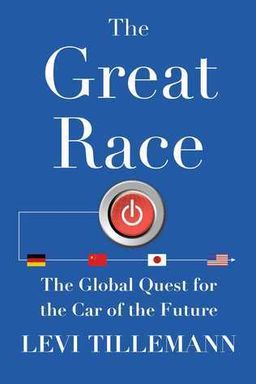
You live in an age of industrial transformation as consequential as the birth of the automobile itself. In The Great Race, Levi Tillemann argues that the shift from internal-combustion engines to electric vehicles (EVs) represents not just a technological upgrade but an epochal struggle over industrial leadership, energy security, and environmental survival. The contest spans nations, companies, and ideologies—a true global race for the future of mobility and the economy it powers.
From Ford's Garage to Global Geopolitics
Tillemann begins with Henry Ford’s brick-wall moment—literally breaking through to roll his Quadricycle into the streets—and uses it as metaphor for how individual audacity catalyzes global revolutions. But the twenty-first-century race is not waged in garages alone. You see state councils, ministries, and regulators shaping outcomes as much as entrepreneurs do. National strategies now determine who designs the batteries, builds the factories, and sets the standards that govern global manufacturing.
Countries such as Japan, China, and the United States deploy different philosophies: Japan’s disciplined coordination, China’s leapfrogging ambitions, and America’s volatile blend of innovation and politics. Each embodies a distinct vision of capitalist statecraft, showing how technology and policy intertwine. The stakes are enormous because EVs touch every link of the energy chain—from mining lithium to controlling grids to exporting software-driven vehicles.
Creative Destruction Meets Market Failure
Tillemann takes Joseph Schumpeter’s idea of “creative destruction” and merges it with the notion of market failure. Industrial capitalism accelerates innovation but also externalizes costs—pollution, dependency, and climate harm. The EV revolution is thus as much regulatory as it is entrepreneurial. When California’s regulators pressed automakers under the “technology forcing” doctrine, they weren’t just imposing red tape—they were shaping the rules of creative destruction toward public benefit. Governments became designers of markets that could internalize environmental costs and reward technological progress.
Scale, Systems, and Strategy
The book insists that you think in systems. A single EV buyer barely reduces global emissions, but when billions of conversions occur, oil markets collapse, trade balances shift, and new supply chains rise. The race is not about persuading consumers one at a time; it’s about aligning industrial ecosystems at scale. That means gigafactories, standards like CHAdeMO or J1772, and cohesive supply networks that make clean transport economically inevitable, not altruistic.
A Story of Institutions and Individuals
Characters animate the policy narrative. You meet Arie Haagen-Smit distilling the chemistry of smog beneath California skies; Mary Nichols crafting ZEV credits that became billion-dollar currencies; MITI bureaucrats disciplining Japanese carmakers into global champions; Wan Gang persuading Beijing to leapfrog combustion entirely; Elon Musk betting his last fortune on lithium-ion; and Takafumi Anegawa designing Japan’s first CHAdeMO chargers in the wake of nuclear disaster. Each represents a node where human initiative meets institutional design.
Throughout, Tillemann threads a recurring argument: innovation doesn’t flourish in a vacuum. It relies on competent governance, visionary leadership, and the courage to set impossible goals. Without those, the creative destruction of markets devolves into chaos. With them, it becomes a race worth running—a struggle not only for profits but for the structure of the modern world economy.
From Smog to Autonomy: The Arc of a Revolution
By the book’s end, you recognize that electrification is only the beginning. The next lap fuses batteries with autonomy and digital connectivity—cars as intelligent nodes in energy and information networks. The Great Race culminates not in a single product but in the transformation of how mobility, power, and policy reinforce one another. Whoever masters that triad—technology, institutions, and vision—wins the century’s defining competition.
Core Claim
Electrification isn’t a niche environmental story—it’s the new industrial revolution shaped by the fusion of statecraft, science, and entrepreneurship. The nations that align these forces fastest will determine the direction of twenty-first-century capitalism.