
Idea 1
Violent Equalizers and the Long History of Inequality
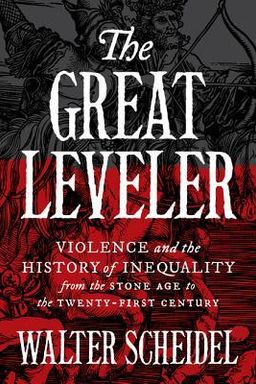
Why has inequality persisted across millennia except in rare, catastrophic moments? Walter Scheidel’s The Great Leveler proposes a stark historical answer: only violence has ever produced deep and enduring reductions in inequality. Across ancient empires and modern nations, peaceful reform—education, democracy, land reform—has seldom sufficed. The book argues that inequality is humanity’s default condition, and leveling comes only through what Scheidel calls the Four Horsemen of Leveling: mass mobilization warfare, transformative revolution, state collapse, and lethal pandemics.
The overarching thesis
Scheidel’s thesis turns on comparative evidence from archaeology, history, and economics. He traces inequality in ‘deep time,’ from Paleolithic burial sites to twenty-first-century tax data, showing that durable compression of wealth occurs chiefly when violent forces destroy the institutional or physical bases of elite privilege. You learn that pandemics shift wages and rents, revolutions confiscate property, wars level capital through taxation and destruction, and collapses erase entire elite networks. This violent pattern repeats because concentrated wealth and entrenched elites resist peaceful redistribution.
Measuring inequality across eras
Scheidel devotes considerable effort to explaining how to measure inequality over millennia. Without modern surveys, you rely on proxies—house sizes, grave goods, tax rolls, or relative prices—to estimate Ginis or top wealth shares. Even these values must be adjusted by an ‘extraction rate,’ comparing realized inequality against the theoretical maximum possible at that society’s productivity level. Archaeological data show that inequality rose sharply with agriculture and urbanization long before written records, while only collapse or depopulation produced declines.
From foragers to farmers and states
Hunter-gatherers were relatively egalitarian not because of virtue but because mobile resources prevented wealth accumulation. Agriculture introduced defensible, storable, and inheritable assets: land, livestock, irrigation. This shift enabled the first durable inequality. State formation amplified it: elites captured rents from taxation, tribute, and officeholding. In Mesopotamia and Rome, rulers and governors accumulated vast estates. Scheidel calls these the ‘original 1%.’ Whether through Sumerian temple managers or Roman senators, political coercion produced material concentration. (Note: similar dynamics appear in modern kleptocratic regimes.)
Empires and their convergent logic
Scheidel compares Han China and Rome to show the universal imperial pattern: different institutions but identical results. In both, officeholders used coercive power to amass land and wealth, while rulers occasionally confiscated fortunes to fund armies or reward allies. Yet such redistributions rarely touched inequality at large—they simply replaced one elite with another. Only systemic breakdown (Han’s collapse, Rome’s fall) temporarily flattened hierarchies.
The rhythm of rise and fall
Over centuries, inequality follows a pulse: long periods of accumulation punctuated by devastating leveling. Rome’s collapse, the Black Death, communist revolutions, and the world wars all mark these troughs. The twentieth century’s ‘Great Compression’—1914–1945—shows the four horsemen operating in concert: war-driven destruction, revolution, and postwar reform compressing incomes dramatically. Scheidel’s data show top shares plunging by half or more in many nations. Yet afterward, inequality resurged with globalization, financialization, and the weakening of progressive institutions.
Scheidel’s radical claim
Deep leveling is never peaceful. You can educate, democratize, and reform—but without obligatory shocks that dismantle elite wealth, the historical record shows only modest moderation, not wholesale redistribution.
The policy dilemma and future frontier
Scheidel ends with what he calls the ‘inequality frontier’: a theoretical ceiling bounded by subsistence and productivity. Modern societies operate far below their maximum extractive inequality, yet peaceful compression at scale appears politically elusive. Demographic aging, global capitalism, and technology may amplify disparities. Proposed remedies—progressive taxation, wealth levies, global registers—face resistance absent crisis. His conclusion is sobering: without shock or coercion, inequality remains structurally stable.
Across five thousand years, Scheidel’s evidence converges: the only enduring equalizers are catastrophes. Human societies rebuild inequality once peace returns. If you want to understand why the modern world’s inequality resembles Rome more than Plato’s Athens, Scheidel gives the uncomfortable answer—because history’s great levelers have always ridden out of apocalypse, not reform.