
Idea 1
The Indosphere’s Long Radiance
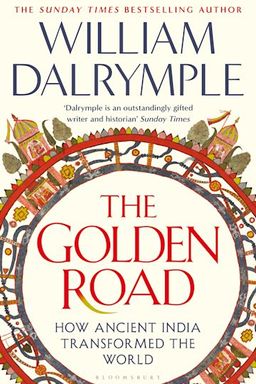
How can you see a millennium of Asian history as one connected story instead of scattered episodes? In this book, William Dalrymple argues that India acted like a cultural sun whose light radiated across Asia, shaping religions, languages, arts, sciences and states from the Oxus to the Java Sea. He calls this field the Indosphere: a lived, transregional world animated less by conquest than by the long pull of trade, monastic networks and courtly aspiration. If you follow the monks, merchants and monarchs who moved along the monsoon routes, you see a shared civilisational template—Sanskritic courts, Buddhist universities, Tantric rites, temple economies and decimal arithmetic—adapted in different places to create local brilliance.
The book asks you to read this as a single phenomenon. Sanskrit does not travel without the Ramayana and Mahabharata; guilds do not cross seas without artisans and ritual specialists; monasteries do not archive texts without patron kings binding learning to legitimacy. Dalrymple links Pallava shore temples at Māmallapuram to Khmer god-kings at Angkor, the mandala of Borobudur to Pallava-trained Tantric masters in Chang’an, and Indian numerals at Baghdad’s Bayt al-Hikma to Fibonacci’s pencil-and-paper commerce in Italy. The effect is cumulative: a cosmopolis whose common grammar is Indic but whose accents are Khmer, Javanese, Chinese and Persianate in turn.
Merchant–monk highways, not imperial roads
You navigate this world by monsoon and monastery. Indian textiles, iron and beads ride east in the ships of Tamil guilds (Ainnurruvar and the Five Hundred); spices, camphor and Sumatran gold sail back via the Straits of Malacca. Ports like Oc Eo and Angkor Borei show layered deposits: Roman intaglios and Indian terracottas, early Brahmi on pottery, wooden Buddha images, and later Shiva shrines. Those strata become a chronology of conversion: goods first, scripts next, then temples and royal ritual. In this model, royal courts adopt Sanskrit titles and rites because they want to signal cosmopolitan sovereignty to partners across the sea (compare Coedès on “Indianization,” a term the book treats critically as too one-way).
Art and ritual as statecraft
Cultural prestige becomes visible in stone and ceremony. The Pallavas turn Māmallapuram into a billboard: Arjuna’s Penance/Descent of the Ganges greets ships with a riddle of kingship and dharma; Durga slays Mahishasura in a performance of royal protection; the Shore Temple anchors a maritime brand. The Khmers convert Śaiva rites and local spirit cults into Devarāja kingship, harnessing waterworks to sanctity and labour. The Sailendra court in Java funds Borobudur, a walkable mandala and teaching machine that distils Tantric cosmology into architecture. Everywhere, imported forms are indigenized: Khmer Vishnus wear Khmer cloth; Javanese roofs bend Pallava lines into tropical silhouettes.
Universities, translations and the republic of letters
The Indosphere is a library on the move. Nalanda becomes a magnet for pilgrims like Xuanzang and Yijing, who ferry back texts, methods and monastic regulations to China and Japan. Chang’an rivals Nalanda as a Buddhist capital under the Tang, especially with Empress Wu’s strategic patronage of Vairocana-centered cosmology. These institutions—colleges, endowments, scriptoria—make knowledge portable, standardized and authoritative (note the Sailendra copper-plate endowment for a Nalanda college, a physical ledger of a transoceanic campus network).
Zero, algorithms and world commerce
Scientific exchange moves west too. Brahmagupta’s arithmetic with zero, place value and sines reaches Baghdad in the Sindhind (via a Sindhi/Ujjaini mission and the Barmakid viziers). Al-Fazari translates; al-Khwārizmī synthesizes; the Bayt al-Hikma institutionalizes. Centuries later, Toledo’s translators (Gerard of Cremona with Ghalib) and merchants like Fibonacci operationalize these techniques for contracts, ledgers and navigation. The Indo-Arabic numeral system rewires European commerce and education (compare this to James Hannam’s accounts of the 12th-century renaissance).
Power, fleets and the shock of conquest
Soft power does not exclude hard power. The Cholas deploy navies to break Srivijaya’s choke on Malacca (1025), acting like a premodern trade-war machine for Tamil guilds. Later, Turkic raids tear down Nalanda and Vikramashila; Mongol conquests rearrange Silk Road hubs and send Persianate elites into India. The cultural map tilts from a Sanskritic maritime order to a Persianate, Islamicate overland system; Indian outward projection narrows even as Indo-Islamic hybridity (Amir Khusrau, Urdu) takes root.
Key claim
“From Balkh to Singapore the elites adopted Sanskrit culture and Indian cosmologies… the Indosphere is an integrated cultural region, not scattered influences.”
If you adopt this lens, you read Asian history as a set of interoperable systems—monsoon logistics, monastery libraries, court ritual, artisanal itinerancy and translation bureaus—through which India’s ideas circulated and were remade. That is the book’s wager: shift your focus from empire to networks, and the scattered become a structure you can trace in ports, reliefs, inscriptions and algorithms. (Note: This method echoes Sanjay Subrahmanyam’s “connected histories,” but centers culture and religion as much as trade.)