
Idea 1
The Delusion of Design: Dawkins’s Core Argument
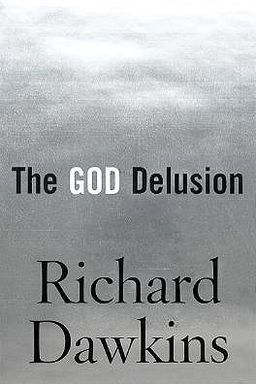
What if the idea of a supernatural creator—the God traditionally imagined as designing and masterminding the cosmos—were not an explanation but the ultimate non-answer? In The God Delusion, Richard Dawkins argues precisely this. His central claim is that belief in a personal deity is not just unsupported by evidence but profoundly improbable and unnecessary as a scientific explanation. Across his chapters he moves systematically—from philosophical arguments and scientific evidence to psychological origins and moral consequences—to show that both the universe and humanity make more sense without a divine creator in the picture.
Defining the Target: The God Hypothesis
Dawkins begins by defining the God Hypothesis precisely: the claim that a superhuman, supernatural intelligence deliberately designed and created the universe and everything in it. This definition excludes poetic or pantheistic uses of ‘God’—Einstein’s admiration for cosmic order, or Sagan’s reverence for nature. The focus is narrow and empirical: the interventionist, miracle-working deity of monotheistic faiths such as Yahweh or Allah. That clarity matters because arguments that rely on metaphor or symbolic awe are not targets here.
Dawkins’s project, therefore, is forensic. He treats the God Hypothesis as a scientific proposition—a hypothesis about the world—and applies the same rules of evidence and probability that govern physics or biology. He insists that gods should be judged like any other explanatory theory, not granted immunity through faith, revelation, or philosophical loopholes.
Agnosticism, Probability, and Burden of Proof
Next he takes on agnosticism and the claim that God’s existence is ‘undisprovable.’ Borrowing Bertrand Russell’s famous analogy, he compares the God Hypothesis to asserting a celestial teapot orbiting the Sun. Since such a claim cannot be disproven yet is vastly improbable, the burden of proof remains with the claimant. Dawkins distinguishes between TAP (Temporary Agnosticism in Practice) and PAP (Permanent Agnosticism in Principle). He argues that while some uncertainties are empirical and temporary, labeling God as permanently beyond evidence is an abdication of rational inquiry.
Through Stephen Jay Gould’s concept of NOMA—Non-Overlapping Magisteria—Dawkins exposes how religion often shelters itself from critique by claiming a separate domain of meaning and morality. But the moment religion describes factual events—creation, miracles, resurrections—it re-enters science’s territory. For Dawkins, empirical claims demand empirical answers.
Debunking Classical Arguments
From Aquinas to Anselm to Paley, Dawkins revisits centuries of theological reasoning. He shows how Aquinas’s First Cause arguments merely relocate the problem: if everything requires a cause, so must God. The ontological argument, defining God into existence by logic alone, confuses language with reality. The design argument, revived in modern intelligent-design movements, collapses when Darwin’s natural selection provides a non-supernatural mechanism for complexity. Each classical argument, upon inspection, either solves nothing or raises further regressions.
The Ultimate Boeing 747: Improbability Reversed
The heart of Dawkins’s case lies in what he calls the Ultimate Boeing 747 argument. If life’s complexity seems improbable, invoking an even more complex deity to explain it multiplies improbability rather than dissolving it. Natural selection is the simpler, cumulative mechanism—a ‘crane’ that builds complexity step by step—whereas belief in an omniscient creator is a ‘skyhook,’ a magical suspension that explains nothing. The supposed design that demands explanation is best understood as the result of gradual, unguided evolution.
From Cosmos to Culture: Psychological Roots of Belief
To explain why religion persists despite its explanatory failure, Dawkins looks to evolution’s by-products. Humans evolved minds that detect agency and intention—a hyperactive agent detection device (HADD)—useful for survival but prone to false positives. Children’s evolved tendency to trust elders makes them susceptible to inherited beliefs. These psychological predispositions create fertile ground for memes—cultural replicators that spread ideas such as gods, miracles, and taboos. Religion, he argues, is a memeplex: a self-replicating system of mutually reinforcing ideas exploiting cognitive biases.
Morality Without God
Against the claim that morality depends on religion, Dawkins presents an evolutionary moral framework based on kin selection, reciprocal altruism, and reputation. Compassion and cooperation are natural strategies favored by selection. These instincts occasionally misfire—when you care for distant strangers—but Dawkins calls such misfirings “blessed mistakes,” the kind of overgeneralized empathy that enriches humanity. Supported by Marc Hauser’s research, he shows how moral decisions follow unconscious cognitive rules common across cultures, independent of scripture.
Religion’s Privilege and Harm
Finally, Dawkins confronts religion’s public and personal consequences: legal exemptions, censorship, indoctrination, violence, and suppression of questioning. From the Mortara abduction case to faith schools in modern Britain, he reveals how children’s rights and scientific education suffer when dogma replaces evidence. Combined with examples of extremism—the Taliban and “American Taliban”—he argues faith’s absolutism removes rational and moral safeguards, allowing atrocities in the name of divine duty.
Consolation and the Science of Wonder
So what replaces faith’s emotional comfort? Dawkins closes with awe. Science itself, he proposes, offers deeper consolation—understanding the cosmos and seeing one's place within it. Using metaphors like the “Mother of All Burkas” (our limited sensory window compared to scientific vision), he insists that the wonder revealed by evolutionary and cosmic science surpasses the consolations of myth. To face reality honestly is itself a form of transcendence.
In sum, The God Delusion leads you through an intellectual arc—from the definition of the God Hypothesis, through its dismantling by science and reason, to a moral and emotional vision grounded in human evolution and cosmic understanding. The message is not merely unbelief; it is the liberation that comes from explaining the world honestly, without resorting to supernatural shortcuts.