
Idea 1
The Gift of Fear and the Intelligence of Intuition
The Gift of Fear and the Intelligence of Intuition
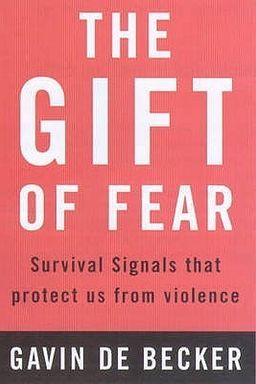
How do you stay safe without being consumed by anxiety? In The Gift of Fear, Gavin de Becker argues that true fear is not your enemy—it is a remarkable internal warning system refined by evolution. This book reveals how fear operates as a signal of survival, not superstition, and how trusting it can save your life. De Becker dismantles the myth that reason must override intuition, showing that intuition is in fact an accelerated form of cognition—your brain’s ability to assemble details and deliver a conclusion long before logic can.
Your survival radar
Fear begins as a flash—an instinctive sense that something is wrong. Robert Thompson’s story in the convenience store illustrates this. He left moments before police were shot because he unconsciously detected subtle signals: a fearful clerk, a man in a heavy coat on a hot day, and an idling car waiting outside. That pattern recognition happened faster than his rational mind could explain. Kelly’s experience with a man who closed her apartment window before an assault shows the same phenomenon—her mind noticed the gesture and generated a visceral command to escape.
Why we ignore intuition
Culture teaches you to value politeness and reasoning. You might dismiss an uneasy feeling as paranoia or worry about offending someone. De Becker calls this denial, and insists it is the most dangerous habit. While animals act immediately when alarmed, humans second-guess themselves and lose time. Kelly’s regret for ignoring her early discomfort became her resolve to never again suppress instinct for social approval.
Fear versus worry
De Becker distinguishes real fear from worry and anxiety. Fear occurs during actual danger and is brief and purposeful. Worry and anxiety are imagination-driven substitutes—forms of rehearsal for things that may never happen. You waste energy by living in chronic alarm. When understood correctly, fear acts as a clarifying light, guiding action rather than spreading panic. (Psychologist Paul Ekman later noted similar mechanisms of emotional accuracy and deception detection.)
Learning to listen without apology
Practical techniques include acting on fear without waiting for proof—say ‘no thanks,’ walk away, close the door. Each time you respond quickly, your intuition sharpens. Record instances when it worked; that habit builds what De Becker calls a “library of accuracy,” training your unconscious to refine its signals. Fear is not about being afraid—it is about acknowledging information that reason has not yet compiled.
Essential reminder
Fear is a message, not a verdict. Treat every sudden unease as data to evaluate. If it signals immediate danger, act decisively. If it signals possible risk, move cautiously—but never ignore it because you cannot explain it.
The book’s central claim is revolutionary: intuition is not mystical, but the fastest form of logic your brain has. To live safely and freely, you must train yourself to recognize, respect, and act on your instincts instead of apologizing for them. Intuition is the technology of self-preservation, and fear—when honored rather than suppressed—is its most sophisticated gift.