
Idea 1
The Social Architecture of Genius
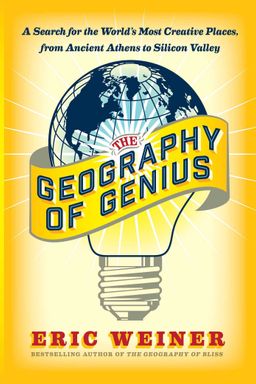
How does genius actually arise—through innate talent, hard work, or the chemistry of a particular place? In The Geography of Genius, Eric Weiner argues that creativity is not a solitary lightning bolt or a genetic quirk, but a social phenomenon that emerges when people, culture, and environment align. A genius, he shows, is an outcome of networks and civic patterns, not just neural wiring. Where Sir Francis Galton saw heredity, Weiner sees ecology: geniuses cluster in space and time, thriving where conversation, competition, and curiosity intersect.
Across Athens, Florence, Hangzhou, Edinburgh, and other creative capitals, Weiner traces the recurrent formula—an ecosystem that values argument, openness, constraint, and public purpose. He builds on Dean Keith Simonton's historiometrics, which statistically prove that genius is not evenly distributed but concentrated: Athens in 450 BC, Florence in 1500, Edinburgh in 1770, Vienna and Silicon Valley later. That pattern reveals something deeper: genius flourishes where societies cultivate clusters of talent rather than isolated prodigies.
From Genes to Places
Weiner dismantles the myth that genius is purely innate. Galton’s Victorian experiments with beauty maps and statistics built the illusion that greatness inherits through bloodlines. While genes contribute modestly (10–20 percent to creative potential), the decisive variable is context: availability of ideas, diversity of minds, and the civic mechanisms that let them interact. Dean Simonton corrected Galton’s view, showing genius as emergent—a system-level property born of cultural accelerations and institutional density.
The Cluster Phenomenon
Clusters of genius emerge where openness meets structure. Athens’ agora institutionalized argument; Florence’s bottegas codified mentorship; Hangzhou’s bureaucratic literacy encouraged technical creativity; Edinburgh’s clubs normalized dissent; Silicon Valley’s labs linked academic curiosity to market feedback. Simonton calls these the “fertile patches” where multiple modest talents combine into extraordinary outcomes. Genius moves not with individuals but with the mobility of ideas and the permeability of borders.
Culture as Catalyst
The book reframes genius as the child of civic culture—the conditions that make innovation visible and durable. Culture matters because it selects, amplifies, and rewards ideas. Pericles made creativity patriotic; Medici patronage made risk socially acceptable; Confucian bureaucracy made technical mastery prestigious; Scottish clubs made debate democratic. These public ecologies enable talent to be exercised in view of others, a requirement for both validation and further iteration.
What Genius Teaches You
Weiner’s central insight: if you want to cultivate genius today—whether in a city, school, or organization—you should engineer environments that mimic those ancient characteristics. Encourage conversation and civic joy. Value competition tied to collective goals, not ego. Build institutions that tolerate error and incubate learning. Genius requires both ferment and filtration: chaos for ideas to arise, structure for them to endure.
Genius as an emergent property
Weiner’s argument echoes systems science: creativity arises at the edge of chaos, where order gives stability and disorder gives possibility. Genius, then, is not a trait but a relationship between a mind and its ecosystem.
In short, genius is not the lightning itself—it’s the storm system that makes lightning possible. Weiner’s journey across cultures turns one myth inside out: we don’t discover geniuses; we build the conditions that let them appear.