
Idea 1
The Gene and the Human Story of Heredity
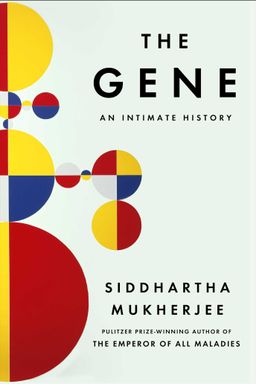
What makes you who you are—your behaviors, your predispositions, your talents or even vulnerabilities? Is it the swirl of your upbringing, or the code written in your cells? Siddhartha Mukherjee’s The Gene: An Intimate History takes this most elemental question and spins it into a sweeping, deeply human exploration of heredity. Mukherjee contends that to understand ourselves—our illnesses, our identities, and even our societies—we must understand the gene: not only how it works biologically, but how the idea of heredity has transformed human history.
Mukherjee argues that the gene is the most powerful scientific idea of the modern era—alongside the atom and the byte—because it represents the smallest indivisible unit of biological information. In tracing its discovery and consequences, he shows how this idea has reshaped science, philosophy, politics, and morality. His narrative unfolds across centuries: from ancient Greece’s mystical ideas of semen and inheritance, to Gregor Mendel’s quiet pea experiments in a Moravian monastery, to Darwin’s voyages on the HMS Beagle and his quest for the mechanism of evolution.
Why Genetics Matters to You
Mukherjee begins with a personal story—his family’s haunting history of mental illness across generations. His cousin Moni’s schizophrenia, his uncles’ manic-depressive illnesses, and his father’s own fear of hereditary madness force Mukherjee to confront heredity not as abstraction but as inheritance woven into personal destiny. As a physician-scientist studying cancer—another disease driven by rogue genes—he asks what control we might gain, and what risks accompany decoding and editing this inheritance. These familial stories make the science visceral: you, too, might wonder whether what runs in your family also runs your fate.
The Dangerous Idea
Mukherjee calls the gene a “dangerous idea” because it offers both incredible power and peril. Like the atom, which gave us immense energy and the bomb, understanding heredity has yielded modern biology’s miracles—cures, insights, and technologies—but also the horrors of eugenics, racial engineering, and the temptation to redesign humanity. As he traces the historical arc, he weaves philosophical and ethical questions that still confront us: if we can read and rewrite the genome, who decides what is worth changing? What does it mean to edit identity, or alter the fabric of human diversity?
From Philosophy to Experiment: The Birth of Genetics
Before Mendel, heredity was an unsolved puzzle wrapped in theology. Pythagoras and Aristotle debated whether traits arose from male “information” or female “matter.” The preformationists imagined tiny humans inside sperm—literal homunculi awaiting enlargement. These ideas mingled mysticism and observation but lacked mechanism. In the 19th century, as European science turned toward experiment, Mendel—an Augustinian monk studying peas—found the mathematical rhythm behind heredity. Each trait, he saw, was determined by discrete units that came in pairs (later called genes), with one copy from each parent. His insight shattered the dominant “blending” model of inheritance and revealed that traits were passed intact, following predictable ratios. Mukherjee presents Mendel’s solitude and diligence as both charming and profound—a man counting peas whose patient gardening uncovered the logic of life itself.
Darwin’s Quest and Mendel’s Missing Link
Mukherjee juxtaposes Mendel with Darwin, who, traveling on the Beagle, conceived natural selection but puzzled over heredity’s mechanism. Darwin proposed that microscopic particles called “gemmules” carried information, merging like paint from both parents—a model that couldn’t explain how variation persisted. Mendel, meanwhile, showed that heredity was digital, not analog. The irony is poignant: Darwin’s evolution needed Mendel’s genes, and Mendel’s genetics explained Darwin’s evolution—but their insights never met in their lifetimes. The result is one of science’s great missed conversations, uniting in retrospect two quiet revolutions into modern biology’s synthesis.
Why This Story Still Matters
Mukherjee balances historical sweep with urgent contemporary relevance. Today, we can read and edit genomes using technologies like CRISPR. We can predict disease risk, alter embryos, and shape future generations. But Mukherjee warns that knowledge without humility reproduces old patterns—our desire to perfect the imperfect, to “weed out” genetic traits we fear or disdain. The book isn’t just about science; it’s a philosophical meditation on identity, choice, and compassion. Understanding genes, he reminds us, demands that we also understand what it means to be human in the deepest sense.
“An organism is much more than its genes, of course,” Mukherjee writes, “but to understand an organism, you must first understand its genes.”
In The Gene, you journey from ancient philosophy to molecular science, from morally fraught history to breathtaking frontiers of future medicine. You meet monks, mathematicians, revolutionaries, and biologists—all grappling with heredity’s enigma. And through their stories, Mukherjee invites you to confront what you might inherit—not only through DNA, but through ideas, pride, prejudice, and hope. The gene, as he shows, is not merely a molecule—it’s a mirror held up to our humanity.