
Idea 1
Ukraine: Frontier of Empires and Identities
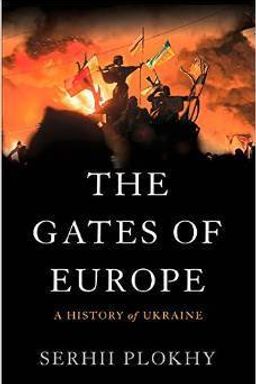
How can one country be both a crossroads of civilizations and a recurring battlefield for empires? In The Gates of Europe, historian Serhii Plokhy argues that Ukraine’s identity and destiny are rooted in geography—its position as the bridge between Europe and the Eurasian steppe. This liminal position makes Ukraine neither exclusively Eastern nor Western but a frontier where worlds meet, clash, and hybridize. To understand Ukraine’s modern struggles for sovereignty and orientation, you have to trace how centuries of migrations, conquests, and cultural exchanges built, fractured, and redefined this frontier.
Plokhy’s story spans millennia—from Greek colonists and Scythian nomads to Kyivan princes, Cossack rebels, and post-Soviet reformers. What connects these eras is not a fixed national essence but what he calls moving frontiers: ecological, political, and religious boundaries that shape Ukraine’s plural foundations. In this book, you witness how these boundaries evolve, how empires rise and fall over this contested landscape, and how the Ukrainian people translate centuries of fluidity into a modern national project.
Geography as destiny
The fertile black earth of the Dnieper basin, stretching between forest and steppe, gives Ukraine its agricultural wealth but also its vulnerability. Ancient Greeks saw it as a breadbasket; Herodotus compared it to Egypt. The same open terrain that supported farming also provided a highway for nomads—Scythians, Sarmatians, Huns, Mongols—and later, armies from Poland, Russia, and Germany. Geography made Ukraine desirable and defenseless at once: a prize to be seized, a corridor to be crossed.
These shifting frontiers also separated civilizations. The fault line between Eastern Orthodoxy and Western Catholicism runs through Ukraine, leaving behind a mosaic of rites, languages, and loyalties. In some regions (Galicia), Catholic influences met Byzantine traditions to form a Uniate synthesis; elsewhere, Orthodox and Cossack cultures combined to resist both Catholic and imperial dominance. From the earliest centuries, Ukraine’s cultural code became plural and adaptive rather than monolithic.
A continuous struggle for autonomy
Because Ukraine sat on the frontier, every empire sought to absorb it. The Kyivan Rus’ empire built the first political unity; the Mongol invasion shattered it. The Polish‑Lithuanian Commonwealth, the Habsburgs, and the Romanovs each imposed their systems, leaving regions with different administrative and religious histories. Yet Ukrainian society repeatedly regenerated autonomy through local forms: the Cossack Sich on the steppe, the Hetmanate politics of the seventeenth century, and later the university and church networks that preserved identity under empire. When imperial pressures tightened, Ukrainians turned to language, religion, and folk tradition as safe havens for collective memory.
The book shows that political independence has never been a permanent state but a rhythm of rise and repression. From Bohdan Khmelnytsky’s revolt (1648) to the fleeting Ukrainian People’s Republic of 1918, autonomy always emerged amid chaos—wars, revolutions, and shifting alliances—and often ended in subjugation. Modern independence (1991) is thus part of a centuries-long cycle rather than an abrupt rebirth.
Empires and modernity
By the late eighteenth and nineteenth centuries, imperial modernization brought railroads, industry, and the printed word. But it also introduced new hierarchies: St. Petersburg imposed Russification; Vienna and Warsaw encouraged Polonization or restrained national campaigns; both feared mass literacy in Ukrainian. Yet language revival movements (Kotliarevsky, Shevchenko, Hrushevsky) transformed ethnic consciousness into nationalism. You learn how literature, education, and print substituted for the political institutions Ukrainians lacked (a pattern mirrored by Ireland and Finland in the same era).
The twentieth century added extremes: civil wars, famine, genocide, Stalinist repression, and Nazi occupation. Each wave redrew boundaries and memories, turning identity into survival. The Soviet era both enabled modernization and suppressed nationhood, while the late‑Soviet awakening—sparked by disasters like Chernobyl—revived calls for democracy and self-rule.
Ukraine’s place in Europe’s story
Plokhy ultimately situates Ukraine as a mirror of Europe’s contradictions: unity through diversity, freedom through struggle. Europe’s east–west divide is embodied in Ukraine’s landscape and history. When you read about medieval trade routes or modern revolutions, you see how Ukraine repeatedly redefines Europe’s borders—not as a peripheral margin but as its testing ground. (Note: Timothy Snyder’s Bloodlands echoes this argument, but Plokhy’s narrative centers Ukrainian agency rather than victimhood.)
Key takeaway
Ukraine’s history is not a linear march toward nationhood but a story of resilience within overlapping empires. Geography created diversity; empire imposed hierarchy; culture preserved continuity. Today’s sovereignty battles—from Crimea to Donbas—are chapters in the same long chronicle of a frontier society struggling to control its own gates to Europe.
Once you see Ukraine through this frontier lens, every historical episode—whether Kyivan princes forging treaties, Cossacks swearing oaths at Pereiaslav, or modern citizens rallying on the Maidan—becomes part of a single drama: the enduring quest to balance openness with autonomy in the space between worlds.