
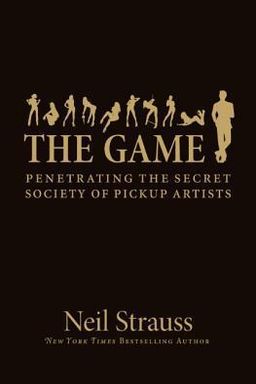
The Game cover

The Game

by Neil Strauss

The Game unveils the secretive world of pickup artists, exposing the techniques and the personal transformations of those who immerse themselves in seduction tactics. Through the author''s journey, it highlights the allure and the eventual disillusionment of this controversial community.

The Rise and Transformation of the Pickup Artist Community

Why do some men seem to have endless confidence with women while others spend years feeling invisible? The story of the pickup artist (PUA) community explores that desire for charisma and social control—revealing how it grew from lonely experimentation into a global subculture obsessed with manipulation, ego, and transformation. The Evolution of the Pickup Artist Community Since the 1980s invites you into a world that began with a kind of social alchemy: if you could learn the formulas of attraction, you could change your fate.

At its heart, this book argues that the PUA community represents the modern quest for male self-improvement—but twisted by the lure of instant validation and commercial success. It charts the movement's path from secretive manuals and hypnosis workshops to the flamboyant “Project Hollywood,” where charisma became a brand and relationships a game. The author contends that while these systems can teach surface-level confidence, they ultimately reveal a deeper emptiness: seduction without genuine intimacy is unsustainable.

From Casanova to Clickbait Seduction

Every age has its seduction experts. Casanova used charm and subtle psychology long before “negs” or “closing tactics” existed. In the 1970s Eric Weber published How to Pick Up Girls, setting off a race among ordinary men desperate to understand attraction. As personal computers appeared, these same men formed online forums that traded thousands of pages of advice—some laughably crude, others deeply analytical. By the 1990s and early 2000s, the digital brotherhood was thriving. Bloggers and gurus shared scripts, body language tips, and methods as if they were software patches for human connection.

If you’ve ever seen the flamboyant characters of reality dating shows or the “how to talk to women” corners of YouTube, you’re seeing the descendants of those early seduction pioneers. What began as a set of self-help techniques for shy men snowballed into a lifestyle industry promising mastery over women. Men like Ross Jeffries turned psychological theories—especially hypnosis—into pseudo-scientific systems meant to trigger attraction mechanically.

The Shift from Online Theory to Real-World Practice

By the early 2000s, the community stepped out of chatrooms and into the nightlife of Los Angeles. Workshops multiplied. For $500 or more, men could attend multi-day boot camps where gurus like Mystery offered limousine service and hands-on coaching. They were learning to “open” conversations, “demonstrate value,” and “close.” These weren’t just flirting tips—they were psychological tactics adapted for field use.

The author recounts his own journey from student to practitioner. He studied under every major guru, amalgamating lessons into a personal formula: grab attention, prove uniqueness, build emotional rapport, and then escalate physically. What’s striking is how systematic it all became, like learning a chess opening rather than connecting naturally.

When Brotherhoods Become Businesses

Fame and money changed everything. Once the seduction world turned into a seminar circuit, competition was inevitable. Each guru claimed to have the ultimate technique. That ego clash produced the infamous “Project Hollywood,” a mansion where PUAs lived together imagining women would simply flock to their lifestyle. Instead, it descended into chaos—jealousy, betrayal, and frat-house dysfunction. The author’s recounting feels metaphorical: when too many men chase dominance and validation, genuine connection collapses.

The Male-Centric Trap

Although billed as a guide to understanding women, the entire seduction subculture was a mirror for men’s insecurities. Most participants seldom interacted with women outside of brief pickups; their social worlds were full of other men chasing the same goal. The PUA scene became more about male competition than romance, with hierarchies of “alpha males” and followers. Ironically, in their search for female attention, many ended up isolating themselves in echo chambers of bravado and obsession.

Why Techniques Fail to Deliver Love

Perhaps the most poignant conclusion comes from the author’s realization that all these rehearsed scripts crumble when faced with genuine emotion. Attracted to a woman named Lisa, he discovered that authenticity—not manipulation—was what truly resonated. His rehearsed lines only created distance, forcing him to drop the act and approach her as his unpolished self. That clarity revealed the seduction community’s fatal flaw: it offers techniques for lust but none for love.

“Like any illusion, pickup artistry works until reality returns. Confidence can draw attention—but only sincerity builds connection.”

In the end, the book feels like a portrait of a cultural phenomenon fading into maturity. What began as harmless curiosity evolved into manipulation, commercialization, and burnout. Yet beneath that drama lies an enduring insight: our search for validation is universal, and real attraction emerges not from tricks but from being comfortable in who you are.


Hypnosis and Mind Games in Seduction

Imagine being able to make someone feel attraction with a simple word or gesture. In the late 1980s, Ross Jeffries proposed that seduction could be engineered this way. His method, Speed Seduction, mixed hypnosis and linguistic psychology, claiming that emotional responses could be triggered like switches. For those seeking control over their dating failures, it was intoxicating science fiction made real.

Ross Jeffries and the Birth of Psychological Seduction

Jeffries presented himself as both scholar and magician. He told students that words can access subconscious emotions, reawakening desire from memory. In one famous example, he asked a waitress to recall the feeling of attraction and physically linked that memory to his raised hand. Every time he lifted his hand, she unconsciously re-experienced the emotion—and gave him her phone number. That demonstration became legend among early followers.

The Spread of Hypnotic Techniques

Soon, a pair known as Steve P. and Rasputin expanded the practice. Steve used performative hypnosis, persuading women that he could trigger pleasure or even physical changes like “increased bust size.” Rasputin took a subtler route, using self-hypnosis to project impenetrable confidence. Together, they represented two extremes: manipulation through fantasy and transformation through psychology.

(As with modern persuasion experts like Robert Cialdini in Influence, the concept rests on emotional priming—though Cialdini warned against unethical manipulation. Jeffries did not.)

Why It Worked—and Why It Failed

Jeffries' teachings gained traction because they promised predictability. Attraction, he claimed, wasn’t random—it could be programmed. Yet, hypnosis as seduction also showcased the community’s ethical blind spot. Treating emotions as manipulable code contradicts real human agency. Those who mastered hypnosis didn’t necessarily build relationships; they built transactional encounters fueled by control.

“Hypnosis gave pickup artists an illusion of mastery—but it replaced connection with compliance.”

Over time, hypnosis became less a secret weapon and more a cautionary tale. It revealed the seductive power of belief itself—both for women being influenced and for men convincing themselves they were in control. The real success came not from entrancing others but from building the self-confidence that hypnosis temporarily simulated.


Social Dynamics and the Mystery Method

If hypnosis manipulated emotions covertly, the next generation of pickup artists preferred social theater. Canadian PUA Mystery revolutionized seduction with social dynamics—turning attraction into a stage performance that anyone could learn. His technique, known as FMAC (Find, Meet, Attract, Close), reads like choreography designed for crowded nightclubs and group interactions.

Breaking Down FMAC

The approach unfolds in four acts. First, you find a woman you’re interested in, then meet her by standing out as an “alpha male.” That might mean walking into a group with confidence, using a quirky opener, and drawing collective attention. Next comes attract—the controversial part—where the woman is teased or negged, a light insult meant to lower her defenses while the PUA wins over her friends. Finally, close by isolating her from the group for physical or emotional escalation.

The Logic Behind the Show

Mystery’s genius was understanding group psychology. Popularity, he argued, breeds desire. When others admire you, your target sees you as high status. The laughter, storytelling, and crowd engagement act as emotional amplifiers. Once the group approves, attraction transfers almost automatically. It’s theatrical manipulation rooted in social proof—the same principle marketers exploit when showcasing testimonials.

Mystery trained countless men using this structure, hosting expensive seminars where participants practiced in real nightlife scenes. The author of the book attended one such $500 Los Angeles workshop that included limo rides between clubs. Those experiences solidified FMAC as the mainstream seduction method of the 2000s.

The Performance and Its Limits

While FMAC offered predictability and confidence, it also fueled egocentrism. Negging might create fleeting intrigue, but it risks undermining empathy. Mystery himself embodied this tension: charismatic and intellectual yet trapped by his own scripts. His students succeeded in attracting attention, but rarely in forming genuine relationships. In that sense, FMAC reflects modern social media culture—projecting charm and control while hiding vulnerability.

“Mystery’s method turned seduction into theater—but connection still requires stepping off the stage.”

Today, many see FMAC as both revolutionary and problematic. It taught thousands of men how to socialize—but not how to empathize. Its success lies less in romance and more in self-presentation, revealing how deeply status and validation define modern attraction.


Inside Project Hollywood: When Egos Collide

Can a mansion full of self-proclaimed alpha males coexist peacefully? Project Hollywood was supposed to prove that charisma could become a lifestyle, that women would flock naturally to a house brimming with confidence and charm. Instead, it became a cautionary tale of rivalry and self-destruction.

The Dream

After achieving public recognition, the author and Mystery conceived Project Hollywood—a shared villa where top pickup artists would live, work, and party. They invited fellow PUAs Papa and Herbal, expecting an endless flow of guests drawn by the aura of high social status. It symbolized a new phase: from learning seduction to embodying it as lifestyle branding.

The Reality

Reality arrived quickly. Competition replaced camaraderie. Papa violated rules, crowding his room with guests; Herbal began dating Mystery’s girlfriend, causing intense fallout; and the author discovered manipulation unfolding behind his back. What was meant to be an aspirational hive of magnetism degenerated into a frat house plagued by jealousy. Even cleanliness and basic respect vanished.

The Lesson

Project Hollywood’s implosion mirrors what happens when self-improvement morphs into narcissism. The very traits that drive seduction—confidence, control, dominance—become toxic when multiplied and confined to one space. Ego displaces empathy, turning charm into competition. The author’s eventual departure underscores a psychological truth: validation sought externally is rarely sustainable internally.

“Project Hollywood wasn’t about women—it was about men performing masculinity for each other.”

Interestingly, this failed experiment inspired copycat communities worldwide—from San Francisco to Australia—yet many shared the same fate. Each demonstrated that without genuine purpose, a collective pursuit of attention collapses under its own vanity.


The Paradox of Masculine Validation

You might assume a group devoted to connecting with women would center around women. Ironically, the pickup artist world revolved almost entirely around men validating other men. Forums, seminars, and shared houses created echo chambers of advice, bravado, and rivalry.

The Ego Economy

Each PUA sought to become the “alpha male,” earning followers and selling techniques. The competition resembled influencer marketing more than romantic mentorship. Gurus feuded, students idolized, and success stories were commodified. Women became proof of status rather than participants in connection. This male-centric focus gradually overshadowed any authentic exploration of femininity or emotional intelligence.

The Cultural Shift to Toxicity

As the movement grew profitable, authenticity eroded. Formerly cerebral discussions morphed into reckless nightlife. Stories from PUAs like Jlaix—filled with drunken brawls and expulsions from clubs—illustrated the shift from seduction to chaos. The pursuit of dominance replaced curiosity, and disrespect became routine. Behind the glamour, many abandoned careers and education for full-time guru life, sacrificing development for temporary validation.

“The pickup artist community began as research into attraction—but ended as a mirror of insecurity.”

This paradox defines the movement’s demise. In its effort to produce “socially alpha” men, it cultivated performative masculinity rooted in comparison rather than connection. The result wasn’t confidence—it was dependency on constant external approval.


The Limits of Technique and Return to Authenticity

Every system eventually faces reality. For PUAs, that reckoning came when their routines stopped working. Seduction formulas designed for repetition eventually saturated clubs; women began recognizing script patterns. When the author's own lines failed repeatedly, he realized something profound—rehearsed charm might attract attention, but it repels sincerity.

Routines vs. Reality

Preplanned openers help shy men overcome fear, but they fossilize into robotic behaviors. Real relationships depend on dynamic interaction. When everyone in a locale uses identical scripts, authenticity evaporates. The author describes trying to charm groups on Sunset Boulevard only to be dismissed because the same lines had been overheard the week before. The illusion of uniqueness had collapsed.

Lisa: The Moment of Truth

His transformative experience arrived with Lisa, a woman unaffected by his routines. When his charm only aroused suspicion, he resorted to vulnerability—speaking as his awkward, honest self. To his amazement, that simplicity connected more deeply than any technique. It demonstrated that genuine emotion can’t be faked or formulated.

The Larger Lesson

In abandoning routine, the author rediscovered humanity. His journey mirrors broader self-help insights (similar to Brené Brown’s ideas about vulnerability unlocking connection). Confidence born of authenticity outlasts scripted dominance. Attraction is emotional reciprocity, not performance. The book closes on this realization—after years of mastering manipulation, the true art of seduction is sincerity.

“Technique can open doors—but vulnerability invites someone to walk through them.”

Ultimately, the author moves beyond formulas to self-awareness. His story warns against mistaking performance for persuasion and reminds readers that connection thrives not when you control it, but when you allow it.

Dig Deeper

Get personalized prompts to apply these lessons to your life and deepen your understanding.

Go Deeper

Get the Full Experience

Download Insight Books for AI-powered reflections, quizzes, and more.