
Idea 1
Profit, Physics, and the Fitzgerald
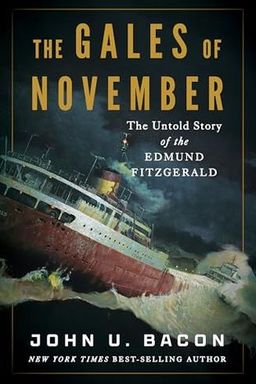
What sinks a ship that everyone calls unsinkable? In this book, you learn the Edmund Fitzgerald didn’t go down because of one error or one storm; it failed at the intersection of physics, profit, culture, and chance. The Great Lakes behave like oceans compressed into narrow, shoal-studded corridors; shipping companies pushed steel to its profitable limits; mariners made reasonable choices with incomplete data; and a rare, two-storm collision turned prudent seamanship into tragic timing. The book’s core argument is that the Fitzgerald’s loss is a systems failure—a chain where small, defensible decisions add up to catastrophe.
To see the chain, you have to look across disciplines. You start with wave physics on inland seas: short, steep, fast-period waves that induce brutal hogging and sagging on 700-foot hulls. Then you add economics: postwar demand and taconite pellets made bigger, thinner, fuller ships irresistible, while freeboard standards quietly loosened and dockside tricks squeezed in extra tons. Next you consider design: modular welding, pump placement, and missing sensors that made hidden flooding easy and corrective action hard. Layer on culture—competitive captains, engineers who quietly control turbine power, and a “silent-dude” radio etiquette—and you begin to understand how human norms can magnify or mute danger.
The lakes that act like oceans
Lake Superior is not a placid bowl; it’s an inland sea with a long fetch and a nasty habit of producing four-to-eight-second waves that hammer a long hull before it can recover. Unlike the ocean’s gentle ten-to-sixteen-second swell, Superior’s short-period waves lift bow and stern while leaving the midsection unsupported—then flip the stress a few seconds later. That repeated bending (hogging and sagging) fatigues steel the way a paperclip fails when you flex it back and forth. Factor in exponential wave energy growth with rising wind and you see why the “gales of November” are feared: 58+ mph winds and 20–30-foot seas imply occasional 40–60-foot rogues by simple statistics (Rayleigh distribution), a hazard sailors can’t out-bravado.
Profit trims the margins
Postwar industry needed iron, and Professor Edward W. Davis’s taconite process delivered uniform, dense pellets that loaded and unloaded cleanly. Efficiency bred ambition: Northwestern Mutual funded a ship tuned to the Soo Locks’ maximum size—729 by 75 feet—so every voyage converted inches of freeboard into paying cargo. Regulators granted extra draft; crews shaved more by draining water tanks or heating deck steel to contract it. The Fitzgerald often carried 26,000-plus long tons late in the season, leaving as little as 11.5 feet of freeboard. On paper, that’s legal; in green water and freezing spray, it’s a tightrope.
Design bets with hidden tails
Modular welding saved weight and added speed but changed fatigue behavior. The ship’s six big pumps sat aft in Hold #3, assuming water would run downhill; there were no required electronic hold sounders to warn of hidden flooding. Taconite’s clay-binder pellets absorb water like a sponge, masking ingress and adding weight that pumps can’t easily clear. Add late-fall icing—hundreds of tons of frozen spray that lower stability—and you have a vessel optimized for throughput with thinner safety cushions when wind and water conspire.
People, pride, and the unspoken rules
Captain Ernest McSorley was the consummate pro—quiet, steady, and respected. Great Lakes culture prizes such composure, and engineers often wield quiet veto power over speed by changing turbine nozzles rather than throttling (as the Anderson’s First Engineer Harry Ashcroft did that night, likely saving lives). Captains also avoid broadcasting vulnerability on open radio—the “don’t put it on the air” norm that preserves pride but can slow help. These norms matter when you lose radar, beacons flicker, and you’re navigating an unfamiliar northern route in a whiteout past Caribou Island and Six Fathom Shoal.
Meteorology turns prudence into peril
Two systems—a southwestern low loaded with warm moisture and an Alberta Clipper’s cold blast—collided and steered their worst winds along Superior’s southern shore toward Whitefish Bay. Forecasts lagged reality, moving from “typical” to gale to storm warnings as conditions surpassed expectations. McSorley’s northward route, prudent to avoid open-lake fetch, unintentionally set a timing trap: the Fitzgerald met the storm’s concentrated fury at the lake’s eastern choke point with failing instruments and rising seas. Slowing down (“checking down”) to nurse topside damage bought control but ceded time to worsening weather and potential flooding.
No single smoking gun
The clues—torn fence rail, missing vents, a reported list, released winch cable, crushed lifeboats, a two-piece wreck—support several plausible failure paths: a shoal strike breaching the hull; hatch or clamp failures admitting green water; progressive flooding via vents and access points; or a rogue-wave sequence that imposed lethal hog-sag cycles. What the record agrees on is speed: there was no Mayday, no organized abandonment. The end came so fast that even McSorley’s final calm—“We are holding our own”—masked how close the ship was to the edge.
Why it still matters
Afterward, the search revealed confusion and courage; Gordon Lightfoot’s ballad fixed the loss in public memory; families turned grief into advocacy that won protection for the wreck and recovery of the bell (1995). Most importantly, the industry changed: better forecasts, electronics, reporting norms, and a stronger bias toward caution. In the decades since, the Great Lakes have not lost a single commercial ship—a record born of hard lessons learned at terrible cost.
Key Idea
The Fitzgerald’s story shows how marginal gains—an inch of freeboard, a few extra knots, a shortcut in whiteouts—compound into systemic risk when weather, design choices, and human norms line up the wrong way.