
Idea 1
Choosing the Future of Humanity
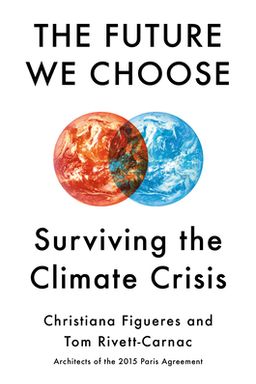
What kind of world will you help create—the one of cooperation or collapse? In The Future We Choose, Christiana Figueres and Tom Rivett-Carnac, architects of the UN Paris Agreement, argue that humanity stands at a defining moment. The next few decades will determine the quality of life on Earth for centuries to come. Their core claim is urgent yet hopeful: while climate change is already reshaping the planet, our mindset and choices—both collective and personal—can still lead us to regeneration instead of ruin.
They contend that this transformation is not just technological or political but profoundly psychological. The way you see yourself and others matters. Do you act from scarcity and fear, or from abundance and solidarity? The authors frame our future as a dual pathway: one leads to devastation (a +3°C world of collapse and suffering), and the other to regeneration (a +1.5°C world of collaboration, creativity, and ecological balance).
Two Worlds, One Choice
Figueres and Rivett-Carnac begin by contrasting two vivid futures. In the grim world of 2050 under unchecked warming, pollution suffocates cities, crops fail, millions become climate refugees, and despair turns political systems authoritarian. In the alternative vision, if global emissions are halved every decade, by 2050 we live amid green cities, abundant forests, clean energy, and globally cooperative societies. Urban gardens thrive, food systems regenerate, and communities connect. These contrasting worlds make the stakes crystal clear: we can still choose the story we write.
Three Mindsets for Transformation
The authors then introduce what they call three essential mindsets for shaping this choice: Stubborn Optimism, Endless Abundance, and Radical Regeneration. These are not philosophical abstractions but practical orientations toward action. Stubborn Optimism means refusing fatalism; Endless Abundance means rejecting the illusion of scarcity and embracing cooperation; Radical Regeneration means nurturing both the planet and our inner lives. Change in mindset precedes change in reality.
For example, Figueres recalls the despair after the failed Copenhagen climate talks in 2009. Everyone said a global deal was impossible—until optimism made it possible. By reframing the problem from one of competition to collaboration, the Paris Agreement emerged as a global turning point. This shared optimism translated into actionable decisions among 195 nations. The authors argue this same psychology can guide individuals as much as governments.
Actions We Can Take
The final part of the book offers ten concrete actions everyone can take, spanning politics, economics, and personal habits. These include letting go of the old world of fossil fuels, defending truth in a “post-truth” era, reforesting the Earth, investing in a clean economy, and building gender equality. Each action connects personal responsibility to systemic change. By seeing yourself as a citizen rather than a consumer, supporting political leaders who prioritize climate, and reorienting values toward regeneration, you help create the conditions for survival.
Why This Matters
This book is grounded in realism but infused with hope. Figueres and Rivett-Carnac acknowledge the profound grief and fear many feel about climate change—but urge us not to remain stuck there. Facing loss honestly allows for renewed commitment and creativity. Their call is to hold a vision larger than despair, one based on collective flourishing—similar to what writers like Joanna Macy call “active hope.” (In Active Hope, Macy teaches that hope is not optimism but engagement; Figueres and Rivett-Carnac echo this philosophy.)
The Invitation
Ultimately, this is not a book about climate policy—it’s about human purpose. The authors invite you to see the climate crisis as a moment to redefine how humanity evolves. The “critical decade” between now and 2030 is a test of collective maturity. If we embody cooperation, transparency, empathy, and action, we can create the world “we must choose.” It’s a manual for hope in motion, reminding us that transformation begins when you choose to believe that failure is simply unthinkable.