
Idea 1
The Transformation of the Professions
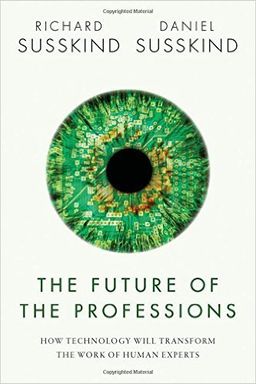
Why are medicine, law, education, and accounting changing so dramatically? In The Future of the Professions, Richard and Daniel Susskind argue that we are witnessing the unraveling of a centuries-old social contract between professionals and society. They call it the grand bargain—a deal that grants professionals exclusivity, autonomy, and status in exchange for maintaining standards, training members, and serving the public interest. Yet that deal, the authors contend, is no longer tenable in an era of digital technologies, data abundance, and increasingly capable machines.
The book presents a sweeping diagnosis of this tension and a roadmap for what comes next. You will explore how shifts in information technology, economics, and public expectations are transforming the production and distribution of knowledge—the professions’ core asset. You'll see how practical expertise, once inseparable from human experts, becomes codified, digitized, and increasingly delivered through systems and machines. And you'll learn how new skills, new roles, and new moral questions are emerging as humans and technologies start to collaborate and compete.
The Grand Bargain Under Strain
For centuries, the grand bargain gave society trusted guardians of specialized knowledge. In return, professionals policed themselves and pledged to act for the public good. But today six strains—economic, technological, psychological, moral, qualitative, and inscrutability—erode public confidence. Many people cannot afford key services; expertise is often cloaked in abstruse language; and technology promises access and affordability the old model cannot match. As professions cling to exclusivity, they risk becoming moral anachronisms in a connected world where information flows freely.
The Information Revolution
The book frames this shift as the latest transition in our information substructure—successor to the oral, script, and print eras. Print-based societies enabled professionalization by creating repositories of knowledge that required expert interpreters. Now, in a technology-based Internet society, expertise can be digitized, shared, and applied by non-specialists and machines. The authors call this a structural reorganization of how knowledge is produced and delivered. As Walter Ong argued about literacy, each new medium reshapes thought and organization; the Susskinds extend this to the architecture of expertise itself.
Increasingly Capable Machines
At the heart of the transformation is the rise of increasingly capable non-thinking machines. From IBM’s Watson to AlphaGo and GPT‑3, systems now perform tasks—diagnosis, legal prediction, text generation—once thought uniquely human. These systems do not reason like people, but they deliver results that often exceed human accuracy. The Susskinds call this rejecting the AI fallacy: machines do not have to think like you to outperform you. The practical implication is profound—performance matters more than mimicry. As systems process vast data sets, patterns and predictions emerge that no single human could compute, redefining what “expertise” means.
Knowledge as an Economic Commodity
To grasp why this matters, you need to treat knowledge as an economic good. Practical expertise is non-rival (my use doesn’t diminish yours), tends toward non-excludability (once shared, it leaks), is cumulative (each use improves it), and is increasingly digitizable. These four properties make expertise scalable and replicable at near-zero marginal cost, undermining business models built on scarcity and human mediation. Systems like Deloitte’s tax platforms, Wikipedia, or patients’ online communities reflect how knowledge escapes enclosure, becoming a commons as much as a profession.
An Evolutionary Path for Work
The Susskinds map this disruption as a four-step evolution from craft to standardization, systematization, and externalization. Each stage represents wider reach and lower cost: professionals move from bespoke one-to-one service toward knowledge embedded in systems and products. Online document drafting, MOOC-based education, or machine diagnostics illustrate this trajectory. The practical question becomes which parts of your work need human craft and which could be systematized for scale.
Patterns, Models, and Roles
Across different fields, the same patterns recur: routinization, demystification, and new models for delivery—from traditional face-to-face service to communities of experience, embedded or machine-generated expertise. This decomposition of work produces new roles: knowledge engineers, process analysts, empathizers, and data scientists who build, monitor, or complement systems. The Susskinds show that future professionals may either become “better than machine” at empathy, creativity, and moral reasoning, or “build the machine” that others will use.
Innovation and Adjustment
Professional firms face a choice between first‑generation innovation (tinkering with old workflows) and second‑generation innovation (building productized, scalable systems). The leaders are those who routinize complexity rather than defend handcraft. COVID‑19 accelerated this transition by making online courts, telemedicine, and remote teaching mainstream. The temporary crisis proved what was technologically and culturally possible, eroding long-held resistance to change.
Moral and Social Choices Ahead
The transformation raises deep moral questions: What happens to trust without personal relationships? How do we train professionals when machines do routine work? What limits should govern automation in domains of compassion and justice? The authors argue for pragmatism with moral awareness: preserve human responsibility where it genuinely matters, but expand digital access where it alleviates inequality. The grand bargain must be renegotiated—less about monopoly, more about stewardship of systems that democratize expertise.
Key Idea
The future of the professions is not human or machine—it is human and machine. The challenge is to distribute expertise more fairly, design trustworthy systems, and retrain ourselves for roles that creativity, empathy, and moral judgment make uniquely human.