
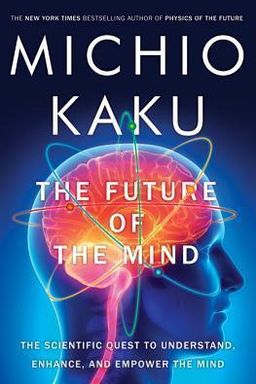
Idea 1
The Physics of the Mind: From Atoms to Awareness
What if consciousness could be explained not just through psychology or biology, but through the language of physics? In his exploration of the human mind, Michio Kaku argues that science is finally able to tackle questions once reserved for philosophy: how the brain produces thought, memory, emotion, and even the sense of self. He shows that advances in imaging, genetics, computation, and engineering have joined forces to let us observe, predict, and even manipulate the living mind.
Kaku’s central claim is that the mind can be described as a complex system of feedback loops that model the world and project those models through time. Consciousness, in his view, is not mystical—it’s a measurable process that can be analyzed, simulated, enhanced, and eventually extended into artificial systems. To understand this revolution, you begin with how physics gave us the tools to see the brain at work, then trace how those tools expose the architecture of thought, from perception to creativity.
From Imaging to Insight
The story starts with physics itself. The discovery of nuclear magnetic resonance by Felix Bloch and Edward Purcell led to MRI, which uses magnetic fields and radio pulses to visualize brain tissue. Later innovations—functional MRI (fMRI), PET scans, diffusion tensor imaging (DTI), and EEG—let scientists watch how different parts of the brain communicate and synchronize. This “imaging revolution” transformed mental life from an invisible mystery into something empirical. You can now see thoughts lighting up specific regions or watch memory formation in real time. (Note: This echoes how Galileo’s telescope turned philosophy into astronomy by offering direct observation.)
Each imaging tool resolves a different aspect: fMRI maps blood flow, EEG tracks timing, and PET reveals chemistry. When combined, they reveal how specific circuits create attention, emotion, and sense of self. Advances such as optogenetics and deep brain stimulation expanded this from observation to direct manipulation—turning neurons on and off, treating Parkinson’s or depression, or even altering fear responses at the circuit level.
A Space–Time Theory of Consciousness
At the center of Kaku’s framework is his space-time theory of consciousness. He defines consciousness as the process by which a brain constructs a model of its environment using multiple feedback loops, then simulates that model through time to achieve goals. Simple organisms operate mainly in spatial awareness—knowing where they are—but humans project far into the future. It’s your ability to imagine tomorrow, replay yesterday, and plan strategy that defines your humanity.
To make this measurable, Kaku proposes levels: Level 0 systems react without models (a thermostat), Level I systems build spatial awareness (reptiles), Level II systems add social emotion (mammals), and Level III systems like humans simulate futures and weigh outcomes. The more feedback loops and longer the timescale, the higher the level of consciousness.
Evidence from Split Brains and Imaging
Split-brain research by Roger Sperry and Michael Gazzaniga reinforces this model. Severing the corpus callosum can leave two semi-independent consciousnesses—each with partial control. The left hemisphere often acts as an “interpreter,” weaving stories to maintain unity. This indicates that what you experience as a single “I” is in fact a coordinated fiction produced by multiple modules. Modern imaging supports this by linking specific functions—planning in the dorsolateral prefrontal cortex, emotion in the amygdala, memory in the hippocampus—to distinct networks that act together like an orchestra.
Science Meets Philosophy
Kaku’s argument brings physics-style clarity to philosophy’s deepest riddle: what it means to be conscious. He treats self-awareness as an emergent property of computation in time and space, rather than a magical essence. This redefinition opens the possibility of testing, comparing, and even engineering consciousness—whether in enhanced humans, prosthetic brains, or artificial minds.
In short, the mind is no longer beyond measurement. With MRI, EEG, optogenetics, gene editing, and computation, we can see thought, restore lost senses, simulate awareness, and perhaps upload identity itself. The new frontier isn’t speculation—it’s experimental. The rest of the book explores how each breakthrough brings us closer to decoding, controlling, enhancing, and eventually transcending the biological brain.