
Idea 1
Rebuilding the Moral Foundations of a Fractured World
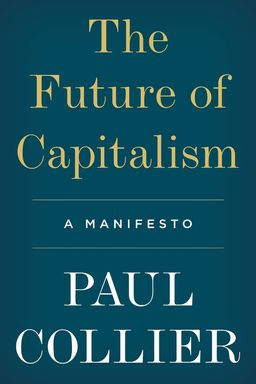
How can you rebuild cohesion in societies scarred by inequality, mistrust and moral fragmentation? In his major work, economist Paul Collier argues that the modern West has fractured along three axes — geographical, educational, and global — producing divisions that have weakened reciprocity and hollowed out the moral bases of capitalism and democracy. His central claim is that the remedies lie not in ideology, but in pragmatism grounded in ethics — a revival of shared obligations within families, firms, states and an interdependent world.
Across this book, Collier redefines economics as moral craftsmanship. He insists that humans are not isolated utility-maximizers (“economic man”) but “social man,” motivated by esteem, belonging, and obligation — concepts long emphasized by Adam Smith and David Hume. From this foundation, he charts how the post-war moral order collapsed, why populism surged, and what practical steps can rebuild ethical institutions fit for a globalized age.
Understanding the Three Divides
Collier begins with the social fractures that destabilize modern democracies: the gulf between metropolises and provinces, the rift between the educated elite and the less-educated majority, and the polarization between globalization’s winners and those left behind. London, Paris, and New York thrive with agglomerated talent and soaring rents, while Sheffield, Detroit and Stoke stagnate. Those left behind not only lose work but dignity, as their moral status and sense of belonging erode. These divides manifest politically in Brexit, Trump and the rise of populist movements across Europe.
The roots are technological and demographic. Globalization shifted semi-skilled jobs abroad, and technology rewarded specialization concentrated in large cities. The well-educated clustered together, built distinct moral vocabularies, and lost touch with provincial values. Collier warns that ignorance of this tension fuels cultural resentment as much as economic grievance.
The Collapse of Social Democracy and the WEIRD Vanguard
Post-war social democracy worked because it balanced individual rights with mutual obligation. But by the late twentieth century, that ethic was displaced by what Collier calls the WEIRD elite — Western, Educated, Industrialized, Rich, Developed professionals — who replaced communal reciprocity with technocratic utilitarianism and rights‑based individualism. Philosophers like Bentham and Rawls supplied the intellectual architecture for paternalist governance: economists optimized welfare by formula, and lawyers multiplied rights divorced from duties. The old moral glue of shared identity fractured.
When educated people came to identify more with global professions than with their nations, reciprocal obligations faded. The result: public goods eroded, redistribution weakened, and populists filled the vacuum of trust. Collier calls for restoring the pragmatic spirit of mid-century social democracy — humility about expertise, moral pluralism, and balance between rights and obligations.
The Moral Core: From ‘Economic Man’ to ‘Social Man’
Every effective institution, Collier argues, must rest on an accurate moral psychology. Humans crave esteem, fairness, loyalty, and liberty — a plural moral grammar identified by social psychologist Jonathan Haidt. Narratives bind these instincts into collective action: stories define “who we are,” what duties we owe, and why cooperation matters. Whether mythic (the nation at war), corporate (Johnson & Johnson’s Credo), or civic, compelling narratives align self-interest with communal ethics. You cannot sustain complex societies solely by incentives or law — they require esteem and shame, embedded in culture.
Restoring Ethical Institutions
From this moral base, Collier proposes a program of ethical restoration. The post-war ethical state embodied duty through welfare and full employment, but its legitimacy depended on patriotic reciprocity. As identity shifted from nation to profession, that cohesion collapsed. To rebuild it, Collier advocates a civic patriotism rooted in place and shared purpose, not xenophobia. Similar ethical renewal is needed in firms (to restore purpose beyond profit), families (to stabilize child‑rearing across classes), and the global order (to balance rescue duties with reciprocal clubs). Each institution must re‑embed moral obligations that markets and ideologies have stripped away.
A Framework for Renewal
Collier’s model is ultimately pragmatic. Like the moral scientists of the Scottish Enlightenment, he values reciprocity over righteousness and obligation over ideology. The reforms he sketches — taxing metropolitan rents, rebuilding provincial clusters, supporting families through “social maternalism”, and restoring political pragmatism — are practical applications of this vision. Each reform re‑ties the social fabric that capitalism has loosened.
Core Thesis
“The moral renewal of capitalism depends on reciprocity — rebuilding shared obligations in families, firms, states and global institutions. Without belonging and duty, wealth and rights lose legitimacy.”
In the chapters that follow, you’ll see Collier apply this ethic systematically: to cities divided by opportunity, to firms hollowed by greed, to families fractured by class, and to a politics drifting toward extremes. His message is urgent yet practical — that economics must rediscover its moral roots if societies are to survive their present discontent.