
Idea 1
Fixing Friction: Making the Right Things Easier and the Wrong Things Harder
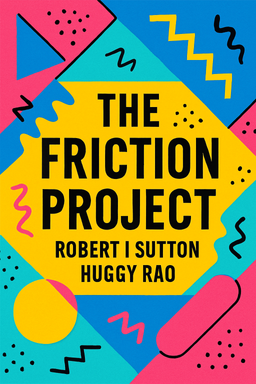
Have you ever found yourself trapped in an endlessly long meeting, buried in confusing emails, or stuck navigating pointless bureaucracy that seems designed to waste your time? Robert I. Sutton and Huggy Rao ask this exact question in The Friction Project, and their answer forms the backbone of this practical and provocative book. They argue that while friction—those forces that make getting things done slower, harder, or more complicated—can be destructive, it can also be invaluable when used wisely. The real challenge isn’t to eliminate friction altogether, but to understand when to remove it and when to add it.
Sutton and Rao make a strong case that many organizations have been taken hostage by bad friction: excessive bureaucracy, endless meetings, email overload, and clueless leaders who are oblivious to how their decisions waste others’ time and energy. Yet at the same time, some organizations suffer from too little good friction—insufficient safeguards, quality checks, and moments of reflection that prevent mistakes, encourage creativity, and build ethical resilience. The Friction Project is the culmination of seven years of research and storytelling that explores both sides of this paradox.
Why Friction Matters
The authors argue that friction is at the heart of every organizational pain and success story. From the 42-page benefits form that tortured millions of Michigan residents (before a redesign made it 80% shorter) to the 113-page faculty promotion forms at Stanford, Sutton and Rao uncover how excessive complexity erodes morale, productivity, and innovation. They show how “too much bad friction” leads to burnout and disengagement, but “not enough good friction” can be equally dangerous—producing reckless decision-making, ethical lapses, and half-baked products rushed to market (as seen with Google's ill-fated Google Glass).
As they emphasize, the magic of great leadership is friction fixing: making the right things easier, faster, and smoother while ensuring the wrong or reckless things take more effort. This isn’t an individual responsibility alone. Every employee—from the CEO to the front-line worker—can contribute to identifying, reducing, or rebalancing friction. The book ultimately offers a structured playbook for anyone who wants to transform their workplace into a smoother, saner, and more humane environment.
The Friction Fixer’s Toolkit
Sutton and Rao define friction fixing as both an art and a craft. They explore it across multiple levels: personal, team, and organizational. The authors describe how true “friction fixers” don’t just grumble about obstacles—they take accountability. They pick up “orphan problems” (issues everyone complains about but no one owns) and fix them through what they call “the help pyramid.” This model progresses from reframing and navigating problems at the individual level, to shielding others from organizational chaos, and eventually to redesigning teams and systems that make good habits easier and bad ones harder.
Key examples illustrate this mindset: Dr. Melinda Ashton’s “Getting Rid of Stupid Stuff” campaign in Hawaii Pacific Health empowered nurses to identify and eliminate pointless electronic health record tasks—freeing thousands of hours of time. At Dropbox, the leadership’s “Armeetingeddon” initiative wiped hundreds of meetings off calendars overnight, showing how small design interventions can transform an entire company’s culture of time-wasting. Similarly, AstraZeneca’s simplification initiatives saved over two million employee hours by attacking unnecessary processes one step at a time.
Why You Can’t—and Shouldn’t—Eliminate All Friction
The authors warn readers against succumbing to the seductive fantasy of a frictionless organization. Removing too much friction, they note, can unleash chaos and harm. Friction serves critical functions: it slows impulsive leaders, prevents fraud, provides time to reflect, and teaches people to value what they’ve worked for. They cite research on the “IKEA Effect,” where people appreciate what they’ve labored over more deeply than what they received effortlessly. Similarly, Pixar cofounder Ed Catmull promotes “healthy struggle” in creativity; by iterating seven to nine times, friction becomes the furnace of excellence. Essentially, smart leaders craft environments where friction is the right kind: friction that protects quality, values, and humanity.
From Diagnosis to Design
Throughout the book, Sutton and Rao equip readers with diagnostics—such as “friction forensics” (when and where to make things faster or slower), “subtraction rituals” (removing unnecessary work), and a five-trap framework that targets oblivious leadership, addition sickness, broken connections, jargon monoxide, and the fast-and-frenzied culture plaguing modern companies. Each tool encourages you to step back, ask—“Is this necessary?”—and cultivate the courage to subtract. As they put it, the real work of leadership is design: to continually shift between the gas and the brakes, to protect people’s dignity and time, and to build systems that make progress more effortless for everyone involved.