
Idea 1
Transforming Prejudice through Education and Empathy
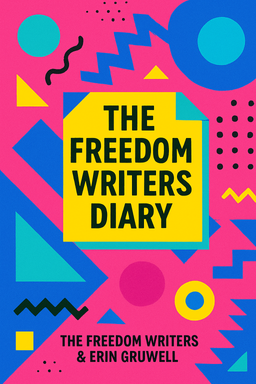
Have you ever had a teacher—or mentor—who made you feel seen for the first time? That moment when you realized someone believed in your potential, even when you didn’t believe in it yourself? Freedom Writers, by Erin Gruwell, invites you into such a moment. It's the story of transformation—how one determined teacher and a group of students from one of Long Beach’s most segregated schools worked their way from despair to empowerment. The book reveals how education, empathy, and courage can undo cycles of prejudice and violence.
Gruwell argues that real teaching means understanding your students’ realities—not just their textbooks. She believes that change begins when people learn to see the humanity in one another. Prejudice, she contends, doesn’t dissolve through lectures or punishment—it fades when individuals connect their own pain with the pain of others. That’s why she deliberately exposed her students to stories from Anne Frank, Zlata Filipović, and Holocaust survivors, connecting their struggles to those faced by teens caught in racial conflict and poverty.
Breaking Down Barriers
The book begins with Gruwell’s first real teaching assignment at Wilson High. As the new teacher, she was given what others saw as the “problem classes”—students divided by gang affiliations, racial prejudice, and distrust toward authority figures. Her classroom was a reflection of the tensions in their neighborhoods: Asian students avoided Latino students, Black students distrusted White students, and everyone assumed she would quit like the teachers before her. Gruwell faced not only adolescents who felt hopeless but also colleagues who dismissed her optimism as naïve.
Her initial lessons fell flat. But gradually, Gruwell shifted her approach—choosing books relevant to her students’ experiences. She used Romeo and Juliet to parallel gang rivalries and brought documentaries and survivor stories into her lessons. Over time, she built an environment where talking about prejudice, violence, and injustice wasn’t taboo but necessary. Students started questioning their ingrained biases. They began talking across racial lines, discovering that their pain—whether from abuse, racism, or loss—was shared.
When Empathy Becomes Action
Gruwell’s students moved from simple awareness to active engagement. During their sophomore year, they wrote letters to Zlata Filipović, whose wartime diary from Sarajevo mirrored Anne Frank’s. When Zlata and Miep Gies (Anne Frank’s protector) later visited, it affirmed the students’ belief that their own voices mattered in the larger fight against hate. These encounters blurred the lines between classroom and global community—making history feel urgent and personal.
By their junior and senior years, the students—now known as the Freedom Writers—had not only discovered self-respect but were channeling it into activism. They compiled their personal diaries into an anonymous manuscript to share their truths with the world. They even traveled to Washington, D.C., to meet the Secretary of Education, symbolizing their growth from marginalized teens to empowered voices advocating tolerance.
The Core Message: Education as Empowerment
At its heart, Freedom Writers isn’t just about teaching English—it’s about teaching humanity. Gruwell’s approach was rooted in what educators like Paulo Freire have called “consciousness-raising” (in Pedagogy of the Oppressed): helping people recognize societal structures that keep them divided and powerless. Her students didn’t just study literature—they studied resilience, empathy, and justice. They learned that their personal stories had the power to dismantle stereotypes.
This journey—spanning from prejudice to purpose—reveals the book’s central thesis: when young people are given the space to confront their truths and connect with others’ stories, they can become agents of change. The lessons extend beyond classrooms. They ask us to reconsider how we respond to difference, how we nurture empathy in our communities, and whether we too are willing to write new narratives about tolerance.
A Transformative Lesson
Education isn’t just about reading books—it’s about awakening understanding. Gruwell’s story reminds us that when lessons move beyond the page and touch the heart, prejudice loses its power and empathy begins its quiet revolution.
By reading the story of Erin Gruwell and her Freedom Writers, you witness how belief, empathy, and courage can transform not just students but entire communities—and why those same values remain as urgent today as they were in that Long Beach classroom nearly three decades ago.