
Idea 1
History’s Four Seasons and Generational Power
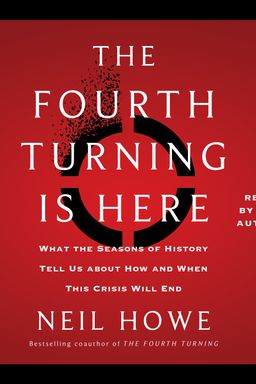
Why do eras of confidence and cohesion so often give way to decades of culture war and then to sudden emergencies? In The Fourth Turning Is Here, Neil Howe argues that modern Anglo‑American history moves through a long human-life rhythm he calls the saeculum—roughly 80–100 years—that unfolds in four seasonal “turnings”: a High, an Awakening, an Unraveling, and a Crisis. What looks like chaos at any given moment gains order when you see how generations rotate into predictable roles and collectively set the mood for politics, culture, and institutions.
At the core, Howe contends that generations are the causal engine of these cycles. Each generation’s childhood imprint—whether indulged, protected, neglected, or overprotected—shapes a lifelong persona that later expresses itself in public life. As these cohorts age in sequence, they recreate the same four archetypes (Prophet, Nomad, Hero, Artist) whose interactions drive the turnings. If you want a durable mental map for turbulent times, this book gives you a generational lens to read the present Crisis and to anticipate the kind of post‑Crisis world that may follow.
The saeculum—and why it matters
Howe’s saeculum works like seasons. A First Turning High (post‑WWII Truman/Eisenhower era) builds strong institutions and public trust. A Second Turning Awakening (the 1960s–70s) unleashes spiritual and cultural revolt. A Third Turning Unraveling (1980s–2000s) elevates individualism and corrodes institutional legitimacy. A Fourth Turning Crisis (today) forces collective action to survive and rebuild. You don’t need precise dates; you need the sequence. The model is probabilistic and diagnostic, not prophetic clockwork.
Generations as the engine
Four archetypes rotate through four life stages in every saeculum. Boomers (Prophets) grow up indulged and later become moralistic elders; Gen X (Nomads) grow up underprotected and later lead as pragmatic troubleshooters; Millennials (Heroes) grow up protected and rally in teams during a Crisis; Homelanders (Artists) grow up overprotected and later refine the post‑Crisis order. These types are not horoscopes; they are recurring social roles formed by shared childhood conditions (Howe quotes Sainte‑Beuve: “All our lives we remain a prisoner of the generation we belonged to at age twenty”).
Where we are now
The current Fourth Turning, Howe argues, began with the 2008 Global Financial Crisis. A precursor (9/11 and the long wars) primed the mood; the crash served as a catalyst; and the 2016 election delivered the first regeneracy—an intense remobilization around rival mega‑identities. Since then, trust has collapsed, institutions have misfired (from Covid responses to supply shocks), and polarization has hardened through the Big Sort (Bill Bishop), media fragmentation (Jonathan Haidt’s “Babel” metaphor), and party realignment (education replacing income as the key divider). You can feel a winter logic: survival and decisive action trump old norms.
What Crescendos in a Crisis
Every Fourth Turning follows a recognizable arc—catalyst, regeneracy, consolidation, a climactic Ekpyrosis, and a resolution that remakes institutions. The Revolutionary era birthed a Constitution; the Civil War forged national supremacy and emancipation; the Depression–WWII Crisis generated the New Deal, Social Security, and America’s superpower order. Howe warns that this Crisis will also end with structural change—possibly a major war, a sweeping domestic settlement, or both. Technology won’t choose the outcome for you; society routes technology through its prevailing mood (mainframes in a High, personal computing in an Unraveling, surveillance in a Crisis).
Global synchronization raises stakes
Because many nations modernized together, their cycles now partially sync. The 1930s–40s brought a near‑global Crisis; the late 1960s–70s saw cross‑border Awakenings. Today, great‑power rivalry (U.S.–China), Russia’s war in Ukraine, and volatile regions act within a synchronized winter. The risk of a global Ekpyrosis—simultaneous climaxes across systems—makes policy choices at home and abroad mutually reinforcing or mutually disastrous (Modelski and Thompson’s long‑cycle work is a useful parallel).
Key promise
See the season, and you regain agency. The saeculum does not erase contingency; it equips you to act with timing—when to preserve, when to revolt, when to mobilize, and when to rebuild.
How to use this lens
Read the present for where it sits in the Crisis sequence, and watch stressors (financial fragility, internal conflict, great‑power war) that could push events toward an Ekpyrosis. Then imagine the First Turning that could follow: stronger institutions, more communal norms, family policies, and large public works—benefits that come with tighter conventions and authority. You don’t control the cycle, but you help steer the outcome—through the roles your generation plays and the coalitions you build.
(Note: Howe builds on and updates the generational thesis from The Fourth Turning (1997), integrating new data on polarization, debt, and global risk. For historical kin, see Toynbee, Vico, Ibn Khaldun, and Censorinus; for modern complexity analogs, see systems theory on emergent cycles.)